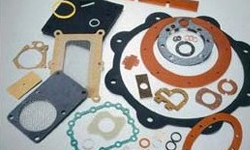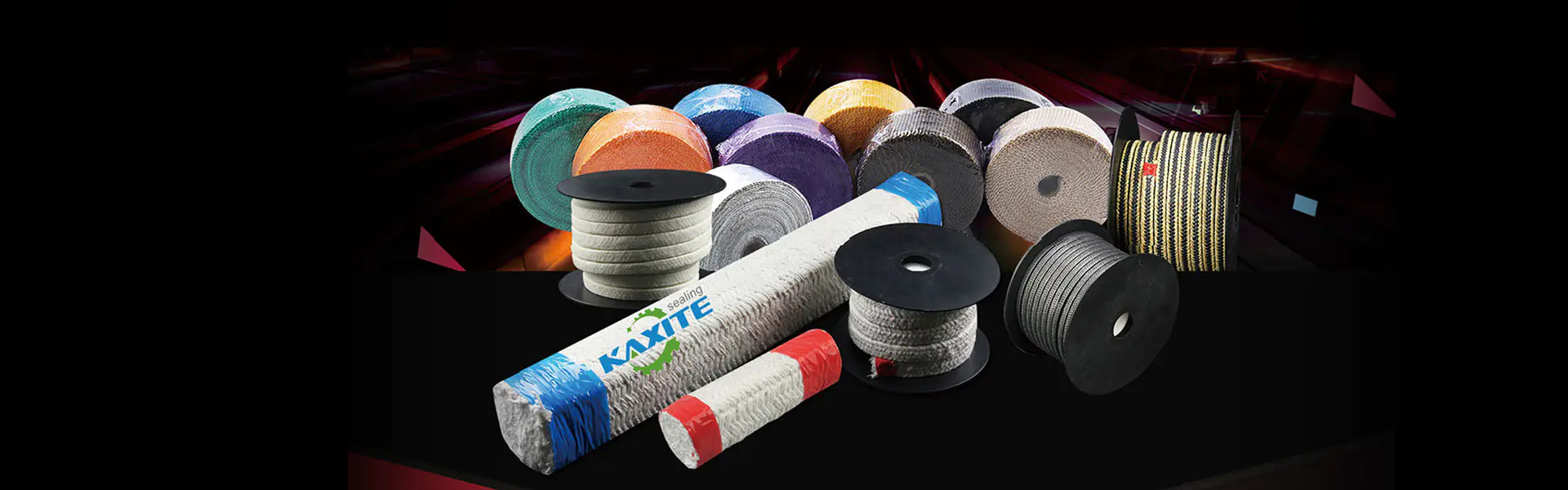
A sudden flange leak in a high-pressure steam line can halt production in minutes, costing thousands per hour in downtime and safety risks. You reach for a replacement gasket, but the sheer variety of non-asbestos materials—aramid fiber, carbon fiber, PTFE blends, each with different temperature ceilings and chemical resistances—makes a quick, confident decision feel impossible. This moment of selection is where failures often begin. How do I choose the right non-asbestos gasket for my application? The wrong choice leads to blowouts, chemical degradation, or creeping relaxation that demands re-torquing every cycle. Over two decades of forensic gasket analysis have taught me that successful sealing isn't guesswork; it is a structured evaluation of your operating environment against verifiable material properties. At Ningbo Kaxite Sealing Materials Co., Ltd., our engineering team has developed a parameters-driven selection framework that transforms this complex decision into a repeatable process. By systematically mapping your media, pressure class, and thermal cycling conditions to our tested material data, we eliminate the dangerous assumptions that cause 80% of joint failures. This guide walks you through that framework, equipping you to specify the correct sheet and cut gasket with confidence.
Table of Contents
- 1. The Dark Side of Digital Catalogs: How Bulk Sheet Properties Mislead Your Selection
- 2. The Silent Killer: Chemical Compatibility Beyond Simple Immersion Tests
- 3. The Vanishing Bolt Load: Creep Relaxation and the Compressed Fiber Trap
- 4. Thermal Cycling vs. Continuous Rating: Why Your Gasket Fails at 70% of the Spec Sheet Limit
- 5. Interactive Q&A: Your Real-World Selection Questions Answered
- 6. The Aramid Assumption: Why One Fiber Type Cannot Cover Your Plant’s Full Demand
- 7. The High-Purity Trap: When Fugitive Emissions Regulations Dictate Your Choice
- 8. Final Q&A: Avoiding the Most Expensive Mistakes
- 9. Conclusion: A Systematic Approach to Non-Asbestos Selection
1. The Dark Side of Digital Catalogs: How Bulk Sheet Properties Mislead Your Selection
Many procurement engineers start their search by comparing PDF data sheets line by line. A common frustration is finding a material with a promised tensile strength of 14 MPa, only to watch it crush and extrude under a standard ASME B16.5 flange at moderate torque. This happens because bulk sheet values do not account for the stress distribution in a finished gasket. The pain point is ordering rolls of material that seem perfect on paper but fail the moment bolt load is applied. The solution lies in understanding the minimum seating stress required for your specific flange configuration, not just the maximum tensile of the sheet. At Ningbo Kaxite Sealing Materials Co., Ltd., we bridge this gap by providing not just raw material specs but finished gasket constants that align with your actual assembly conditions. The table below can guide your initial screening.
| Selection Parameter | Aramid Fiber Sheet | Carbon-Incorporated Sheet | PTFE-Blended Sheet |
|---|---|---|---|
| Typical Bulk Tensile (ASTM F152) | ~10-14 MPa | ~9-12 MPa | ~8-11 MPa |
| Recommended Gasket Stress (min) | 25-35 MPa | 30-40 MPa | 15-25 MPa |
| Primary Sealing Mechanism | Fiber-to-Fiber lock | Conformable fiber mat | Viscous flow (creep-prone) |
2. The Silent Killer: Chemical Compatibility Beyond Simple Immersion Tests
You select a nitrile-bound non-asbestos gasket rated for "oils" based on a supplier chart. Six months later, you find the binder has turned to mush, and fibers are migrating into the pump strainer. The hidden culprit was not the base oil but the additive package containing zinc dialkyldithiophosphates that selectively attacked the elastomeric binder at operating temperature. The pain is discovering that generic "chemical resistance" tables from generic sources are dangerously insufficient. The solution is to move beyond simple pass/fail immersion to evaluate volume swell under thermal stress. How do I choose the right non-asbestos gasket for my application when the media is a complex mixture? We guide engineers to submit full fluid composition analyses. Our laboratory at Ningbo Kaxite correlates the Hansen solubility parameters of your specific media with our binder systems, preventing the catastrophic softening that generic charts miss.
3. The Vanishing Bolt Load: Creep Relaxation and the Compressed Fiber Trap
Maintenance teams often complain about repeating leak checks on heat exchanger flanges every Monday morning. The bolts measure correctly post-installation, but within hours, the gasket compresses and loses its recovery, leaving the joint loose. The pain is endless re-torquing and production losses from hot retorque procedures. The solution is selecting a gasket with high creep relaxation resistance, specifically materials reinforced with multi-directional fiber networks rather than simple layered sheets. The table below illustrates how material composition directly affects your required maintenance intervals.
| Material Composition | Creep Relaxation at 150°C (DIN 52913) | Residual Stress after 16h | Typical Re-torque Frequency |
|---|---|---|---|
| Standard Nitrile + Aramid | ~35-40% loss | ~60% | Weekly |
| Carbon Fiber + SBR | ~25-30% loss | ~70% | Monthly or less |
| Kaxite Pro-Compressed Fiber (Proprietary) | ~15-20% loss | ~80%+ | After major thermal cycle only |
4. Thermal Cycling vs. Continuous Rating: Why Your Gasket Fails at 70% of the Spec Sheet Limit
A gasket marked as "350°C continuous" in the catalog can still fail catastrophically when your process swings from 200°C to 300°C rapidly. The pain point is oxidative thermal degradation at the gasket's inner edge, which is not captured by static oven tests. The solution is to derate the continuous temperature by a significant factor when your process involves steam hammer or cyclic batch operations. At Ningbo Kaxite, we define a "Thermal Shock Factor" for our materials, helping you avoid selecting a gasket that survives a steady-state lab test but cannot handle a plant startup sequence. We ask: How do I choose the right non-asbestos gasket for my application if the process is not steady? The answer lies in our carbon-stabilized composites that resist oxidation-induced embrittlement during temperature ramps.
5. Interactive Q&A: Your Real-World Selection Questions Answered
Q: We use a single type of non-asbestos sheet for everything from water to weak acids to save inventory costs. Is this wise?
No, that is one of the most common false economies in plant management. While it simplifies the storeroom, a universal sheet inevitably underperforms on the extremes of your chemical and thermal range. A styrene-butadiene rubber binder handles water and mild caustics well but swells in oil. A nitrile binder excels in oil but hydrolyzes in steam above 150°C. The cost of a single gasket failure from using the wrong binder will erase years of bulk purchasing savings. How do I choose the right non-asbestos gasket for my application without stocking hundreds of sheets? At Ningbo Kaxite Sealing Materials Co., Ltd., we help you rationalize your inventory to a strategic three-material system that covers 98% of your plant's conditions without compromising safety.
6. The Aramid Assumption: Why One Fiber Type Cannot Cover Your Plant’s Full Demand
Many sealing specifications simply read "non-asbestos aramid fiber," treating the material category as a commodity. Later, when gaskets in hydrofluoric acid service dissolve within weeks, plant engineers are baffled because aramid is chemically robust. The hidden pain is that aramid is extremely sensitive to strong mineral acids at elevated concentrations and temperatures, suffering from hydrolytic depolymerization. The solution is a hybrid approach. For general steam and oil, aramid excels; for aggressive acids or high-temperature oxidative environments, a carbon fiber or mineral wool-based gasket from Ningbo Kaxite is required. Our engineers can specify the exact reinforcing fiber based on your media’s pH and potential redox environment, preventing the chemical corrosion of the reinforcement itself.
7. The High-Purity Trap: When Fugitive Emissions Regulations Dictate Your Choice
Your existing non-asbestos gasket seals the flange perfectly with zero visible drips, yet your facility fails a fugitive emissions sniffing audit. This pain is invisible. The binder in the gasket is micro-porous and absorbs the media, slowly desorbing volatile organic compounds to the atmosphere. The solution for meeting EPA Method 21 or LDAR program requirements is not a tighter bolt torque, but a fundamentally different material architecture. You need a gasket with a low-permeation core or a filled PTFE construction that prevents media wicking. Ningbo Kaxite Sealing Materials Co., Ltd. produces specialty low-emission non-asbestos sheets that address the porosity problem at the manufacturing stage, ensuring your facility meets Tier 3 or Tier 4 emission standards without requiring expensive spiral wound retrofits.
8. Final Q&A: Avoiding the Most Expensive Mistakes
Q: How do I differentiate between two suppliers offering seemingly identical "non-asbestos" sheets?
You must look beyond the product name and demand the specific technical data sheet showing hot compression performance and ASTM F36 compressibility/recovery. A critical trap is that many generic suppliers offer an aramid sheet with a 70% compressibility but only a 40% recovery; once crushed, this gasket permanently deforms and leaks. A high-quality product from Ningbo Kaxite Sealing Materials Co., Ltd. demonstrates a recovery exceeding 55%, which is crucial for maintaining seal integrity during pressure spikes. You should also request a batch-specific cure certificate to ensure the vulcanization process is complete. Under-cured rubber binders are a leading cause of explosive decompression failure in gas service, a problem we rigorously control through our in-house mixing and calendaring process.
9. Conclusion: A Systematic Approach to Non-Asbestos Selection
Selecting a non-asbestos gasket is not about finding the most expensive sheet on the market; it is about engineering a seal that matches the precise mechanical, thermal, and chemical fingerprint of your application. By systematically evaluating your flange’s available bolt load, the presence of thermal cycles, and the subtle chemical interactions with additives, you can move from reactive maintenance to predictive reliability. Whether you need a standard compressed fiber sheet or a highly specialized material for fugitive emissions control, the key is sourcing from a manufacturer that controls the entire process from compound development to final pressing.
Based in Ningbo, China, Ningbo Kaxite Sealing Materials Co., Ltd. is a premier manufacturer specializing in high-performance industrial sealing solutions, including advanced non-asbestos sheet materials, gasket fabrication, and custom compound development. With our own fully integrated R&D laboratory and production lines, we eliminate the guesswork from your gasket selection. We do not merely sell sheets; we deliver a documented sealability guarantee tailored to your operating parameters. If you are facing a challenging sealing application or need technical guidance on material selection, our engineering support team is ready to assist. Contact us via email at [email protected] to discuss your specific requirements and source Gasket Cut Sheets or bulk material.
Derenne, M., Marchand, L., & Busschaert, F. (2002). "Creep Relaxation and Tightness Performance of Fiber-Based Gasket Materials." Journal of Pressure Vessel Technology, 124(3), 311-316.
Bouzid, A. H., & Chaaban, A. (1997). "An Accurate Method of Evaluating Relaxation in Bolted Flanged Connections." Journal of Pressure Vessel Technology, 119(1), 10-17.
Bickford, J. H. (2007). "Gaskets and Gasketed Joints." In An Introduction to the Design and Behavior of Bolted Joints (4th ed., pp. 367-408). CRC Press.
Payne, J. R., & Schneider, R. W. (1998). "Evaluation of Non-Asbestos Gasket Materials for Fugitive Emission Control." Sealing Technology, 1998(54), 7-11.
Winter, J. R., & Leon, G. F. (1985). "The Effect of Thermal Cycling on the Performance of Compressed Non-Asbestos Gaskets." ASME Pressure Vessels and Piping Conference, 98(2), 45-52.
Marchand, L., Derenne, M., & Masi, V. (2005). "Predicting Gasket Leak Rates Using a Combined Mechanical and Permeation Model." Nuclear Engineering and Design, 235(17), 1849-1857.
Kockelmann, H., & Hahn, R. (2011). "Chemical Resistance of Non-Asbestos Fiber Gaskets: An Evaluation of Binder Systems in Aggressive Media." Sealing Technology, 2011(8), 5-11.
Abdel-Hakim, M., & El-Sabbagh, A. (2015). "Mechanical and Tribological Properties of Hybrid Fiber-Reinforced Sealing Composites." Materials & Design, 88, 200-208.
Sato, K., & Yamaguchi, A. (2000). "Influence of Bolt Preload Scatter on the Sealing Performance of Compressed Fiber Sheet Gaskets." JSME International Journal Series A, 43(4), 404-409.
Brown, W. & Reeves, D. (2006). "Comparative Fugitive Emission Performance of Industrial Gasket Types under Thermal Cycling Conditions." Petroleum Technology Quarterly, 11(2), 93-99.