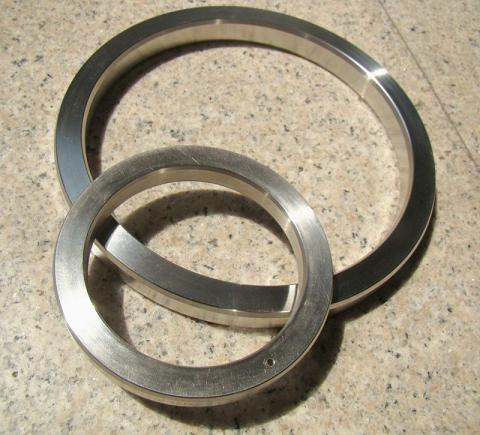
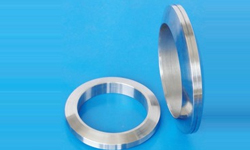
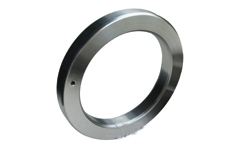
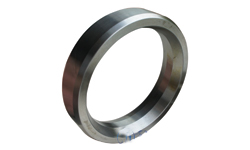
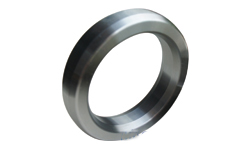
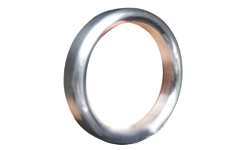
In the demanding world of high-pressure, high-temperature sealing for pipeline and pressure vessel connections, the integrity of the seal is non-negotiable. Among the most reliable solutions engineered for such critical applications is the Ring Joint Gasket (RJG). These metallic sealing rings are the cornerstone of safety and leak-tight performance in flanged connections across oil and gas, petrochemical, and power generation industries. Unlike softer gasket materials, RJGs create a seal through controlled deformation, forging a gas-tight barrier capable of withstanding extreme conditions that would compromise other sealing methods.
Kaxite Sealing has dedicated decades to mastering the metallurgy and precision manufacturing of these vital components. Our expertise ensures that every Ring Joint Gasket we produce meets the highest international standards, providing engineers and maintenance professionals with unparalleled confidence in their flange assemblies.
The superior performance of a Ring Joint Gasket stems from its unique design and operating principle. It is precisely machined from a solid ring of metal to fit into specially machined grooves in mating flanges, known as ring grooves.
Kaxite Sealing manufactures a comprehensive range of RJGs to meet API (American Petroleum Institute) and ASME (American Society of Mechanical Engineers) specifications. Our product parameters are meticulously controlled to ensure perfect form, fit, and function.
We produce gaskets conforming to the following major standards:
Our primary product line includes:
The choice of material is critical for corrosion resistance, temperature capability, and mechanical strength. Kaxite Sealing offers a wide array of materials.
| Material Grade | Common Designation | Key Properties | Typical Temperature Range | Ideal For |
|---|---|---|---|---|
| Soft Iron | ASTM A105 | Good ductility, basic corrosion resistance | -20°F to 800°F (-29°C to 427°C) | General service, non-corrosive fluids |
| Low Carbon Steel | ASTM A350 LF2 | Improved strength over soft iron | -20°F to 800°F (-29°C to 427°C) | General hydrocarbon service |
| 304 Stainless Steel | ASTM A182 F304 | Excellent corrosion resistance, good strength | -425°F to 1500°F (-254°C to 816°C) | Acidic/corrosive environments, wide temp range |
| 316 Stainless Steel | ASTM A182 F316 | Superior corrosion resistance, especially to chlorides | -425°F to 1500°F (-254°C to 816°C) | Marine, chemical processing |
| Inconel 600 | UNS N06600 | High strength, oxidation resistance at high temps | Up to 2150°F (1177°C) | High-temperature furnaces, thermal processing |
| Monel 400 | UNS N04400 | Excellent resistance to seawater and acids | Up to 1000°F (538°C) | Marine, sulfuric acid, hydrofluoric acid service |
| Titanium | Grade 2 | High strength-to-weight, superb corrosion resistance | Up to 600°F (316°C) | Severe chloride environments, aerospace |
| Nominal Pipe Size (NPS) | Ring Number | Outside Diameter (in) | Inside Diameter (in) | Width (in) | Approx. Weight (lbs) |
|---|---|---|---|---|---|
| 1 | R45 | 2.38 | 1.50 | 0.31 | 0.3 |
| 2 | R45 | 3.75 | 2.62 | 0.38 | 0.8 |
| 4 | R45 | 6.00 | 4.75 | 0.44 | 2.0 |
| 8 | R45 | 10.62 | 9.25 | 0.56 | 7.0 |
| 12 | R45 | 15.25 | 13.62 | 0.62 | 13.5 |
Note: This is illustrative data. Kaxite Sealing provides full dimensional certification for all orders according to the specific ring number and standard requested.
Q: How do I properly install a Ring Joint Gasket?
A: Proper installation is critical. First, ensure the flange faces and ring grooves are perfectly clean, dry, and free of scratches or old gasket material. Lightly lubricate the gasket with a suitable anti-seize or lubricant recommended for the service. Carefully place the gasket into the groove of one flange, ensuring it sits evenly. Align the bolt holes and bring the mating flange into position. Insert all bolts and hand-tighten nuts. Finally, tighten the bolts in a crisscross pattern using a calibrated torque wrench to the specified bolt load. Never use impact wrenches for final tightening.
Q: Can I reuse a Ring Joint Gasket?
A: Reuse is possible but must be evaluated carefully. After disassembly, inspect the gasket thoroughly. If it shows no signs of flattening beyond specification, cracking, pitting, or heavy scoring, and if it is within the dimensional tolerances for its ring number, it may be reused for the same service. For critical service or if any doubt exists, Kaxite Sealing always recommends installing a new gasket to guarantee seal integrity.
Q: What is the difference between Oval and Octagonal ring types?
A: The cross-section shape defines them. Oval ring gaskets have a rounded cross-section and fit into grooved flanges with a corresponding oval groove. Octagonal ring gaskets have an eight-sided cross-section and fit into grooved flanges with a flat-bottomed groove. Octagonal rings generally provide a more effective seal with lower required bolt load and are more tolerant of flange rotation. They are often preferred for higher-pressure applications.
Q: How do I select the right material for my application?
A: Material selection depends on three primary factors: the fluid media (for corrosion resistance), the operating temperature, and the pressure. First, consult the corrosion charts for the process fluid. Then, ensure the material's temperature rating exceeds your maximum operating temperature. Finally, verify the material's yield strength is sufficient for the sealing stress required at your pressure class. Consulting with Kaxite Sealing's technical team is advised for non-standard or highly aggressive services.
Q: What do the markings on a Ring Joint Gasket mean?
A: Legible markings are a sign of a quality manufacturer like Kaxite Sealing. Standard markings typically include the manufacturer's name or logo (e.g., Kaxite), the material grade (e.g., 316), the ring type/size (e.g., R45), and sometimes the heat number for traceability. These markings ensure you have the correct gasket for the application and provide crucial traceability.
Q: Are Kaxite Sealing RJGs compliant with industry standards?
A> Absolutely. Kaxite Sealing manufactures all standard Ring Joint Gaskets in full compliance with the dimensional, material, and marking requirements of API 6A, API 17D, and ASME B16.20 standards. We can provide material test reports (MTRs) and certificates of conformity upon request to validate compliance for your quality assurance and auditing processes.
Q: What are the common causes of Ring Joint Gasket failure?
A> The most common causes are: 1) Improper Installation: Under- or over-torquing bolts, uneven bolt loading, or dirty/seized threads. 2) Flange Damage: Nicks, scratches, or galling in the ring groove sealing surfaces. 3) Incorrect Gasket Selection: Using the wrong ring number, type (R vs RX), or material grade for the service conditions. 4) Excessive Flange Movement: From pipeline vibration, thermal cycling, or external loads that exceed the flange design.
Q: How do I identify a leaking RJG, and what should I do?
A> Signs include visible weeping of fluid, audible hissing, or gas detection around the flange. If safe to do so, a soap-bubble test can pinpoint small gas leaks. Never attempt to tighten bolts on a pressurized, leaking flange. The system must be safely depressurized, purged, and isolated before any remedial action. Once safe, disassemble and inspect the gasket and flange grooves for the root cause. Replace the gasket with a new one from Kaxite Sealing and ensure proper installation procedures are followed.