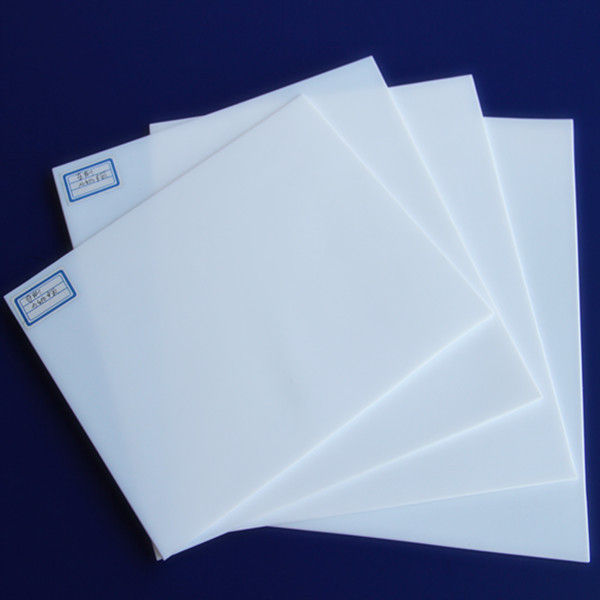
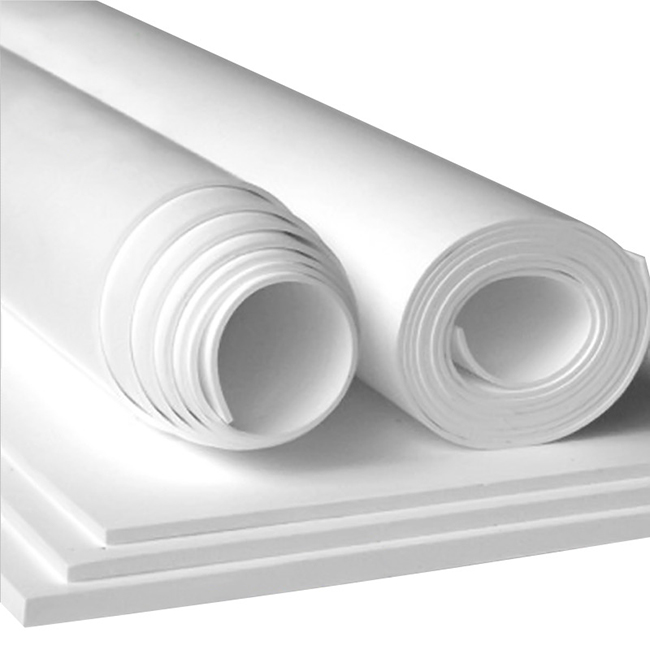
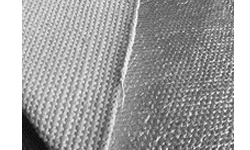
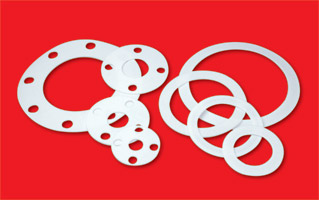
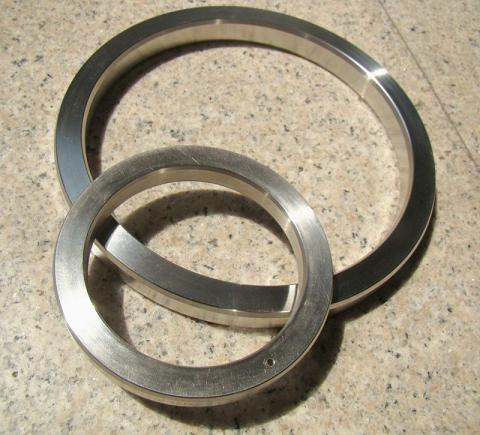
Kaxite Sealing is an ISO 9001 certified PTFE sheet manufacturer and wholesale supplier in China. For over 10 years, we have engineered high-performance fluoropolymer solutions for chemical processing, pharmaceutical, food, electrical, semiconductor and industrial machinery industries. Our product range covers PTFE resin molded sheet, PTFE skived sheet, modified PTFE sheet, pure PTFE sheet and expanded PTFE sheet, along with related PTFE gaskets and PTFE rods.
For engineers, designers, and procurement specialists across demanding industries, specifying the right high-performance material is critical. PTFE sheet, or Polytetrafluoroethylene sheet, stands as a cornerstone material renowned for its unparalleled combination of properties. PTFE is a fully fluorinated, high-molecular-weight polymer characterized by a strong carbon-fluorine bond. This unique molecular structure grants it exceptional qualities, making it indispensable where other materials fail.
Its most celebrated feature is an extremely low coefficient of friction, often compared to wet ice sliding on wet ice. Furthermore, it is chemically inert, meaning it resists attack from virtually all industrial chemicals and solvents. It operates across a vast temperature range from -200°C to +260°C, offers excellent dielectric properties, and is naturally hydrophobic. At Kaxite Sealing, we engineer and supply premium-grade PTFE sheets that deliver consistent, reliable performance in the most challenging environments.
Not all PTFE sheets are created equal. Manufacturing processes, raw material purity, and post-treatment directly impact performance. Kaxite Sealing's PTFE sheets are produced using advanced, controlled processes to ensure:
Minimal fillers or additives unless specified for enhanced mechanical properties. FDA compliant options available.
Uniform structural integrity throughout the sheet for predictable mechanical and sealing performance.
Smooth surfaces ideal for sealing, liners and low-friction applications, reducing wear on mating surfaces.
Precise thickness and flatness tolerances for accurate CNC machining, die-cutting and manual fabrication.
Selecting the correct PTFE sheet requires a detailed understanding of its technical parameters. Below are the key properties and available specifications for standard Kaxite Sealing virgin (unfilled) PTFE sheets.
| Property | Test Method | Typical Value | Significance |
|---|---|---|---|
| Density | ASTM D792 | 2.15 - 2.20 g/cm³ | Indicates material purity and processing quality. |
| Tensile Strength | ASTM D638 | 25 - 35 MPa | Measures resistance to pulling forces. |
| Elongation at Break | ASTM D638 | 300 - 500% | High elasticity allows for conformability. |
| Coefficient of Friction | ASTM D1894 | 0.05 - 0.10 | Extremely low value ensures anti-stick performance. |
| Service Temperature | - | -200°C to +260°C | Widest useful temperature range of any common thermoplastic. |
| Dielectric Strength | ASTM D149 | >40 kV/mm | Outstanding electrical insulator even at high temperatures. |
| Chemical Resistance | - | Excellent | Resists all known chemicals except molten alkali metals and fluorine under specific conditions. |
| Parameter | Standard Options | Notes |
|---|---|---|
| Sheet Size | 1000mm x 1000mm, 1200mm x 1200mm, custom widths up to 1500mm | Ideal for CNC machining, die-cutting and manual fabrication. |
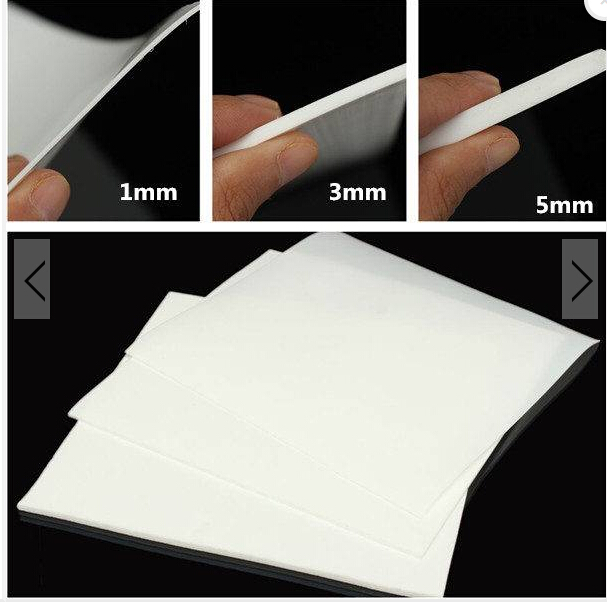
| Thickness Range | 0.5mm (0.020") to 50mm (2.0") | Thin films for liners, standard gauges for gaskets, thick blocks for machined parts. |
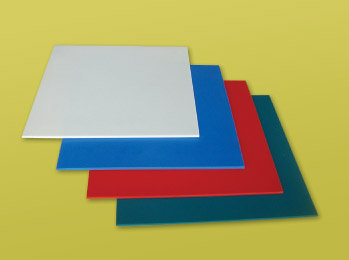
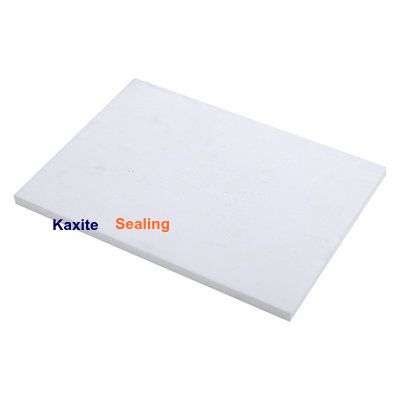
| Color | White (virgin), custom FDA-approved colors for coding | Virgin PTFE is naturally opaque white. |
| Surface Finish | Two sides smooth (2S), skived finish, molded finish | Smooth is standard for sealing. Skived offers very thin, consistent sheets. |
| Form | Virgin (unfilled), Glass-Filled, Carbon-Filled, Bronze-Filled, MoS2-Filled | Fillers enhance wear resistance, compression strength and thermal conductivity. |
While virgin PTFE excels in chemical and thermal resistance, its mechanical properties like wear resistance and creep resistance can be enhanced with fillers. Kaxite Sealing offers a range of filled PTFE sheets for specialized applications.
Improves wear resistance, compression strength and reduces deformation under load. Common filler percentages: 15%, 20%, 25%.
Enhances conductivity (electrical and thermal), increases hardness and improves wear resistance. Ideal for anti-static applications.
Greatly improves thermal conductivity and wear resistance, making it perfect for high-load bearing applications.
Molybdenum Disulfide filler further reduces friction and increases lubricity, often used in compressor rings and bearings.
Gaskets, seals, liners, bellows and spacer rings in pumps, valves and reactors handling corrosive fluids.
Sanitary gaskets, conveyor liners, wear plates and components requiring FDA compliance and cleanability.
Insulation barriers, coil formers, wafer carriers and components in etching and plating equipment.
High-temperature seals, bearings, thrust washers and anti-stick surfaces in engines and fuel systems.
Low-friction wear strips, slide plates, piston rings and compressor parts to reduce maintenance and downtime.
Valve seats, seals and gaskets for refinery, petrochemical and offshore service.
Kaxite Sealing supports full custom and OEM PTFE sheet manufacturing, from drawing review to sample approval and mass production. Our engineers work directly with your technical team to confirm dimensions, materials, tolerances and packaging.
Send your 2D/3D drawings, dimensions or physical samples. Our engineers review material, thickness, tolerance and application compliance within 24 hours.
We provide a detailed quotation including unit price, MOQ, lead time and packaging options. Custom MOQ may vary by material and size.
We produce free samples for your quality evaluation. Sample lead time is typically 5-7 working days for standard materials.
After sample approval, we start mass production with full dimensional inspection, material certificates and batch traceability.
Custom logos, labels, protective films, poly bags, cartons and pallets. We support neutral packaging and private label for distributors and brands.
Worldwide shipping by sea, air and express. Full export documentation: invoice, packing list, CO, MTR, COC and third-party inspection reports.
Kaxite Sealing operates an ISO 9001 certified quality management system. Every PTFE sheet undergoes raw material verification, precision molding or skiving, dimensional inspection and batch testing. We provide mill test reports, material certificates and third-party inspection reports upon request. Learn more about our company profile.
Our PTFE sheets are supplied to distributors, OEM brands and industrial end users in 80+ countries across chemical, food, electrical and machinery industries.
Every batch comes with mill test reports, material certificates and dimensional inspection records. Third-party inspection is available on request.
Custom sizes, thicknesses, filled grades, colors, logos, labels and packaging. Send your drawings or samples and our engineers will confirm feasibility within 24 hours.
Kaxite Sealing supports distributors, OEM brands and industrial end users worldwide. Below are typical cooperation cases and the inspection documents we provide for every bulk PTFE sheet order.
A German chemical plant ordered 2,000 pcs of 3mm virgin molded PTFE sheet with FDA compliance for reactor liners. Batch MTRs and dimensional reports were provided for each shipment.
A UAE industrial distributor placed recurring monthly orders of 1mm skived PTFE sheet for gasket fabrication. Neutral packaging and private labeling were used.
A US semiconductor equipment OEM ordered glass-filled PTFE sheet for wear parts. Samples were approved within 7 days and mass production started immediately after.
Mill Test Report (MTR) · Material Certificate · Dimensional Inspection Report · Certificate of Conformance (COC) · FDA Compliance Statement · Third-Party Inspection (SGS / TÜV / BV on request) · Packing List & Commercial Invoice
Q: What is the MOQ for wholesale PTFE sheets from Kaxite Sealing?
A: Our standard MOQ is 50 sheets for wholesale orders. For custom thicknesses, filled grades and OEM sheets, MOQ may vary depending on material and dimensions. Free samples are available for quality evaluation before bulk purchase.
Q: How long is the lead time for bulk PTFE sheet orders?
A: Standard lead time is 7-15 working days for most PTFE sheet products. Custom and OEM orders may require 15-25 working days depending on specifications and order quantity. Rush orders can be accommodated upon request. We ship worldwide via sea, air and express couriers.
Q: What is the main difference between PTFE sheet and Teflon™ sheet?
A: PTFE is the generic name for the polymer Polytetrafluoroethylene. Teflon™ is a registered trademark of Chemours (formerly DuPont) for their brand of PTFE products. Therefore, all Teflon™ sheets are PTFE sheets, but not all PTFE sheets are Teflon™. Kaxite Sealing manufactures high-performance PTFE sheets that meet or exceed the properties associated with the Teflon™ brand.
Q: Can Kaxite Sealing PTFE sheets be used for food contact applications?
A: Yes, our virgin (unfilled) PTFE sheets are manufactured from 100% pure PTFE resin, which is inherently food-safe and meets FDA CFR 21.177.1550 regulations for repeated food contact. They are non-toxic, odorless, and tasteless. For colored sheets intended for food contact, we use specifically certified food-grade pigments.
Q: How does temperature affect PTFE sheet performance?
A: PTFE retains its remarkable properties across an exceptionally wide range. It remains flexible and usable from cryogenic temperatures as low as -200°C up to a continuous +260°C. Above 260°C, mechanical properties gradually decline, and above 327°C (its melting point), it begins to degrade. It does not embrittle at low temperatures, making it unique among polymers.
Q: What are the limitations of PTFE sheets?
A: PTFE has three primary limitations: 1) Creep (cold flow) under sustained heavy load, mitigated by using filled PTFE grades such as glass-filled or proper design with support rings. 2) Poor radiation resistance under high gamma or electron beam radiation. 3) Lower tensile and compressive strength than metals, so it is not a direct load-bearing replacement without design adjustments. For applications involving extreme abrasion without lubrication or very high continuous loads, materials like PEEK or UHMW-PE might be evaluated.
Q: What is the best method to cut and fabricate PTFE sheets?
A: PTFE is easily machinable with standard workshop tools. For thin sheets, sharp blade cutting or die-cutting is effective. For thicker sheets and precise parts, CNC machining, milling, turning, and drilling are commonly used. It is crucial to use sharp tools and adequate cooling to avoid frictional heat build-up. Kaxite Sealing can also provide pre-cut gaskets, washers and custom-machined components to your drawings.
Q: How do I select the right thickness for a gasket application?
A: Gasket thickness depends on flange surface finish, bolt load, pressure, and chemical media. For standard ANSI flanges, 1.5mm (1/16") and 3mm (1/8") are most common. Thinner sheets (0.5mm-1mm) are used for delicate seals or liners. Thicker sheets (over 3mm) are used for irregular surfaces or as spacer materials. Our technical team at Kaxite Sealing can assist with specific recommendations based on your operating conditions.
Q: Are Kaxite Sealing PTFE sheets suitable for outdoor or UV-exposed applications?
A: Virgin PTFE has excellent weathering resistance and is not significantly degraded by UV exposure, making it suitable for outdoor use in seals, bearings, and architectural applications. Its properties remain stable over long periods in sunlight, unlike many other plastics which become brittle.
Q: Can Kaxite Sealing provide custom sizes and filled PTFE sheets?
A: Yes. We manufacture custom PTFE sheets in any required size, thickness and filler combination. Filled grades include glass-filled, carbon-filled, bronze-filled and MoS2-filled PTFE for enhanced wear resistance, thermal conductivity or anti-static properties. Contact our engineering team for specific recommendations.
Tell us your required thickness, sheet size and application, and our engineers will respond within 24 hours with a competitive quotation and free sample offer.
Send Inquiry Now Download Catalogue