Serrated Gaskets: The Definitive Guide to High-Pressure Static Sealing Solutions
For engineers and procurement specialists navigating the demanding world of industrial sealing, few components are as critical for high-integrity, static flange connections as serrated gaskets. Also known as grooved gaskets or ring-joint gaskets, these are specialized sealing elements designed to create a leak-proof seal in high-pressure and high-temperature applications. Unlike softer, compressible gaskets, serrated gaskets rely on a metal-to-metal bite principle. The serrated, concentric grooves on both faces of the gasket are forced into the flange surfaces under high bolt load, creating multiple concentric barriers against fluid or gas escape. This guide, leveraging Kaxite Sealing's two decades of expertise, delves deep into the design, specifications, selection, and application of these robust seals.
**Understanding the Core Design and Function**
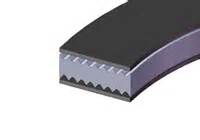
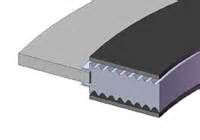
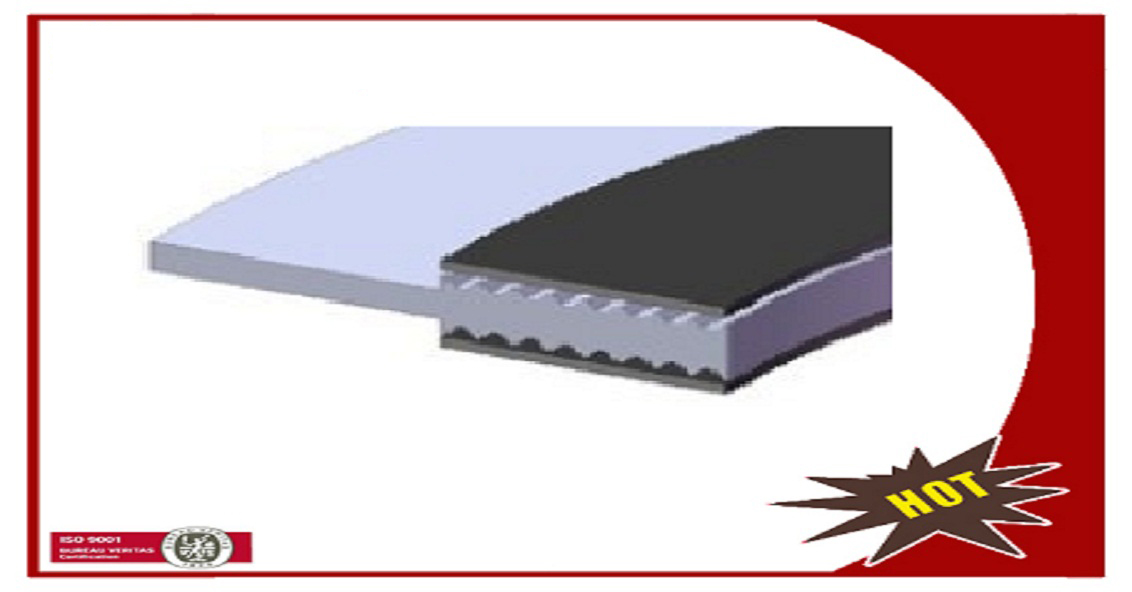
The effectiveness of a serrated gasket lies in its precision engineering. It is typically a solid metal ring with a near-rectangular or oval cross-section. Its defining feature is the series of sharp, concentric "teeth" or grooves machined onto its top and bottom faces. During installation, as the flange bolts are torqued, these hardened teeth deform slightly and embed themselves into the relatively softer flange material. This embedding action accomplishes two key things:
1. **Plastic Flow and Seal Creation:** The localized high stress at the tips of the teeth causes plastic deformation in the flange surface, creating a matching groove. This cold-flow process eliminates micro-leakage paths.
2. **Multiple Sealing Lines:** Each concentric groove acts as an independent sealing barrier. Even if one groove were compromised, the others continue to hold the pressure, offering exceptional reliability.
This mechanism makes serrated gaskets ideal for applications where safety and zero leakage are paramount, such as in oil and gas production, chemical processing, high-pressure steam systems, and subsea equipment.
**Kaxite Sealing Serrated Gasket: Technical Parameters and Specifications**
Selecting the correct serrated gasket requires a thorough understanding of its parameters. Kaxite Sealing manufactures gaskets to exacting international standards, ensuring compatibility and performance. Key specifications are outlined below.
**Primary Material Grades:**
Kaxite Sealing offers a wide range of materials to suit various media, temperatures, and pressures.
| Material Grade | Common Designation | Typical Hardness (HB) | Key Properties & Applications |
| :--- | :--- | :--- | :--- |
| Soft Iron | R | 90 Max | Excellent for standard applications with carbon steel flanges. Good deformability. |
| Low Carbon Steel | B | 120 Max | General purpose, widely used in oil and gas for its strength and cost-effectiveness. |
| 304 Stainless Steel | S304 | 160 Max | Good corrosion resistance for a wide range of chemicals and elevated temperatures. |
| 316 Stainless Steel | S316 | 160 Max | Superior corrosion resistance, especially against chlorides and acids. |
| Nickel Alloys | Inc 600, 825, etc. | 150-220 | For severe corrosive environments, high-temperature hydrogen service, and specialized chemical processes. |
| Copper | Cu | 90 Max | Used for non-sparking applications and certain thermal conductivity requirements. |
**Standard Dimensions and Tolerances:**
Serrated gaskets are manufactured to conform to global standards like ASME B16.20 (Ring Joint Gaskets) and API 6A. Critical dimensions include:
* **Ring Number (R#):** A standardized designation (e.g., R20, R37, R50) that defines all key dimensions for a specific flange pressure class and size.
* **Outside Diameter (O.D.):** The outer dimension of the gasket ring.
* **Inside Diameter (I.D.):** The inner dimension, critical for flow and preventing intrusion into the pipeline.
* **Width (W) / Thickness (P):** The cross-sectional width and height of the ring.
* **Groove Pitch and Depth:** The precise measurement between grooves and their depth, crucial for the sealing bite.
The following table illustrates a sample of common ring numbers and their dimensions according to ASME B16.20 for Class 1500 pressure rating.
| Ring Number | Nominal Pipe Size | O.D. (mm) | I.D. (mm) | Width (mm) | Approx. Weight (kg) |
| :--- | :--- | :--- | :--- | :--- | :--- |
| R20 | 2" | 120.7 | 79.4 | 11.1 | 0.29 |
| R23 | 3" | 149.2 | 104.8 | 11.1 | 0.37 |
| R26 | 4" | 175.4 | 131.8 | 12.7 | 0.60 |
| R31 | 6" | 222.3 | 177.0 | 12.7 | 0.77 |
| R37 | 10" | 304.8 | 263.5 | 15.9 | 1.80 |
*Note: Dimensions are indicative. Always consult Kaxite Sealing's engineering datasheets for precise, project-specific tolerances.*
**Surface Finish and Coating Options:**
The performance is heavily influenced by surface finish. Kaxite Sealing provides:
* **Standard Machined Finish:** A clean, machined surface suitable for most services.
* **Phosphate Coatings:** Applied to carbon steel gaskets to prevent galling during installation and provide temporary corrosion resistance.
* **Silver Plating:** A premium option for high-temperature applications (e.g., steam), improving anti-seize properties and enhancing the seal in cyclic services.
* **Other Platings:** Tin, nickel, or zinc plating available for specific corrosion or anti-galling needs.
**Serrated Gaskets FAQ (Frequently Asked Questions)**
**Q: When should I choose a serrated gasket over a spiral wound or RTJ gasket?**
A: Serrated gaskets are best for static, flat-face or raised-face flanges where very high bolt loads can be applied. They are often used in smaller size, high-pressure applications (e.g., wellhead equipment, valve bonnets, manifold connections). Spiral wound gaskets are more versatile for a wider range of pressures/temperatures and flange types (especially raised face), offering more resilience to vibration and thermal cycling. Ring-Type Joints (RTJ) are used with specially grooved flanges and are the standard for the most extreme pressures in oil & gas.
**Q: Can a serrated gasket be reused?**
A: Generally, no. The sealing action relies on the permanent deformation (embedding) of the teeth into the flange surfaces. Once disassembled, the gasket's teeth are flattened, and the flange grooves are compromised. Reusing an old gasket will almost certainly result in a leak. Kaxite Sealing always recommends using a new, unused gasket for every connection to ensure seal integrity.
**Q: What is the proper installation procedure for a serrated gasket?**
A: Correct installation is critical. Clean the flange faces meticulously, removing all old gasket material, dirt, and rust. The gasket should be placed centered on the flange. Use a cross-bolt tightening pattern (torque sequence) in multiple incremental steps (e.g., 30%, 60%, 100% of final torque) to apply even load. Always follow the equipment manufacturer's or applicable standard's (like ASME PCC-1) recommended bolt torque values. Under-torquing will not achieve the necessary bite, while over-torquing can damage the gasket or flange.
**Q: How do I select the right material grade for my application?**
A: Material selection depends on three primary factors: the fluid/media (corrosivity), operating temperature, and the flange material. For non-corrosive services like hydrocarbons, steam, or water, soft iron or low-carbon steel are common. For corrosive chemicals or where product purity is essential, 316 stainless steel or nickel alloys are chosen. Always ensure the gasket material is compatible with the flange material to avoid galvanic corrosion. Kaxite Sealing's technical team can provide material compatibility charts and recommendations.
**Q: What are the common causes of serrated gasket failure?**
A: The most frequent causes are: 1) **Improper Installation:** Incorrect torque or sequence. 2) **Flange Surface Damage:** Scratches, pitting, or warping that prevent proper tooth embedding. 3) **Material Incompatibility:** Galvanic corrosion or chemical attack. 4) **Over-Pressurization or Temperature:** Exceeding the design limits of the gasket material. 5) **Using a Damaged or Old Gasket.**
**Q: What are the advantages of sourcing serrated gaskets from Kaxite Sealing?**
A: Kaxite Sealing brings precision, reliability, and expertise. Our gaskets are CNC-machined from certified raw materials, ensuring dimensional accuracy and consistent mechanical properties. We offer full traceability with material test certificates (MTCs). Our product range covers all standard sizes and materials, plus the capability for custom designs. With deep application knowledge, our engineers provide support from selection through installation guidance.
**Advanced Considerations and Custom Solutions**
For unique challenges, standard catalog items may not suffice. Kaxite Sealing specializes in engineering custom serrated gasket solutions:
* **Non-Standard Sizes:** For OEM equipment or legacy flanges.
* **Exotic Alloys:** For ultra-corrosive or extreme temperature environments.
* **Special Groove Profiles:** Optimized tooth geometry for specific sealing performance or flange materials.
* **Combination Gaskets:** Integrating serrated metal with a soft insert for specific sealing requirements.
Proper handling and storage are also part of ensuring gasket performance. Store Kaxite Sealing gaskets in a dry, clean environment, preferably in their original protective packaging to prevent nicks or corrosion on the critical sealing surfaces.