In the world of high-performance thermal management and sealing, Graphite Sheet materials stand out for their exceptional properties. As industry professionals with decades of experience, we at Kaxite Sealing understand that selecting the right material is critical for your application's success. This comprehensive guide delves into the technical details, applications, and common questions surrounding graphite sheets, providing the in-depth information needed for informed decision-making.
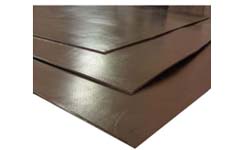
A graphite sheet is a highly engineered material made from expanded natural or synthetic graphite. Through a process of high-temperature exfoliation and compression, these sheets achieve a unique combination of properties: they are excellent conductors of heat, flexible, compressible, and resistant to many chemicals. Unlike traditional materials, graphite sheets manage heat by planar spreading, effectively dissipating thermal energy across their surface, making them ideal for managing hotspots in compact electronic devices, industrial equipment, and automotive systems.
Kaxite Sealing offers a range of graphite sheet products tailored for specific needs. Below are the standard specifications for our flagship GFS series. Custom formulations are available to meet unique requirements.
| Parameter / Property | Standard Grade (GFS-150) | High-Density Grade (GFS-300) | High-Purity Grade (GFS-500) | Test Method |
|---|---|---|---|---|
| Thickness Range | 0.1mm - 3.0mm | 0.2mm - 3.0mm | 0.1mm - 1.5mm | ASTM F152 |
| Density | 1.0 - 1.2 g/cm³ | 1.5 - 1.8 g/cm³ | 1.1 - 1.3 g/cm³ | ASTM D792 |
| Thermal Conductivity (In-Plane) | 150 - 300 W/m·K | 250 - 400 W/m·K | 400 - 600 W/m·K | ASTM E1461 |
| Thermal Conductivity (Through-Plane) | 5 - 10 W/m·K | 8 - 15 W/m·K | 10 - 20 W/m·K | |
| Compression Set (% @ 1000 psi) | < 10% | < 8% | < 12% | ASTM F36 |
| Continuous Service Temperature (Inert) | -240°C to +400°C | -240°C to +400°C | -240°C to +550°C | - |
| Tensile Strength | 4.5 MPa (min) | 6.8 MPa (min) | 3.5 MPa (min) | ASTM D828 |
| Carbon Content | > 99.0% | > 99.0% | > 99.95% | - |
| Halogen Content | < 50 ppm | < 50 ppm | < 10 ppm | IEC 61249-2-21 |
Q: How does a graphite sheet differ from thermal grease or adhesive pads?
A: Graphite sheets offer a solid, dry, and reusable alternative. Unlike grease, they are mess-free and don't pump out or dry over time. Compared to adhesive pads, they typically offer 5-10 times higher in-plane thermal conductivity for spreading heat, are reusable, and can withstand much higher temperatures. They work by conforming to surfaces under pressure without necessarily requiring adhesive.
Q: Can Kaxite Sealing graphite sheets be used as a gasket for sealing fluids?
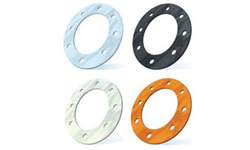
A: Yes, absolutely. Our high-density grades (like GFS-300) are specifically engineered for sealing applications. The material's compressibility allows it to flow into surface imperfections, creating an excellent seal against many gases, fuels, oils, and even some acids and solvents. It is crucial to ensure the chemical compatibility with the specific media and to use appropriate compression loads and flange design.
Q: Is graphite sheet electrically conductive? Does this pose a risk for electronics?
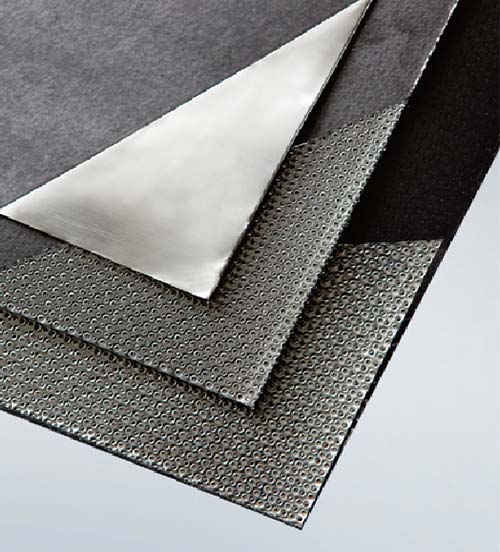
A: Yes, graphite sheets are electrically conductive in the plane of the sheet. This is a critical consideration in electronics applications. They must be used carefully to avoid short-circuiting components. Typically, they are installed with insulating films or used in configurations where the conductive property is not a risk. Kaxite Sealing can provide laminated versions with insulating layers on one or both sides.
Q: What is the shelf life and how should I store graphite sheet material?
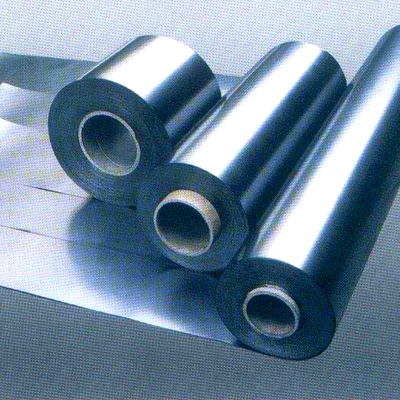
A: Graphite sheets from Kaxite Sealing have an indefinite shelf life if stored properly. They should be kept in a cool, dry environment away from direct sunlight and oxidizing agents. It is best to store them flat or rolled on a core with a diameter larger than 3 inches to prevent permanent creasing. The material is not hygroscopic but should be protected from dust and debris.
Q: How do I handle and install a graphite sheet gasket?
A: Handle with clean hands or gloves to prevent contamination. The sheet can be easily cut with sharp blades, die-cut, or punched. Installation surfaces should be clean, dry, and free of debris. The gasket is placed between the flanges, and the assembly is tightened evenly in a cross pattern to the recommended torque specification. Avoid over-torquing, which can crush the material excessively. The gasket does not require a sealant.
Q: Can your graphite sheets be customized?
A: Kaxite Sealing specializes in customization. We can provide sheets with:
Q: What are the limitations of graphite sheet material?
A: While versatile, graphite sheets have limitations to consider: They are not suitable for strong oxidizing environments (e.g., concentrated nitric acid) at high temperatures as oxidation can occur above 400°C in air. They are brittle in handling and can tear if mishandled. The electrical conductivity can be a disadvantage if not managed. Also, for very high-pressure static seals, a reinforced metal core version might be recommended for superior creep resistance.
Q: How does the "in-plane" vs. "through-plane" thermal conductivity affect my design?
A: This is a fundamental characteristic. Graphite sheet has very high "in-plane" conductivity, meaning it excels at spreading heat sideways across its surface to a heat sink or cooler area. The "through-plane" conductivity (through the thickness) is much lower. Therefore, for optimal performance, design the part so the sheet's large face is in contact with the heat source, allowing it to act as a heat-spreading layer, rather than relying on it to conduct heat directly through a thick section.