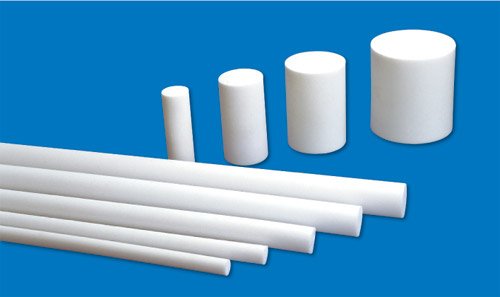
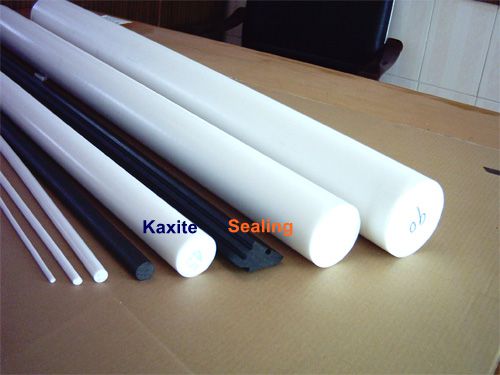
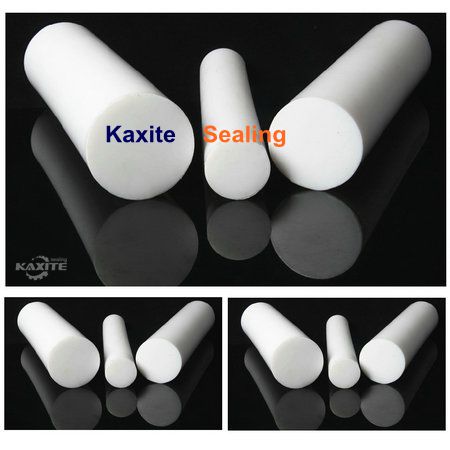
In the landscape of high-performance polymers, PTFE Rod, or Polytetrafluoroethylene rod, stands as a cornerstone material for engineers and designers tackling extreme operational challenges. Kaxite Sealing has established itself as a leader in the precision manufacturing of industrial-grade PTFE rods, delivering components that set the benchmark for reliability, chemical resistance, and thermal stability. Our rods are engineered from 100% virgin PTFE polymer, ensuring consistent purity and performance that meets the rigorous demands of sectors such as aerospace, chemical processing, pharmaceuticals, and food and beverage production.
The inherent properties of PTFE make it an indispensable material. It operates seamlessly across a vast temperature spectrum, maintains exceptional dielectric characteristics, and provides the lowest coefficient of friction of any known solid material. At Kaxite Sealing, we transform these raw properties into robust, machinable rod stock. Available in a comprehensive range of diameters and lengths, our PTFE Rod is the ideal starting point for creating custom seals, bearings, insulators, valves, and countless other critical components where failure is not an option.
Choosing Kaxite Sealing PTFE rods provides a multifaceted solution to complex engineering problems. Below are the core advantages that define our product's superiority:
Kaxite Sealing offers a standardized yet comprehensive inventory of PTFE rod stock to suit most project requirements. All our rods are manufactured to exacting tolerances, ensuring predictable performance and ease of fabrication.
| Nominal Diameter (mm) | Nominal Diameter (inches) | Standard Length (mm) | Standard Length (inches) | Tolerance |
|---|---|---|---|---|
| 6 mm | 0.236" | 1000 mm | 39.37" | ±0.1 mm |
| 10 mm | 0.394" | 1000 mm | 39.37" | ±0.1 mm |
| 12 mm | 0.472" | 1000 mm | 39.37" | ±0.2 mm |
| 20 mm | 0.787" | 1000 mm | 39.37" | ±0.2 mm |
| 25 mm | 0.984" | 500 mm / 1000 mm | 19.68" / 39.37" | ±0.3 mm |
| 50 mm | 1.969" | 500 mm | 19.68" | ±0.5 mm |
| 100 mm | 3.937" | 300 mm / 500 mm | 11.81" / 19.68" | ±0.8 mm |
| 150 mm | 5.906" | 300 mm | 11.81" | ±1.0 mm |
| Property | Test Method | Typical Value | Units |
|---|---|---|---|
| Density | ASTM D792 | 2.15 - 2.20 | g/cm³ |
| Tensile Strength | ASTM D638 | 25 - 35 | MPa |
| Elongation at Break | ASTM D638 | 300 - 500 | % |
| Compressive Strength | ASTM D695 | 12 | MPa |
| Coefficient of Friction (Dynamic) | ASTM D1894 | 0.04 - 0.10 | - |
| Continuous Service Temperature | - | -200 to +260 | °C |
| Dielectric Strength | ASTM D149 | >60 | kV/mm |
| Water Absorption | ASTM D570 | < 0.01 | % |
What is the primary difference between white and skived (brown) PTFE rod?
The primary difference lies in the manufacturing process and resulting properties. White PTFE rod is molded from granular resin, offering excellent dimensional stability and uniform properties throughout the cross-section, making it ideal for machining precise parts. Skived rod starts as a sintered billet and is then skived (peeled) to create a continuous rod; it often has a brownish color and exhibits slightly different mechanical properties, such as higher tensile strength in the longitudinal direction. For most standard machining applications, white molded rod from Kaxite Sealing is the recommended and most readily available choice.
Can PTFE rod be used for applications involving strong acids or alkalis?
Yes, this is one of the key strengths of PTFE. It is virtually inert to almost all industrial chemicals, including strong acids (e.g., sulfuric, hydrochloric, nitric) and strong alkalis (e.g., sodium hydroxide). It is also resistant to solvents, oils, and fuels. This makes Kaxite Sealing PTFE rod an excellent choice for seals, gaskets, and liners in chemical processing equipment, laboratory apparatus, and plating facilities.
What are the best practices for machining a PTFE rod?
PTFE is soft and has a low modulus of elasticity, requiring specific machining techniques. Use sharp, high-speed steel or carbide tools. Employ high cutting speeds with slow feed rates to achieve a good surface finish. Due to its high thermal expansion, allow the material to cool to ambient temperature before taking final measurements or achieving tight tolerances. Proper clamping is essential to avoid deformation, and using compressed air to clear chips is recommended as PTFE does not dissipate heat well. Always refer to Kaxite Sealing's machining guide for detailed parameters.
Is Kaxite Sealing PTFE rod suitable for food contact or medical applications?
Our rods manufactured from 100% virgin PTFE resin are inherently pure, non-toxic, and FDA-compliant for food contact applications under specific regulations. They are also USP Class VI approved, indicating biocompatibility testing for medical device applications. However, final suitability depends on the specific application, sterilization method, and regulatory jurisdiction. We provide full material certification and can supply rods meeting specific compliance documentation upon request.
How does the performance of PTFE compare to other engineering plastics like Nylon or Acetal (POM)?
PTFE offers distinct advantages in extreme environments where Nylon or Acetal would fail. While Nylon and Acetal have higher mechanical strength and stiffness at room temperature, PTFE outperforms them in chemical resistance (especially against strong bases and oxidizing acids), upper continuous temperature limit (+260°C vs. ~80-100°C), and friction properties (self-lubricating with the lowest coefficient of friction). PTFE is the material of choice for non-stick, high-purity, or exceptionally corrosive/wet environments.
What are the limitations of using a PTFE rod?
Understanding PTFE's limitations is crucial for proper application. Its main limitations include: relatively low mechanical strength and stiffness compared to metals and some other plastics, making it unsuitable for high-load structural parts; significant cold flow (creep) under sustained load, which must be accounted for in seal and gasket design; and poor resistance to abrasion and wear unless modified with fillers. For applications requiring improved creep resistance or wear properties, Kaxite Sealing offers filled PTFE compounds (e.g., glass-filled, carbon-filled, bronze-filled).
Can you supply custom diameters or lengths beyond your standard stock?
Absolutely. Kaxite Sealing specializes in providing custom-engineered polymer solutions. We regularly manufacture PTFE rods in non-standard diameters, exceptionally long lengths, or with specific tolerances tighter than our standard stock. We can also provide rods made from compounded PTFE materials with fillers for enhanced properties. Contact our technical sales team with your application requirements for a custom quotation.
The successful implementation of a PTFE component begins with selecting the correct rod stock. Key factors to consider include:
Kaxite Sealing's technical support team is available to assist you through this selection process. By providing detailed application information, we can ensure you receive the optimal PTFE rod material for performance, longevity, and cost-effectiveness.