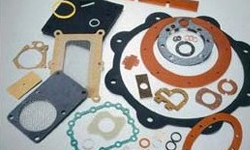
In the demanding world of industrial sealing, where extreme temperatures, aggressive chemicals, and high pressures are daily challenges, selecting the correct gasket material is not just a choice—it's a critical engineering decision. Among the plethora of materials available, PTFE Gaskets stand out as a premier solution for the most severe service conditions. At Kaxite Sealing, with decades of expertise in advanced polymer sealing solutions, we engineer PTFE gaskets that set the benchmark for reliability, purity, and performance. This comprehensive guide delves into the properties, types, applications, and technical specifications of PTFE gaskets, providing you with the knowledge to specify the ideal seal for your application.
Polytetrafluoroethylene (PTFE) is a synthetic fluoropolymer renowned for its exceptional chemical resistance and broad operational temperature range. Its unique molecular structure grants it properties unmatched by most other elastomers or plastics.
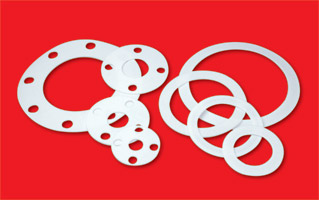
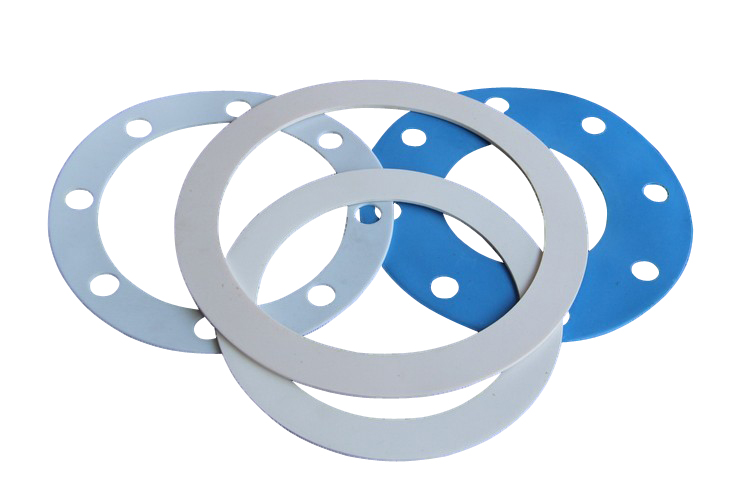
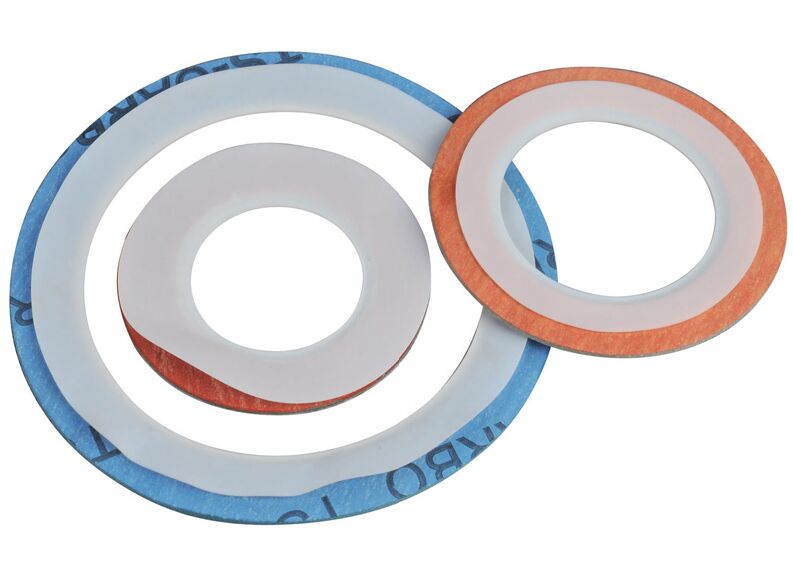
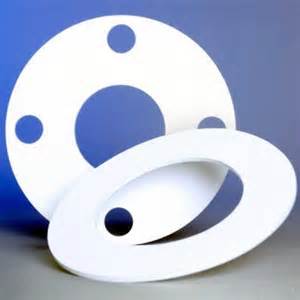
Kaxite Sealing offers a comprehensive portfolio of PTFE gaskets, each designed to meet specific performance and budgetary requirements. From cost-effective filled compounds to high-performance expanded varieties, our products are precision-manufactured to ensure leak-free integrity.
The baseline for chemical purity and performance, made from 100% pure PTFE resin.
| Property | Specification / Value | Test Standard |
|---|---|---|
| Specific Gravity | 2.14 - 2.20 g/cm³ | ASTM D792 |
| Tensile Strength | 25 - 35 MPa (min) | ASTM D638 |
| Elongation at Break | 300 - 500% | ASTM D638 |
| Continuous Service Temperature | -268°C to +260°C (-450°F to +500°F) | - |
| Chemical Resistance | Excellent against virtually all chemicals | - |
| Pressure Rating | Up to 20 Bar (300 PSI) - Dependent on design | - |
Engineered with additives like glass fiber, carbon, graphite, or bronze to improve mechanical properties for specific challenges.
| Filler Type | Key Enhanced Properties | Typical Applications |
|---|---|---|
| Glass Fiber (15-25%) | Increased compressive strength, reduced creep (cold flow), improved wear resistance. | High-load flange connections, pump housings, valve seals. |
| Carbon/Graphite (15-20%) | Enhanced thermal conductivity, improved wear resistance, lower friction. | Heat exchangers, compressor seals, applications requiring heat dissipation. |
| Bronze (40-60%) | Significantly improved thermal conductivity, high compressive strength, excellent wear resistance. | High-temperature heat transfer systems, heavy-duty industrial equipment. |
| Stainless Steel (Micropowder) | Extreme pressure resistance, excellent thermal conductivity, reduced deformation under load. | Ultra-high-pressure vessel seals, aggressive chemical environments with mechanical stress. |
A highly versatile form of PTFE, expanded into a microporous structure, offering superior sealing with lower bolt load.
Correct specification involves more than just selecting the material. The following parameters are crucial for ensuring optimal performance and longevity.
Q: What is the main difference between Virgin PTFE and Filled PTFE gaskets?
A: Virgin PTFE is pure, offering the best chemical resistance and electrical properties but is susceptible to "cold flow" or creep under sustained pressure. Filled PTFE incorporates materials like glass, carbon, or bronze to improve mechanical properties—such as reducing creep, increasing hardness, enhancing thermal conductivity, or improving wear resistance—while slightly trading off some chemical inertness. The choice depends on whether chemical purity or mechanical strength is the primary driver for the application.
Q: Can PTFE gaskets be used for steam service?
A: Yes, PTFE is an excellent material for steam service within its temperature range. For saturated steam lines up to 260°C (500°F), virgin or filled PTFE gaskets perform well. For superheated steam or higher temperatures, it's critical to consult the specific temperature rating of the gasket grade and consider the potential for increased creep. Expanded PTFE (ePTFE) tapes are also very popular for steam line flange seals due to their conformability.
Q: How do I prevent PTFE gaskets from failing due to "cold flow"?
A: Cold flow is the gradual deformation of PTFE under constant load. To mitigate it: 1) Use filled PTFE grades (e.g., glass-filled) designed for improved creep resistance. 2) Ensure proper flange design with adequate gasket contact area and controlled bolt torque—do not over-tighten. 3) Use serrated flange faces to "grip" the gasket and restrict flow. 4) Consider using thicker gaskets for lower compressive stress, or alternatively, for critical applications, explore reinforced PTFE composites or ePTFE materials which exhibit much lower creep.
Q: Are PTFE gaskets suitable for food, pharmaceutical, or ultra-pure applications?
A: Absolutely. Virgin PTFE is the material of choice for these industries. It is FDA compliant, meets USP Class VI requirements, and is often used in WFI (Water for Injection) systems and high-purity chemical processes. Its non-toxic, non-contaminating, and easy-to-clean surface ensures product integrity. Kaxite Sealing offers certified virgin PTFE gaskets manufactured in clean-room conditions for such critical applications.
Q: How do I select the right PTFE gasket type for aggressive acids like sulfuric or hydrofluoric acid?
A: For highly aggressive acids, virgin PTFE is typically the safest choice due to its near-universal chemical inertness. It is the standard for hydrofluoric acid service. For sulfuric acid, virgin PTFE is excellent across all concentrations. The key is to ensure the gasket is made from high-quality, void-free PTFE resin. Avoid filled grades unless the filler material is explicitly proven compatible, as the filler could be susceptible to attack. Always request chemical compatibility charts from your supplier, like Kaxite Sealing, for confirmation.
Q: Can Kaxite Sealing provide custom-shaped PTFE gaskets?
A: Yes, custom fabrication is a core strength at Kaxite Sealing. We specialize in producing PTFE gaskets in any size, shape, and complexity—from simple O-rings and sheet-cut gaskets to complex CNC-machined profiles for pumps, valves, reactors, and proprietary equipment. We work from supplied samples, drawings (DXF, DWG), or CAD models to deliver precision-engineered sealing components that fit perfectly the first time.
The versatility of PTFE makes it indispensable across a wide spectrum of industries. Kaxite Sealing's products are trusted globally in these critical sectors: