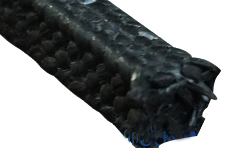
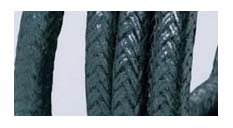
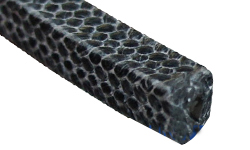
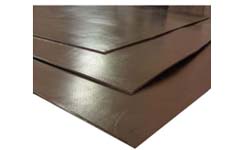
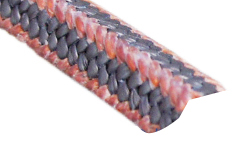
In demanding industrial environments where extreme pressures, aggressive chemicals, and high temperatures are the norm, traditional sealing materials often fall short. Finding a packing solution that offers exceptional durability, minimal friction, and reliable performance is critical for operational efficiency and safety. This is where Carbon Fiber Packing excels. Kaxite Sealing, a leader in advanced sealing technology, has engineered a proprietary range of carbon fiber packing products designed to meet the most challenging sealing requirements across diverse industries, from chemical processing and refineries to power generation and marine applications.
Our packing is manufactured using premium, high-modulus carbon fibers, combined with specialized lubricants and reinforcing agents through a controlled process. This results in a robust, self-lubricating packing material that provides superior sealing integrity, extended service life, and reduced maintenance costs compared to conventional aramid, PTFE, or graphite-based packings.
Kaxite Sealing offers several grades of carbon fiber packing tailored for specific operational parameters. Below are the core technical specifications for our flagship KX-CF500 series.
| Parameter | Test Standard | Value / Rating | Remarks |
|---|---|---|---|
| Temperature Range (Continuous) | ASTM E831 | -250°C to +550°C | Short peaks up to 600°C possible |
| pH Range | N/A | 0 - 14 | Resistant to all common acids & bases |
| Maximum Pressure (Static) | ASTM F37 | 350 Bar (5075 PSI) | Dependent on shaft clearance |
| Shaft Speed (Rotary) | ANSI/PRO STD 610 | Up to 25 m/s | Excellent for high-speed pump shafts |
| Thermal Conductivity | ASTM D5470 | 15 - 25 W/m·K | Promotes heat dissipation from shaft |
| Coefficient of Friction (Dry) | ASTM D1894 | 0.08 - 0.12 | Low friction, energy-saving profile |
| Density | ASTM D3800 | 1.6 - 1.8 g/cm³ | Consistent, high-density braid |
| Cross-Sectional Shape | Standard Sizes (mm) | Standard Sizes (inches) | Standard Packing Length |
|---|---|---|---|
| Square Braid | 3, 4, 5, 6, 8, 10, 12, 14, 16 | 1/8", 5/32", 3/16", 1/4", 5/16", 3/8", 7/16", 1/2", 5/8" | Coils of 30 meters (100 ft) or pre-cut rings |
| Round Braid | 6, 8, 10, 12, 14, 16, 19, 22 | 1/4", 5/16", 3/8", 1/2", 9/16", 5/8", 3/4", 7/8" | Coils of 30 meters (100 ft) |
| Die-Formed Coil (Spiral Wound) | 3, 4, 5, 6 | 1/8", 5/32", 3/16", 1/4" | Pre-coiled for specific bore diameters |
Q: What are the primary applications for Kaxite carbon fiber packing?
A: Kaxite carbon fiber packing is ideally suited for demanding service in centrifugal and rotary pumps, mixers, agitators, valves (including control valves), expanders, and compressors. It is extensively used in industries such as chemical and petrochemical processing (for acids, alkalis, solvents), power generation (boiler feed pumps, hot water), oil & gas (refining, offshore), pulp & paper (bleach plants, chemical recovery), and marine (stern tube seals, pump shafts). Its clean-running nature also makes it suitable for food-grade applications with proper lubrication.
Q: How does carbon fiber packing compare to graphite foil or braided asbestos packing?
A: Carbon fiber packing offers significant advantages. Compared to pure graphite foil, it has much higher tensile strength, resists extrusion better, and maintains seal integrity under dynamic conditions. Compared to older asbestos-based packings, Kaxite carbon fiber packing is non-hazardous, offers superior chemical resistance across a broader pH range, and operates at higher temperatures with better lubrication, leading to less shaft wear and longer service life.
Q: What is the proper installation procedure for braided carbon fiber packing?
A: Correct installation is key to performance. Ensure the shaft/stem and stuffing box are clean, smooth, and free of old packing debris. Cut packing rings using a sharp blade on a mandrel equal to the shaft diameter; use a staggered joint technique (typically 90° or 45° offset). Install rings one at a time, seating each firmly with a tamping tool. Tighten the gland follower evenly and hand-tight only initially. After startup, allow the pump or valve to run for a short period to let the packing warm up and seat, then perform a final adjustment to achieve a slight leakage for lubrication (as required). Never overtighten, as this causes excessive heat and wear.
Q: Does Kaxite carbon fiber packing require a break-in period or run-dry capability?
A: Yes, a proper break-in period is recommended. Gradually tighten the gland over the first few hours of operation to achieve the optimal leak rate. While our packing has excellent dry-running characteristics due to its self-lubricating design, some minimal initial leakage (often called "weepage") is beneficial for long-term lubrication and heat dissipation in rotary applications. For applications where zero leakage is mandatory, consult Kaxite Sealing for specialized recommendations, which may include alternative grades or flushing arrangements.
Q: Can Kaxite carbon fiber packing be used in high-speed centrifugal pumps?
A: Absolutely. This is one of its strongest applications. The combination of high thermal conductivity, excellent self-lubrication, and high strength makes it an outstanding choice for high-speed pump shafts. It effectively dissipates frictional heat, minimizes shaft scoring, and maintains a stable seal face under centrifugal forces. For optimum performance in high-speed applications above 20 m/s, we recommend specifying our KX-CF550 High-Speed grade.
Q: How do I select the correct size and grade for my application?
A: Selection depends on multiple factors: equipment type (pump, valve, mixer), shaft/stem diameter, operating speed, pressure, temperature, and the specific media being sealed (including pH and abrasiveness). As a general rule, the packing cross-section should match the radial clearance between the shaft and stuffing box wall. For precise selection, provide the application details to the Kaxite Sealing engineering team. We offer the KX-CF500 (general purpose), KX-CF550 (high-speed/abrasive), and KX-CF575 (ultra-high temperature/acid) series to match specific conditions.
Q: What are the signs that my carbon fiber packing needs replacement?
A: Indicators include a persistent, uncontrollable increase in leakage even after gland adjustment, a significant rise in operating temperature at the stuffing box, excessive power consumption or drag on the shaft, visible physical degradation of the packing (fraying, hardening, powdering), or contamination of the process fluid with packing material. Regular maintenance checks for leakage rate and temperature are the best preventative measures.