In the world of precision engineering and industrial sealing, material selection is paramount. For environments where extreme temperatures, aggressive chemicals, or stringent regulatory compliance are the norm, standard elastomeric seals often fall short. This is where advanced polymer seals, specifically those crafted from PTFE (Polytetrafluoroethylene) and PEEK (Polyetheretherketone), become indispensable. As a leader in high-performance sealing solutions, Kaxite Sealing specializes in engineering and manufacturing superior PTFE & PEEK Seals designed to deliver unmatched reliability and longevity in the most challenging conditions.
Our commitment at Kaxite Sealing is to provide components that are not just parts, but critical enablers of efficiency, safety, and operational continuity. Through advanced polymer science, precision machining, and a deep understanding of application dynamics, we create seals that set the benchmark for performance.
Understanding the core characteristics of PTFE and PEEK is essential for selecting the optimal seal for your application. While both are high-performance thermoplastics, they offer distinct property profiles.
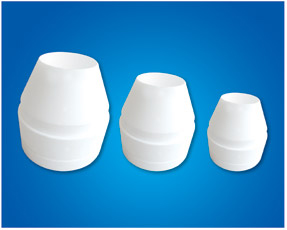
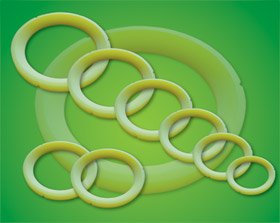
Kaxite Sealing offers a comprehensive portfolio of PTFE and PEEK seals, available in standard and custom-engineered designs. Our manufacturing process ensures precise tolerances, superior surface finishes, and material integrity.
To address specific performance requirements, Kaxite Sealing utilizes modified compounds:
| Material Grade | Key Fillers/Enhancements | Primary Benefits | Typical Applications |
|---|---|---|---|
| PTFE + Glass Fiber | Glass Microspheres or Fibers | Improved compressive strength, reduced creep, better dimensional stability. | Static gasketing, heavy load bearings. |
| PTFE + Carbon/Graphite | Carbon Powder or Graphite Fibers | Enhanced thermal conductivity, improved wear resistance, self-lubricating. | Compressor rings, rotating shaft seals. |
| PTFE + Bronze | Bronze Powder | Significantly increased hardness, excellent wear resistance, high thermal conductivity. | Thrust washers, bearings in dry or lubricated service. |
| Virgin PEEK | Unfilled Polymer | High purity, excellent chemical and hydrolysis resistance, good toughness. | Semiconductor, medical implant, and ultra-pure fluid handling. |
| PEEK + 30% Carbon Fiber | Carbon Fiber Reinforcement | Maximum stiffness, strength, and creep resistance. Excellent wear properties. | High-performance dynamic seals, valve seats, aerospace components. |
| PEEK + 10% Graphite + 10% PTFE | Graphite & PTFE Blends | Optimized for low friction and wear without carbon fiber's abrasiveness. | Bushings, bearings, and seals requiring smooth operation. |
| Parameter | PTFE (Virgin) | PTFE (25% Glass Filled) | PEEK (Virgin) | PEEK (30% Carbon Filled) | Test Standard |
|---|---|---|---|---|---|
| Tensile Strength | 25 - 35 MPa | 17 - 24 MPa | 90 - 100 MPa | 160 - 200 MPa | ASTM D638 |
| Continuous Service Temp. | 260°C | 260°C | 250°C | 250°C | - |
| Coefficient of Friction | 0.05 - 0.10 | 0.10 - 0.15 | 0.30 - 0.40 | 0.25 - 0.35 | ASTM D1894 |
| PV Limit (Dry) | 1,000 - 10,000 psi-fpm | 10,000 - 20,000 psi-fpm | 15,000 - 25,000 psi-fpm | 30,000 - 50,000 psi-fpm | - |
| Chemical Resistance | Excellent | Excellent | Very Good | Very Good | - |
Q: When should I choose a PTFE seal over a PEEK seal, or vice versa?
A: The choice hinges on your application's primary demands. Choose PTFE seals from Kaxite Sealing when your priority is maximum chemical inertness, the lowest possible friction, or compliance with food/pharmaceutical standards in static or slow-moving applications. Opt for PEEK seals when you require high mechanical strength, superior resistance to wear and abrasion in dynamic settings, need to withstand very high continuous temperatures with minimal creep, or must meet flame/smoke toxicity standards (e.g., in aerospace or rail). For aggressive chemical environments with high mechanical stress, a detailed review with our engineering team is recommended.
Q: Can PTFE and PEEK seals handle both static and dynamic sealing functions?
A: Yes, both materials are used in static (gaskets, flange seals) and dynamic (reciprocating, rotating) applications. However, their performance differs. Pure PTFE has a relatively high wear rate and cold flow tendency under load, making it less ideal for high-pressure, high-speed dynamic seals without reinforcement or careful design. Filled PTFE compounds from Kaxite Sealing dramatically improve wear resistance and creep performance. PEEK, especially carbon-fiber reinforced grades, is inherently excellent for demanding dynamic sealing due to its high strength, stiffness, and outstanding wear properties, handling much higher PV (Pressure-Velocity) values.
Q: What are the key design considerations for installing PTFE or PEEK seals?
A: Proper installation is critical. Key considerations include: 1. Surface Finish: Seal gland and mating hardware surfaces should have an appropriate finish (typically 8-16 µin Ra for dynamic, 16-32 µin Ra for static) to ensure proper sealing without excessive wear. 2. Clearances & Extrusion Gaps: These polymers are less elastic than rubber. Anti-extrusion devices (e.g., Kaxite backup rings) or limited gland clearances are often necessary, especially at high pressures. 3. Thermal Expansion: PTFE and PEEK have higher thermal expansion coefficients than metals. Designs must account for dimensional changes across the operating temperature range to avoid loss of seal stress or over-compression. 4. Avoid Notching: Use installation tools with generous lead-in chamfers to prevent cutting or nicking the seal during assembly.
Q: Are Kaxite Sealing PTFE and PEEK seals suitable for use in ultra-high vacuum (UHV) or semiconductor applications?
A: Absolutely. Both materials, in their high-purity forms, are mainstays in critical environments. Virgin PTFE is renowned for its low outgassing properties, making it a standard for high and ultra-high vacuum systems. Virgin PEEK offers superior strength and temperature resistance with similarly low outgassing when properly processed. Kaxite Sealing manufactures seals for these industries using controlled, cleanroom-compatible processes, and can provide materials with certified low levels of ionic contaminants and total outgassing rates (TML/CVCM per ASTM E595) to meet the strict requirements of semiconductor fabrication, space simulation, and particle physics research.
Q: How does Kaxite Sealing ensure the quality and consistency of its polymer seals?
A: Quality is integral to our manufacturing philosophy. We implement a multi-stage process: 1. Material Sourcing & Verification: We source premium, traceable polymer resins from leading suppliers and perform incoming material checks. 2. Precision Manufacturing: Seals are produced using state-of-the-art CNC machining or compression molding equipment, ensuring dimensional accuracy per ISO 286 or customer-specific drawings. 3. In-process Inspection: Critical dimensions are monitored throughout production. 4. Final QC & Documentation: Every batch undergoes final inspection. We provide material certifications, dimensional reports, and can perform functional testing as required. Our quality system is designed to meet the demands of industries like oil & gas, aerospace, and medical technology.
The unique properties of these advanced polymers make them vital across diverse sectors where failure is not an option.