In the world of industrial sealing, few materials offer the unique combination of properties found in copper. Copper gaskets are the go-to solution for applications where reliability under extreme pressure, temperature, and corrosive conditions is non-negotiable. Engineered for perfection, these gaskets serve as critical components in creating leak-proof seals in systems where failure is not an option. At Kaxite Sealing, we leverage decades of metallurgical expertise to produce copper gaskets that meet the most stringent international standards, ensuring performance, durability, and safety.
Unlike polymer-based seals, copper gaskets are metallic static seals that deform plastically when compressed between two flanges. This deformation fills the microscopic imperfections on the flange surfaces, creating a hermetic barrier against fluid or gas leakage. The inherent qualities of copper—such as excellent thermal conductivity, high malleability, corrosion resistance, and non-magnetic properties—make it indispensable in industries like oil & gas, power generation, aerospace, and high-vacuum technologies.
Selecting the right gasket requires a deep understanding of its technical specifications. Below are the critical parameters that define the performance and suitability of our copper gaskets for your specific application.
Our gaskets are manufactured to precise dimensional tolerances as per ASME B16.20, B16.21, DIN, and other global norms.
| Parameter | Typical Range / Specification | Notes |
|---|---|---|
| Thickness (Gauge) | 0.5 mm (0.020") to 3.0 mm (0.125") | Thinner gauges for low-pressure sealing, thicker for high-pressure or uneven flanges. |
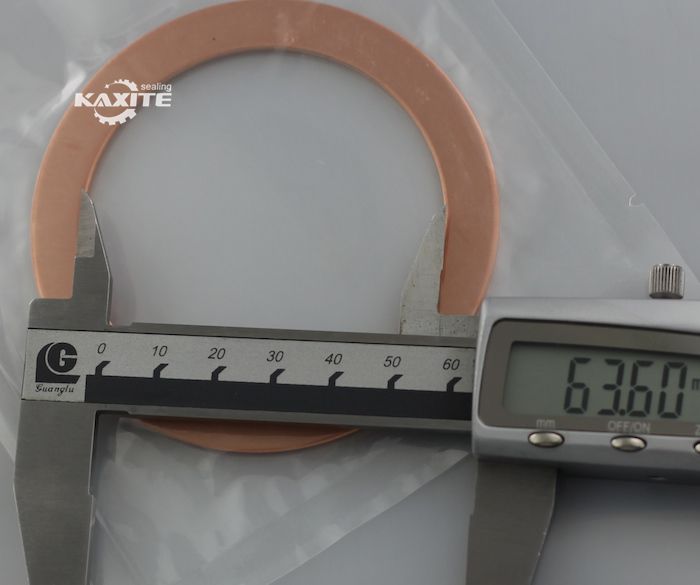
| Standard Outer Diameter (OD) | 15 mm (0.6") to 1500 mm (60") | Custom sizes beyond this range are available. |
| Inner Diameter (ID) | As per flange bore size or bolt circle. | Precision-machined to prevent flow restriction. |
| Facing / Surface Finish | Ra 3.2 µm to Ra 0.8 µm | Smooth finish for optimal contact; serrated or grooved patterns available for enhanced sealing bite. |
| Hardness (Rockwell B Scale) | Soft Annealed (RB 40-60), Half-Hard (RB 65-75), Full-Hard (RB 80-90) | Softer tempers conform better; harder tempers resist blowout at higher pressures. |
| Pressure Rating | Up to 30,000 psi (2000 Bar) | Dependent on flange design, temper, and gasket geometry. |
| Temperature Range | -250°C to +600°C (-418°F to +1112°F) | Performance may vary; consult for cryogenic or extreme oxidizing environments. |
| Gasket Type | Typical Profile | Primary Applications |
|---|---|---|
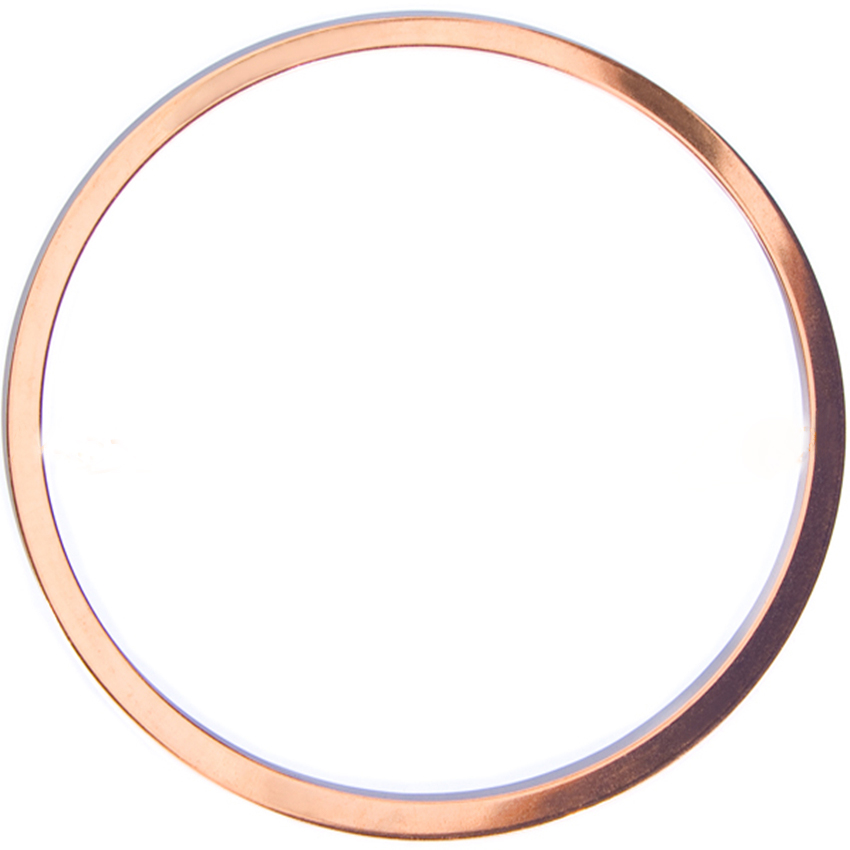
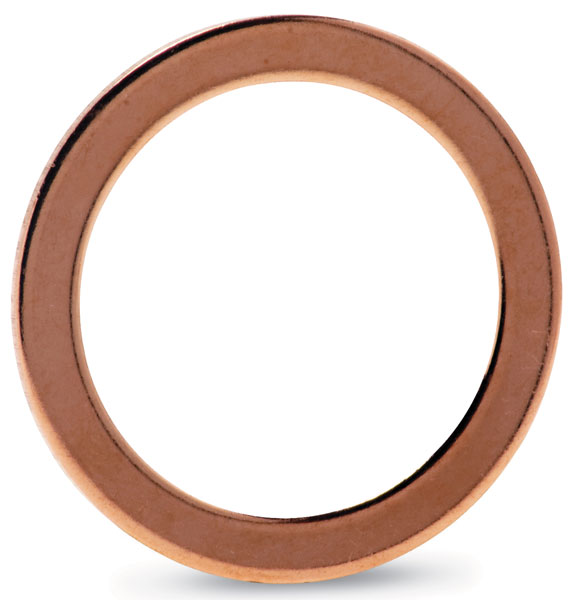
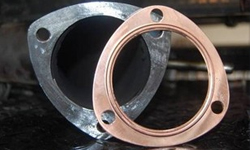
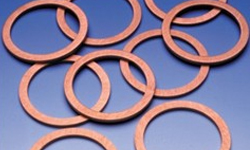
| Flat Ring Gasket (Plain/Flat) | Simple solid ring, rectangular cross-section. | General service for raised face (RF) flanges, heat exchangers, low to medium pressure. |
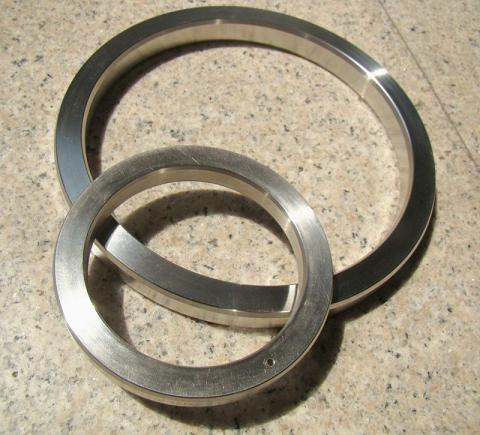
| RTJ Gasket (Ring Type Joint) | Octagonal or Oval cross-section with grooves. | High-pressure piping systems (HP), oil & gas wellheads, API 6A applications. |
| Spiral Wound with Copper Fill | V-shaped metal strip wound with copper filler. | High-temperature steam lines, refinery applications, wide pressure-temperature cycling. |
| Corrugated / Serrated Gasket | Flat ring with concentric grooves or serrations. | Creates high unit load for sealing in fuel systems, vacuum systems. |
| Lens Ring Gasket | Convex lens-shaped cross-section. | High-pressure vessel closures, reactor heads, specialized industrial equipment. |
Q: When should I choose a copper gasket over a rubber or graphite gasket?
A: Copper gaskets are selected for extreme conditions. Choose copper for applications involving very high temperatures (exceeding 400°C where elastomers burn and graphite oxidizes), ultra-high pressures, high vacuum or hermetic sealing needs, exposure to radiation, or where non-magnetic properties are crucial (e.g., MRI machines). For standard water, oil, or low-pressure steam at moderate temperatures, rubber or composite gaskets may be more cost-effective.
Q: Can copper gaskets be reused after installation?
A: Generally, copper gaskets are not designed for reuse. They achieve their seal through controlled plastic deformation (crushing) when the flange bolts are torqued. Once disassembled, the gasket has been work-hardened and its profile altered, compromising its ability to re-fill the flange imperfections effectively. Reuse can lead to leaks. Kaxite Sealing always recommends installing a new gasket for critical joints.
Q: How do I determine the correct hardness (temper) for my application?
A: The temper choice balances conformability and resistance to blowout. Use Soft Annealed copper for flanges with uneven surfaces or low bolt load, as it conforms easily. Use Half-Hard for most standard applications with good flange finish and standard torque. Use Full-Hard or alloyed copper for very high internal pressure systems to prevent the gasket from extruding into the flange gap. Our engineers at Kaxite Sealing can assist based on your specific flange design and operating conditions.
Q: Are copper gaskets suitable for oxidizing atmospheres or certain chemicals?
A: Copper has good general corrosion resistance but is not universally inert. It performs well in reducing atmospheres, vacuum, and against many organic acids, freshwater, and seawater. However, it is not recommended for prolonged service in strongly oxidizing acids (like nitric acid) or atmospheres with high sulfur content at elevated temperatures, where rapid degradation can occur. For aggressive chemical service, a detailed compatibility check is necessary.
Q: What is the proper installation torque procedure for a copper ring gasket?
A: Correct installation is critical. Always start with clean, undamaged flanges. Place the gasket centered on the flange. Use a crisscross (star) pattern to tighten the bolts in multiple progressive passes—typically to 30%, 60%, and finally 100% of the recommended torque value. This ensures even compression and prevents gasket distortion. The final torque value depends on the bolt size, grade, flange material, and gasket type. Refer to ASME PCC-1 or the equipment manufacturer's guidelines. Under-torquing can cause leaks; over-torquing can crush the gasket excessively or damage flanges.
Q: Does Kaxite Sealing offer custom-shaped copper gaskets?
A: Absolutely. While we stock a wide range of standard ASME and DIN sizes, a significant portion of our work involves custom-engineered sealing solutions. We can manufacture copper gaskets in virtually any shape—obround, square, with tabs, odd bolt patterns, or complex geometries—from supplied drawings or samples. Our advanced CNC machining and laser cutting capabilities ensure precise dimensions and fast turnaround for prototypes and production runs.
At Kaxite Sealing, we don't just supply gaskets; we deliver engineered sealing confidence. Our process begins with stringent raw material selection, sourcing only certified copper from reputable mills. Every batch is verified for purity and mechanical properties. Our manufacturing floor combines state-of-the-art CNC machining, precision stamping, and skilled hand-finishing for specialized profiles like RTJ rings. Each copper gasket undergoes rigorous quality control checks, including dimensional verification with coordinate measuring machines (CMM) and visual inspection for surface defects.
We understand that a gasket is a small component with a massive responsibility. Therefore, our technical support team works closely with clients from the design phase, recommending the optimal material grade, temper, and design to ensure longevity and leak-free performance. Whether for a nuclear facility, a deep-sea oil rig, or a cutting-edge semiconductor fabrication plant, Kaxite Sealing copper gaskets are built to seal the most challenging environments on earth and beyond.