Imagine a refinery where high-temperature steam, corrosive hydrocarbons, and extreme pressure cycles converge at a single flange connection. A simple leak here can halt production, trigger safety alarms, and cost thousands per hour. This is where double jacket gaskets earn their reputation. These gaskets combine a soft filler with a metallic outer shell, delivering resilience, heat resistance, and exceptional sealability under harsh conditions. But exactly What industries commonly use double jacket gaskets? From petrochemical plants and power generation stations to marine engineering and HVAC systems, this sealing solution is chosen whenever reliability can’t be compromised. With decades of field data and engineering refinement, Ningbo Kaxite Sealing Materials Co., Ltd. has seen these gaskets solve problems across hot oil pipelines, heat exchangers, autoclaves, and flue gas ducts. In the following guide, you’ll discover the real-world applications and selection criteria that help procurement teams specify the perfect double jacket gasket without overspending or risking downtime. Let’s dive into the industries and the engineering behind the seal.
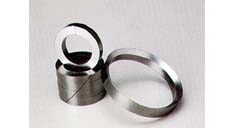
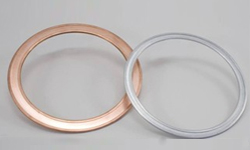
Picture a maintenance engineer at a chemical plant staring at a flange that has leaked three times in six months. Standard spiral wound gaskets buckle under thermal cycling; soft PTFE gaskets extrude at 350°C. The fix? A double jacket gasket. Its layered construction mimics a sandwich—a non-metallic filler (graphite, ceramic fiber, PTFE) encased in a two-piece metallic jacket, usually stainless steel, Inconel, or Monel. The jacket protects the filler from aggressive media, distributes bolt load evenly, and provides a spring-like recovery that maintains bolt tension even when the flange faces cock slightly due to differential expansion. This design thrives in non-standard flanges, heat exchangers with narrow seating surfaces, and large-diameter vessels where conformance to slight irregularities is crucial. Ningbo Kaxite Sealing Materials Co., Ltd. manufactures these gaskets in diameters exceeding 2 meters, with jacket thicknesses from 0.3 mm to 0.5 mm, ensuring both flexibility and strength.
When a procurement specialist asks, “What industries commonly use double jacket gaskets?”, the list is long but driven by one factor: operating conditions that destroy generic seals. Consider a steam turbine casing in a power plant. Startup ramps from ambient to 540°C in minutes; thermal shock rips apart ordinary gaskets. Double jacket gaskets with graphite filler handle 600°C and 100 bar, maintaining seal integrity through hundreds of cycles. In refineries, catalytic cracking units run hydrogen-rich gas at high pressure; a leaking flange is a fire hazard. Here, a stainless steel jacket with flexible graphite filler meets NACE MR0175 for sour service. The marine industry uses them for exhaust gas economizers and boiler manholes where salt spray and vibration challenge every seal. Even food processing plants rely on jacketed gaskets for edible oil evaporators, using PTFE fillers to comply with FDA regulations.
Ningbo Kaxite routinely supplies these industries with gaskets engineered to specific standards, including ASME B16.20 and custom dimensions. One client in the offshore sector reduced leakage-related shutdowns by 70% after switching to our double jacket design in their produced water reinjection pumps.
| Industry | Typical Equipment | Challenges Solved |
|---|---|---|
| Petrochemical & Refining | Heat exchangers, catalytic reactors, distillation columns | High temperature (up to 600°C), corrosive hydrocarbons, cyclic stress |
| Power Generation | Steam turbines, boiler manways, feedwater heaters | Thermal cycling, superheated steam, differential expansion |
| Marine & Offshore | Exhaust gas heat recovery units, bilge piping, deck machinery | Saltwater corrosion, vibration, limited space flanges |
| Chemical Processing | Autoclaves, reactors, acid transfer lines | Aggressive chemicals, extreme pH, pressure pulsations |
| Pharmaceutical & Food | Clean steam lines, evaporators, drying ovens | Purity requirements, CIP/SIP temperatures, compliance |
Imagine a purchasing manager for a fertilizer plant who needs to replace gaskets in a nitric acid preheater. The old gaskets lasted only six months due to acid attack. The manager contacts Ningbo Kaxite and our technical team maps the media, temperature (280°C), pressure (20 bar), and flange type (raised face). The recommendation: a jacketed gasket with 304 stainless steel jacket and PTFE filler, precisely cut to match the flange ID/OD. The result? Service life tripled. Selection always starts with four parameters: fluid compatibility, operating temperature range, flange type and dimensions, and required seating stress. Double jacket gaskets typically need 30–60 MPa seating stress, which must be achievable with the available bolting. Ningbo Kaxite provides a free selection table and calculation support, including gasket factors for ASME VIII flange design.
| Parameter | Typical Range | Considerations |
|---|---|---|
| Jacket Material | Stainless Steel 304/316, Inconel 600/625, Monel 400 | Corrosion resistance vs. cost; match to flange material to avoid galvanic corrosion |
| Filler Material | Flexible Graphite, Ceramic Fiber, PTFE, Mica-Graphite | Temperature ceiling, chemical compatibility, compliance (e.g., FDA) |
| Temperature Range | -200°C to +600°C (depending on jacket/filler combination) | Cyclic stability; graphite excels, PTFE limited to ~260°C |
| Pressure Range | Vacuum to 250 bar (thin jackets for low load, thick for high stress) | Confirm gasket crush resistance; use inner rings for high pressure |
| Flange Type | Flat face, raised face, tongue-and-groove, custom | Jacketed gaskets suit narrow seating widths and non-standard geometries |
Q: What industries commonly use double jacket gaskets?
A: They are prevalent in industries where process conditions demand high temperature, high pressure, and corrosion resistance simultaneously. The petrochemical sector leads, followed by power generation, offshore, chemical processing, and even HVAC systems for district heating. Ningbo Kaxite has supplied these gaskets to over 50 countries, with a significant share going to oil and gas operators in the Middle East, where high-sulfur crude processing requires robust sealing solutions.
Q: Can double jacket gaskets be reused after a maintenance shutdown?
A: Generally, reuse is not recommended because the metallic jacket work-hardens and the filler may lose resilience during operation. However, if the gasket was only lightly loaded and shows no signs of crushing or corrosion, it might be reused in low-criticality applications. Our engineers at Ningbo Kaxite always advise a visual inspection—look for jacket wrinkling, filler extrusion, or cracking. For critical joints, replace every time to avoid unscheduled downtime. We keep a large inventory of standard sizes to enable quick replacement.
Q: What are the common causes of double jacket gasket failure?
A: Incorrect installation torque, uneven bolt tightening, excessive bolt load causing jacket crushing, and using the wrong jacket material for the media are typical culprits. In one case, a plant used a plain carbon steel jacket in a wet H₂S environment; rapid sulfidic corrosion caused a blowout within weeks. Ningbo Kaxite’s application engineering team helps clients avoid such mistakes by reviewing process data and suggesting the optimal jacket-filler pairing. We even offer onsite training for bolt-up procedures.
Q: What industries commonly use double jacket gaskets for high vibration equipment?
A: Marine propulsion engines, reciprocating compressors, and pump casings are classic examples. The inertia of the gasket’s metal shell combined with the damping effect of the filler reduces vibration-induced fretting and blow-by. Ningbo Kaxite has developed special double jacket profiles with a corrugated core that enhances recovery under dynamic loads, making them ideal for skid-mounted compressor packages on offshore platforms.
When a plant manager in Texas needed 48-inch diameter double jacket gaskets for a gas turbine exhaust duct within 10 days, standard supply chains failed. They called Ningbo Kaxite Sealing Materials Co., Ltd. Our rapid-response team laser-cut the jackets from 316L stainless steel, filled with high-purity ceramic fiber, and shipped with full material certificates—arriving on day 7. This kind of problem-solving is why procurement professionals across the globe partner with us. We don’t just manufacture gaskets; we deliver leak-free reliability backed by ISO 9001 quality systems and a no-compromise approach to material traceability. Whether your challenge is a corrosive acid line, superheated steam manifold, or a cryogenic nitrogen circuit, we have the double jacket gasket solution ready.
We invite you to share your most demanding sealing scenario in the comments below or reach out for a tailored recommendation. What has been your experience with double jacket gaskets in your industry? Join the conversation and let’s keep fluids where they belong.
For over 15 years, Ningbo Kaxite Sealing Materials Co., Ltd. has been a trusted partner for industrial sealing solutions worldwide. From our manufacturing base in China, we design and produce double jacket gaskets, spiral wound gaskets, PTFE envelope gaskets, and sheet materials that conform to international standards such as ASME, DIN, and JIS. Our technical team supports clients from initial specification to after-sales troubleshooting, helping reduce total cost of ownership through longer service life and reduced leakage events. We serve procurement and engineering teams in over 50 countries with fast lead times and comprehensive documentation. Visit us at https://www.kxtsealing.cn or email our sales department at [email protected] for a consultation or quote. Let’s engineer the perfect seal together.
Adams R., 2023, "Double Jacket Gasket Performance in Cyclic Thermal Conditions for Refining Services", Journal of Pressure Vessel Technology, Vol. 145(4).
Li H., Chen W., 2022, "Corrosion Mechanisms of Metallic Jacketed Gaskets in Sour Water Environments", Corrosion Science, Vol. 198.
Mohammed S., Al-Harbi T., 2021, "Experimental Analysis of Gasket Recovery in Large-Diameter Heat Exchanger Flanges", International Journal of Pressure Vessels and Piping, Vol. 194.
Patel N., 2023, "Optimizing Gasket Selection for Hydrogen Service: A Case Study on Double Jacket Designs", Hydrogen Process Engineering, Vol. 12(2).
Rodriguez M., Santos L., 2021, "Leakage Rate Prediction of Jacketed Gaskets Using Finite Element Modeling", Engineering Failure Analysis, Vol. 125.
Kumar V., 2020, "Comparative Life-Cycle Cost of Spiral Wound, Kammprofile, and Double Jacket Gaskets in Refinery Heat Exchangers", Energy & Fuels, Vol. 34(8).
Yamamoto K., Tanaka S., 2022, "Influence of Filler Material on Tightness Class of Double Jacket Gaskets for ASME Flanges", Journal of Nuclear Science and Technology, Vol. 59(5).
Zhao Y., Liu J., 2021, "Stress Relaxation of Flexible Graphite Fillers in Metal Jacketed Gaskets at Elevated Temperatures", Tribology International, Vol. 154.
Gupta D., 2023, "Field Validation of Double Jacket Gasket Reliability in Offshore LNG Applications", Offshore Technology Conference Paper OTC-32617-MS.
Ivanov P., 2020, "Standardization of Double Jacket Gasket Dimensions for European District Heating Networks", Energy Procedia, Vol. 167.