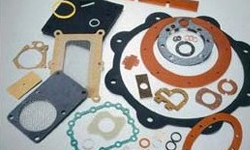
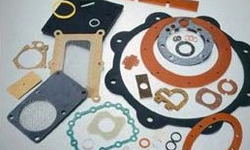
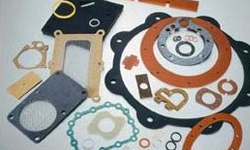
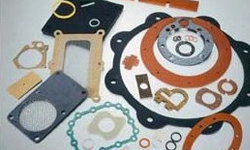
In the vast and intricate world of industrial machinery, automotive systems, plumbing, and countless other applications, there exists a silent, often overlooked hero: the rubber gasket. These unassuming components are the first line of defense against leaks, contamination, pressure loss, and environmental ingress. At Kaxite Sealing, with decades of expertise in polymer engineering, we understand that the performance and longevity of an entire system can hinge on the quality and suitability of its gaskets. This comprehensive guide delves into the technical specifics, material science, and critical selection criteria for rubber gaskets, positioning Kaxite Sealing as your premier partner for reliable sealing solutions.
A rubber gasket is a mechanical seal designed to fill the space between two or more mating surfaces, preventing leakage from or into the joined objects while under compression. Unlike rigid seals, rubber gaskets offer the crucial advantage of conformability. They can compensate for minor surface imperfections, thermal expansion, and vibrational movements, ensuring a consistent seal under dynamic conditions. The effectiveness of a gasket is determined by a precise interplay of its material composition, geometric design, and the specific demands of its operating environment.
The choice of elastomer is the single most critical factor in gasket performance. Each material offers a unique profile of resistance and physical properties. Kaxite Sealing manufactures gaskets from a wide range of high-quality compounds to meet every conceivable challenge.
To specify a gasket correctly, engineers must consider a comprehensive set of parameters. The tables below outline the standard and advanced specifications for Kaxite Sealing rubber gaskets.
| Parameter | ASTM Test Method | Typical Range | Significance |
|---|---|---|---|
| Hardness (Shore A) | D2240 | 40 to 90 Durometer | Measures resistance to indentation. Softer gaskets conform better; harder ones resist extrusion. |
| Tensile Strength | D412 | 10 to 25 MPa (min) | Maximum stress the material can withstand while being stretched before breaking. |
| Elongation at Break | D412 | 100% to 600% | Indicates flexibility and ability to stretch without tearing. |
| Compression Set | D395 | 10% to 40% (Method B, 22 hrs) | Measures permanent deformation after compression. Lower percentage indicates better recovery. |
| Specific Gravity | D792 | 1.0 to 2.0 | Density relative to water. Affects material cost and weight. |
| Material | Temp. Range (°C) | Oil/Fuel Resistance | Weather/Ozone | Water/Steam | Acid/Alkali Resistance |
|---|---|---|---|---|---|
| NBR (Nitrile) | -40 to +120 | Excellent | Poor | Good | Fair to Good |
| EPDM | -50 to +150 | Poor | Excellent | Excellent | Excellent |
| Silicone | -60 to +230 | Fair | Excellent | Good | Fair |
| FKM (Viton®) | -20 to +250 | Excellent | Excellent | Good | Excellent |
| Neoprene | -40 to +100 | Good | Excellent | Excellent | Good |
Beyond material, the design and production process defines a gasket's capability. Kaxite Sealing employs state-of-the-art techniques to ensure precision and consistency.
Surface finishes and enhancements can further improve performance. Kaxite Sealing offers options such as adhesive backing for easy installation, fabric or metal inserts for reinforcement, and special coatings to reduce friction or enhance chemical resistance.
How do I select the right rubber gasket material for my application?
Material selection is a systematic process. First, identify all fluids the gasket will contact (e.g., engine oil, hot water, acid). Second, determine the continuous and peak operating temperatures. Third, consider pressure requirements and any dynamic movement. Fourth, evaluate environmental factors like UV exposure or ozone. Cross-reference these requirements with material resistance charts, like those provided by Kaxite Sealing, to narrow down the optimal elastomer.
What is the difference between a rubber gasket and an O-ring?
Both are seals, but their form and function differ. An O-ring is a torus (doughnut-shaped) seal that sits in a gland (groove) and seals by radial compression. It is typically used in dynamic (moving) or static applications with groove confinement. A gasket is usually a flat seal of various profiles (sheet, cut, molded) that seals by axial compression between two flanges or faces. Gaskets are generally used for static sealing of larger, often irregularly shaped, interfaces.
Why does my rubber gasket fail prematurely?
Premature failure can stem from several root causes: Chemical Incompatibility: Swelling, softening, or cracking indicates the fluid is attacking the polymer. Temperature Extremes: Exceeding the material's range can cause hardening/brittleness or excessive softening. Compression Set: Using a material with poor recovery leads to permanent flattening and loss of sealing force. Improper Installation: Under-torquing, over-torquing, or misalignment can cause leaks. Extrusion: High pressure can force soft material into flange gaps, cutting or damaging it.
What does "Compression Set" mean, and why is it important?
Compression set is a measure of a rubber material's ability to return to its original thickness after prolonged compression. It is expressed as a percentage of the original deflection. A low compression set (e.g., 10-20%) is critical for applications where the gasket must maintain sealing force over long periods during thermal cycles or where bolt torque may relax. A high compression set means the gasket remains flattened and loses its sealing resilience.
Can Kaxite Sealing produce custom rubber gaskets?
Absolutely. While we stock a wide range of standard shapes and materials, custom manufacturing is a core competency at Kaxite Sealing. We can engineer and produce gaskets to your exact specifications, whether from supplied CAD drawings or samples. Our technical team can also advise on material selection and design optimization for performance and cost-efficiency, supporting projects from prototype through to full-scale production.
How should rubber gaskets be stored to maximize shelf life?
Proper storage is essential to prevent degradation before use. Store gaskets in a cool, dark, and dry environment, ideally between 10°C and 25°C (50°F and 77°F). Avoid exposure to direct sunlight, ozone sources (like electric motors), excessive heat, or humidity. Do not hang gaskets on hooks, as this can cause permanent deformation. Keep them in their original packaging until ready for use, lying flat where possible.
The versatility of rubber gaskets means they are specified across diverse industries. Here are key considerations for major sectors: