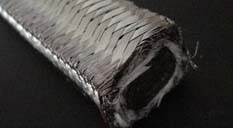
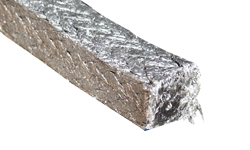
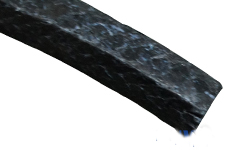
For engineers and plant managers navigating the demanding world of industrial sealing, selecting the right packing material is a critical decision impacting efficiency, safety, and operational cost. Among the plethora of options, Graphite Packing stands out as a premier solution for extreme conditions. At Kaxite Sealing, with decades of expertise in advanced sealing technology, we have engineered graphite packing products that set industry benchmarks for reliability and performance. This comprehensive guide delves into the specifics of graphite packing, presenting detailed technical parameters and answering the most pressing questions to inform your selection process.
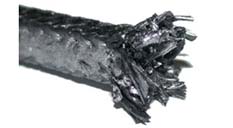
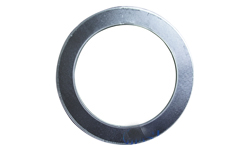
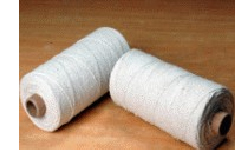
Graphite packing is manufactured from high-purity, flexible graphite foil that is reinforced and converted into tape, coil, or die-molded ring sets. Its exceptional properties stem from the laminated crystalline structure of graphite, which provides a unique combination of characteristics essential for modern sealing challenges.
Kaxite Sealing's graphite packing is further enhanced with proprietary treatments and reinforcement materials, such as Inconel wire or high-grade austenitic stainless steel foils, to boost mechanical strength and resilience under dynamic conditions.
Our product line is categorized to meet specific application demands, from general service to ultra-high-pressure valve stems. The following tables outline the standard specifications and performance data for Kaxite Sealing's core graphite packing series.
Ideal for pumps, valves, and agitators in chemical, petrochemical, and power generation industries.
| Parameter | Specification / Value |
|---|---|
| Material Composition | 98%+ Pure Flexible Graphite, Reinforced with 316SS Foil |
| Temperature Range (Continuous) | -400°F to 850°F (-240°C to 454°C) in air |
| pH Range | 0 - 14 (excluding strong oxidizing agents at high temp) |
| Density (Typical) | 1.7 - 1.9 g/cm³ |
| Thermal Conductivity | >100 W/m·K (axial) |
| Pressure Limit (Rotary) | Up to 1500 psi (100 bar) |
| Available Forms | Spool, Die-Formed Rings, Sheet |
| Standard Sizes (Square Section) | 1/4", 3/8", 1/2", 5/8", 3/4", 1" |
Designed for severe service valve stems, high-pressure pumps, and applications with potential for gap extrusion.
| Parameter | Specification / Value |
|---|---|
| Material Composition | Flexible Graphite with Inconel 600 Wire Insert & Anti-Extrusion Rings |
| Temperature Range (Continuous) | -400°F to 1200°F (-240°C to 649°C) in inert gas |
| pH Range | 0 - 14 |
| Compression Recovery | >40% |
| Pressure Limit (Static/Valve) | Up to 5000 psi (345 bar) |
| Leakage Rate (Class) | Meets API 622 / TA-Luft standards |
| Special Feature | Integral anti-extrusion rings prevent packing blow-out |
Q: How does graphite packing compare to traditional PTFE or asbestos packings?
A: Graphite packing offers superior performance in high-temperature and high-pressure applications compared to PTFE, which is limited to about 500°F (260°C). It is chemically more inert than many organic fibers and is a direct, superior replacement for legacy asbestos packings, providing better thermal stability, lubrication, and environmental safety. Kaxite Sealing graphite packings require less maintenance and adjustment than many traditional styles.
Q: Is graphite packing suitable for high-speed rotary equipment like centrifugal pumps?
A: Yes, but specific grades are recommended. For high-speed rotary applications, it is crucial to use a graphite packing reinforced with metal foil (like our GX-200 series) or internally lubricated with special agents to enhance its durability and heat dissipation. Proper installation and break-in procedures, which we provide in our technical manuals, are essential to prevent excessive shaft wear and achieve optimal service life.
Q: Can graphite packing handle stem or shaft misalignment?
A: Flexible graphite packing has excellent conformability and can accommodate minor to moderate shaft misalignment and runout better than many rigid packing materials. Its self-lubricating property also helps in such conditions. However, for severe or chronic misalignment, the root cause should be corrected, and a consultation with Kaxite Sealing engineers is advised to recommend a packing style with enhanced resilience.
Q: What is the correct installation procedure for die-formed graphite rings?
A: Proper installation is key. The stuffing box must be clean and free of old packing. Rings should be installed one at a time, staggering the seams by 90 degrees. Use a proper sizing mandrel to ensure rings are not overstretched. A gland follower is used to compress the packing evenly. Final tightening should be performed after the equipment has been run and heated to operational temperature, following a specific torque procedure outlined in our installation guide to avoid over-compression.
Q: How do I select the right graphite packing density or style for my application?
A: Selection depends on multiple factors: equipment type (rotary, reciprocating, valve), media (chemical, temperature, abrasiveness), pressure, shaft speed, and allowable leakage. As a general rule, higher density (e.g., 1.9 g/cm³) provides better sealing for high pressure but may require more break-in. Reinforced styles (like GX-200) are for dynamic applications, while pure graphite foil is often used for static gasketing. Kaxite Sealing provides detailed selection charts and direct engineering support to ensure the optimal product is chosen for your specific service conditions.
Q: Does graphite packing require a run-in or break-in period?
A: Absolutely. A controlled break-in period is critical for graphite packing to seat properly and perform at its best. This typically involves running the equipment at low pressure for several hours, allowing the packing to adapt to the shaft surface and establish a stable seal. The gland nuts should be adjusted incrementally during this period to compensate for initial compression relaxation. Skipping this step can lead to premature failure or excessive leakage.
Q: Is there a risk of galvanic corrosion when using metal-reinforced graphite packing?
A: This is a valid concern. If the packing reinforcement (e.g., stainless steel, Inconel) is dissimilar to the shaft or stuffing box material and an electrolyte (water, chemical) is present, galvanic corrosion can occur. Kaxite Sealing offers a range of reinforcement materials. It is essential to match the reinforcement alloy to the shaft material. For highly corrosive environments, we offer pure graphite packing or versions reinforced with corrosion-resistant alloys like Hastelloy. Our technical datasheets clearly indicate the electrochemical compatibility of each product.