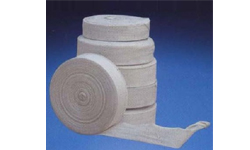
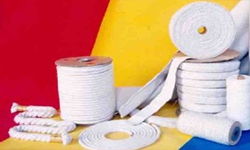
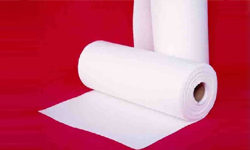
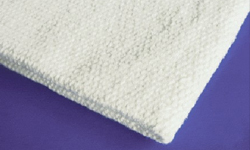
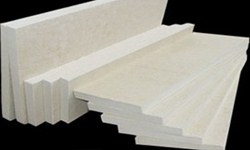
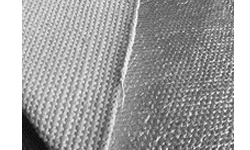
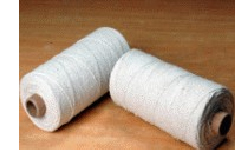
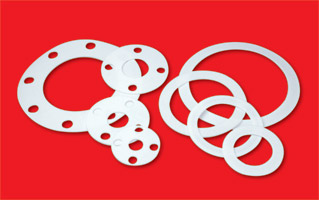
Ceramic fiber, also known as refractory ceramic fiber (RCF), is a specialized lightweight insulating material manufactured from high-purity alumina-silica materials. Through a melting and fiberizing process, it is transformed into a flexible, wool-like blanket, board, module, or paper form. This versatile material is engineered to provide superior thermal management in high-temperature industrial applications. At Kaxite Sealing, we produce advanced Ceramic Fiber solutions designed to offer exceptional heat resistance, low thermal conductivity, and excellent chemical stability, making them indispensable in sectors ranging from metal processing and petrochemicals to aerospace and power generation.
Our ceramic fiber products stand out due to their engineered excellence and consistent quality. Below are the core features that define Kaxite Sealing's offerings:
To ensure you select the perfect material for your application, Kaxite Sealing provides a comprehensive range of ceramic fiber products with precise specifications. The following table outlines the standard properties of our most common blanket grades.
| Product Grade | Maximum Service Temperature (°C/°F) | Density (kg/m³) | Thermal Conductivity (W/m·K at 500°C) | Linear Shrinkage (% after 24h at max temp) | Typical Applications |
|---|---|---|---|---|---|
| Standard Grade | 1260 / 2300 | 128 | 0.16 | ≤ 3.5 | General furnace linings, backup insulation |
| High-Purity Grade | 1430 / 2606 | 128 | 0.15 | ≤ 3.0 | Petrochemical heaters, steel annealing covers |
| Zirconia Grade | 1540 / 2804 | 160 | 0.19 | ≤ 2.5 | Aluminum and non-ferrous metal processing, ceramic kilns |
| High-Density Board | 1260 / 2300 | 280-320 | 0.18 | ≤ 2.0 | Furnace doors, hot face lining in aggressive environments |
In addition to blankets and boards, Kaxite Sealing offers these products in various forms:
Q: What is the primary safety consideration when handling ceramic fiber?
A: Fresh ceramic fiber products can generate airborne dust containing respirable fibers. It is crucial to follow proper handling procedures. Kaxite Sealing recommends using appropriate personal protective equipment (PPE) such as NIOSH-approved dust masks, gloves, and safety glasses. Ensure adequate ventilation in the work area. Once installed and heated, the fibers undergo a process called "devitrification," which converts them into a more stable, crystalline structure with significantly reduced bio-persistence, mitigating long-term handling concerns.
Q: How does ceramic fiber compare to traditional brick or castable refractory?
A: Ceramic fiber offers distinct advantages over dense refractories. It is approximately 1/10th the weight, leading to lighter structural support requirements. Its low thermal mass allows for faster heating and cooling, improving process cycle times and energy efficiency. While dense refractories excel in abrasion resistance and direct flame impingement in some cases, ceramic fiber provides superior insulation value per inch of thickness. Kaxite Sealing often provides hybrid solutions, combining both materials for optimal performance.
Q: Can Kaxite Sealing ceramic fiber be used in contact with molten metal or severe chemical environments?
A: While ceramic fiber has excellent chemical stability, direct contact with molten aluminum or other aggressive metals can cause reduction reactions and degradation. For such applications, Kaxite Sealing offers specially treated or coated ceramic fiber products, or we recommend using our high-density boards and veneering systems designed to withstand these conditions. We advise consulting our technical team for specific chemical compatibility assessments.
Q: What factors determine the lifespan of a ceramic fiber lining?
A: The service life depends on several key factors: the maximum operating temperature and thermal cycling frequency, the presence of corrosive vapors or particulates (alkalis, acids), mechanical abrasion or gas velocity, and the quality of installation. By selecting the correct Kaxite Sealing grade for the application, ensuring proper installation without compression gaps, and maintaining operating temperatures within the specified limits, linings can last for many years, often 5-10 or more in well-maintained industrial settings.
Q: How do I select the right density for my application?
A: Density is a critical performance parameter. Lower density (e.g., 96 kg/m³) offers the lowest thermal conductivity and is ideal for backup insulation where space is not a constraint. Standard density (128 kg/m³) provides a balance of insulating value, strength, and handling properties for most hot-face applications. Higher density products (160 kg/m³ and above) from Kaxite Sealing provide greater resistance to erosion, gas velocity, and physical abuse, making them suitable for furnace doors, burner blocks, and areas with high turbulence.
Q: Does Kaxite Sealing offer custom-shaped ceramic fiber components?
A: Yes, absolutely. We specialize in engineering custom solutions. Our manufacturing capabilities allow us to produce precision die-cut shapes, pre-formed modules, complex folded structures, and vacuum-formed parts to exact customer specifications. This reduces on-site fabrication time, ensures consistency, and optimizes performance for specialized equipment like thermal processing ovens, combustion chambers, and exhaust systems.
The unique properties of Kaxite Sealing ceramic fiber make it a cornerstone material in numerous high-temperature processes.
Choosing Kaxite Sealing means partnering with a leader in thermal management technology. Our team of engineers provides comprehensive support, from initial design consultation and thermal modeling to installation guidance and lifecycle analysis. We are committed to sustainability; our ceramic fiber products contribute to massive energy savings and CO2 emission reductions by improving the efficiency of industrial thermal processes. Furthermore, we adhere to strict environmental and safety regulations in the manufacturing and classification of our materials, ensuring responsible stewardship throughout the product lifecycle.