Polytetrafluoroethylene, more commonly known by its acronym PTFE, is a high-performance fluoropolymer celebrated for its exceptional chemical resistance, wide temperature tolerance, and extremely low coefficient of friction. These unique properties make
PTFE Parts indispensable across a vast spectrum of industries, from aerospace and semiconductor manufacturing to food processing and pharmaceuticals. At Kaxite Sealing, we specialize in engineering and manufacturing precision PTFE components that meet the most demanding operational challenges, ensuring reliability, longevity, and peak performance in critical applications.
### Key Properties and Advantages of PTFE Parts
The widespread adoption of PTFE components is driven by a combination of physical and chemical characteristics unmatched by most other materials.
* **Exceptional Chemical Resistance:** PTFE is virtually inert, resisting attack by nearly all industrial chemicals, solvents, and acids, including strong oxidizers like aqua regia. This makes it ideal for seals and components in aggressive chemical environments.
* **Broad Service Temperature Range:** PTFE parts maintain their functionality in a continuous temperature range from -200°C (-328°F) to +260°C (+500°F), with short-term tolerance even higher.
* **Outstanding Non-Stick Properties:** Its low surface energy gives PTFE excellent release properties, preventing adhesion of most materials. This is crucial in food processing and molding applications.
* **Low Coefficient of Friction:** PTFE has one of the lowest friction coefficients of any solid material, providing self-lubricating properties that reduce wear and energy consumption in moving assemblies.
* **Excellent Dielectric Properties:** PTFE is an outstanding electrical insulator with a high dielectric strength across a wide frequency range, making it perfect for electrical and electronic applications.
* **High Purity and Compliance:** Certain grades of PTFE are FDA-compliant, USP Class VI approved, and meet EU regulations for food contact, allowing safe use in medical, pharmaceutical, and food industries.
### In-Depth Product Specifications and Technical Data
Kaxite Sealing offers a comprehensive portfolio of PTFE parts, available as standard items or custom-engineered to your exact blueprints. Our manufacturing capabilities include CNC machining, molding, sintering, and skiving to produce components with tight tolerances and superior finish.
#### Common PTFE Parts We Manufacture:
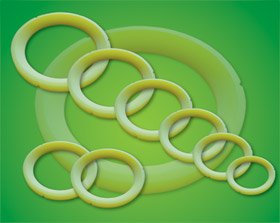
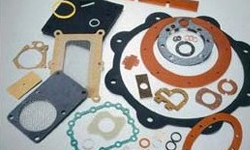
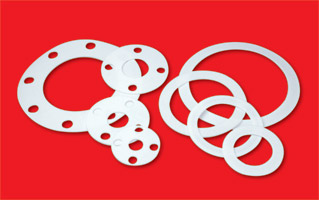
* Gaskets & Seals (O-rings, V-rings, flange gaskets)
* Bushings, Bearings, and Wear Pads
* Bellows and Diaphragms
* Valve Seats, Plugs, and Liners
* Insulators, Spacers, and Washers
* Laboratory Equipment Components
* Custom Machined Parts and Prototypes
#### Material Grades and Selection Guide:
PTFE is available in various compounds, each enhanced for specific performance criteria. Selecting the correct grade is critical for application success.
| Grade / Compound | Key Additives/Process | Primary Advantages | Typical Applications |
| :--- | :--- | :--- | :--- |
| **Virgin PTFE** | Pure, unmodified polymer | Highest chemical purity, best electrical properties, translucency. | Semiconductor manufacturing, pharmaceutical processing, high-purity fluid handling. |
| **Glass-Filled PTFE** | Fine glass fibers or beads | Improved compressive strength, reduced creep (cold flow), enhanced wear resistance. | Heavy-duty bushings, bearings, thrust washers, compressor rings. |
| **Carbon-Filled PTFE** | Carbon powder or graphite | Superior thermal conductivity, lower friction, excellent wear resistance, good PV limits. | Mechanical face seals, piston rings, applications requiring heat dissipation. |
| **Bronze-Filled PTFE** | Bronze powder | Greatly improved load-bearing capacity, thermal conductivity, and wear resistance. | High-load bearings, industrial machinery components, wear plates. |
| **Stainless Steel Filled PTFE** | Stainless steel powder | High compressive strength, excellent wear resistance, suitable for wet environments. | Pump components, seals in abrasive media, food & beverage machinery. |
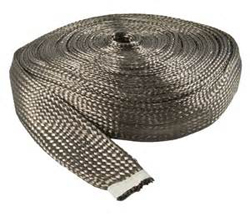
| **Expanded PTFE (ePTFE)** | A highly porous, fibrillated structure | Flexible, compressible, sealable. Excellent for gasketing and filtration. | Sheet gaskets, valve stem packing, filtration membranes, medical textiles. |
#### Technical Property Table (Typical Values for Virgin PTFE):
| Property | Test Method | Metric Unit | Imperial Unit |
| :--- | :--- | :--- | :--- |
| **Density** | ASTM D792 | 2.15 - 2.20 g/cm³ | 0.078 - 0.079 lb/in³ |
| **Tensile Strength** | ASTM D638 | 25 - 35 MPa | 3600 - 5000 psi |
| **Elongation at Break** | ASTM D638 | 300 - 500 % | 300 - 500 % |
| **Compressive Strength** | ASTM D695 | 12 MPa | 1700 psi |
| **Coefficient of Friction (Dynamic)** | Against Steel | 0.05 - 0.10 | 0.05 - 0.10 |
| **Continuous Service Temperature** | — | -200°C to +260°C | -328°F to +500°F |
| **Dielectric Strength** | ASTM D149 | 19 kV/mm | 480 V/mil |
| **Chemical Resistance** | — | Excellent (Inert to most chemicals) | Excellent (Inert to most chemicals) |
### PTFE Parts: Frequently Asked Questions (FAQ)
**What is the main difference between PTFE and Teflon™?**
Teflon™ is a well-known brand name for PTFE and other fluoropolymer products owned by Chemours (formerly DuPont). While all Teflon™ is PTFE, not all PTFE is branded as Teflon™. Kaxite Sealing uses high-quality PTFE resins that meet or exceed the performance characteristics of branded materials, providing a cost-effective and reliable alternative.
**How do I choose between virgin PTFE and a filled compound?**
The choice depends entirely on your application's mechanical and environmental demands. Choose virgin PTFE for maximum chemical purity, electrical insulation, or in FDA-contact applications. Opt for filled compounds (glass, carbon, bronze) when you require enhanced mechanical properties such as reduced creep (cold flow), higher compressive strength, better wear resistance, or improved thermal conductivity.
**What is "creep" or "cold flow" in PTFE, and how is it managed?**
Creep, or cold flow, refers to the tendency of PTFE to gradually deform under a constant mechanical load over time, especially at elevated temperatures. This can affect the sealing force of gaskets or the dimensional stability of components. It is managed by using filled PTFE compounds (which significantly reduce creep), proper design to avoid excessive stress points, and ensuring the operating conditions are within the material's design limits.
**Can Kaxite Sealing manufacture custom PTFE parts from my drawings?**
Absolutely. Custom manufacturing is a core strength at Kaxite Sealing. We can produce precision PTFE parts directly from your CAD drawings or samples. Our engineering team can also provide design consultation to optimize the part for manufacturability and performance using PTFE's unique characteristics.
**Are PTFE parts suitable for use in food, medical, or pharmaceutical applications?**
Yes, provided the correct grade is selected. We supply PTFE materials that are compliant with FDA 21 CFR 177.1550, are USP Class VI tested, and meet EU Regulation 10/2011 for food contact. It is crucial to specify your regulatory requirements when requesting a quote to ensure the correct, certified material is used.
**How does temperature affect the performance of PTFE seals and components?**
PTFE performs exceptionally well across a wide temperature range. However, at cryogenic temperatures, it remains flexible and tough. At the upper end of its range (above 260°C/500°F), thermal degradation can begin, releasing fumes. For high-temperature applications, it's vital to ensure the operating temperature remains within the continuous service limit and to consider heat dissipation, especially for dynamic seals.
**What are the machining considerations for PTFE parts?**
PTFE is a soft, ductile material that requires specific machining techniques. It has a high thermal expansion coefficient and is prone to deformation if not handled correctly. Kaxite Sealing utilizes specialized CNC machining processes, sharp tooling, and proper fixturing to produce parts with excellent dimensional accuracy and surface finish, minimizing stress and deformation.
**How should PTFE gaskets and seals be installed and maintained?**
PTFE seals, especially those made from virgin material, require careful installation. Flange surfaces should be smooth, clean, and parallel. Bolts should be tightened in a cross-pattern to ensure even compression and avoid over-torquing, which can cause excessive cold flow. For dynamic seals, ensuring adequate lubrication (if compatible) can extend service life, though PTFE's self-lubricating nature often makes external lubrication unnecessary.