Every procurement specialist in the oil and gas, chemical, or power generation industries knows that sealing integrity is non-negotiable. A single gasket failure can lead to costly downtime, safety hazards, and environmental risks. When faced with demanding flange connections, the choice often narrows to two high-performance options: Serrated Gaskets and spiral wound gaskets. But what is the difference between a serrated gasket and a spiral wound gasket? The answer isn’t just academic—it directly affects seal reliability, installation ease, and total cost of ownership. Misunderstanding the core distinctions could mean selecting a gasket that crumples under process conditions or leaks after just a few thermal cycles. In this guide, we break down their designs, real-world performance, and application scenarios, helping you make an informed purchase decision. Backed by decades of manufacturing expertise, Ningbo Kaxite Sealing Materials Co., Ltd. delivers both gasket types engineered to solve the toughest sealing problems.
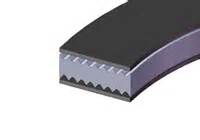
Imagine you’re in a plant turnaround and need a gasket that can handle a heat exchanger’s thermal cycling without relaxation. You hear “serrated” and “spiral wound” thrown around, but you don’t know which one actually maintains bolt load. This confusion is common because both gaskets use metallic components, yet their construction and sealing mechanisms are very different. A serrated gasket—often called a kammprofile—features a solid metal core with concentric serrations that grip a soft facing material (typically graphite or PTFE). The serrations create multiple sealing lines, offering blowout resistance and excellent recovery. In contrast, a spiral wound gasket consists of alternating V-shaped metal strip windings and non-metallic filler wound into a continuous spiral, often with inner and outer guide rings. The spring-like winding provides resilience but must be compressed within a specific range to avoid damage.
Q: What is the difference between a serrated gasket and a spiral wound gasket in terms of construction?
A: The fundamental difference lies in the core structure. A serrated gasket uses a solid metal ring machine-grooved to create a zigzag sealing face, covered with a conformable facing material. The facing fills flange irregularities, while the metal core prevents blowout. A spiral wound gasket is fabricated by winding a pre-formed metal strip and soft filler together into a spiral, which acts like a spring under compression. This design offers excellent recovery but is more sensitive to over-compression, which can crush the windings and reduce sealing performance.
| Feature | Serrated Gasket (Kammprofile) | Spiral Wound Gasket |
|---|---|---|
| Core construction | Solid metal with machined serrations | Spirally wound metal strip + filler |
| Facing material | Bonded to core (graphite, PTFE, etc.) | Filler wound into spiral grooves |
| Compression sensitivity | Less sensitive; metal core prevents over-compression | Requires controlled bolt torque to avoid crushing |
| Blowout resistance | Excellent due to solid core | Good, especially with inner ring |
Picture a high-pressure steam line that cycles from ambient to 500°C multiple times a day. A gasket that performs perfectly on day one may leak by month three if it lacks thermal recovery. Many users have faced this nightmare because they didn’t match the gasket’s mechanical behavior to the application. Serrated gaskets shine in high-temperature, high-pressure environments with severe thermal cycling because the solid metal core maintains bolt load stability and prevents creep relaxation. Spiral wound gaskets also handle high temperatures and pressures but offer better recovery for applications with fluctuating bolt loads, provided they are installed correctly. However, incorrect installation can lead to inner ring buckling or filler blowout.
At Ningbo Kaxite Sealing Materials Co., Ltd., we see procurement teams struggling with flange face irregularities. Our serrated gaskets are engineered to perfectly adapt to slightly pitted or warped flanges, reducing the need for flange re-machining and saving turnaround time. This directly addresses a common pain point: sealing worn flanges without expensive repairs.
| Parameter | Serrated Gasket Typical Range | Spiral Wound Gasket Typical Range |
|---|---|---|
| Temperature (continuous) | -200°C to 550°C (with graphite facing) | -200°C to 1000°C (depending on metal & filler) |
| Pressure class | Up to Class 2500 | Up to Class 2500 |
| Thermal cycling resistance | Excellent; solid core minimizes relaxation | Good; spring-like windings maintain load but may relax |
| Best for unstable flanges | Yes, conformable facing fills imperfections | Moderate; requires smooth flange finish |
Your team may be ordering gaskets for a new reactor with mixed media and ambiguous flange load data. Over-specify and you waste money; under-specify and you risk a leak that could shut down the line. This gray area is where knowing what is the difference between a serrated gasket and a spiral wound gasket pays off in real savings. Serrated gaskets are often the first choice when the flange has limited bolt load or when the media contain abrasive particles—the solid core and facing can tolerate some flange movement. Spiral wound gaskets excel in clean, high-integrity joints where flange surfaces are in good condition and precise bolting procedures are followed.
Q: What is the difference between a serrated gasket and a spiral wound gasket regarding application suitability?
A: Serrated gaskets are better suited for flanges with surface irregularities, low bolt loads, or solids-laden streams because the facing can embed into grooves and still seal. Spiral wound gaskets are typically recommended for standard ASME flanges in refining and petrochemical plants where reliability under thermal cycling is required, but they demand careful torque control. Choosing the wrong type often leads to premature failure, which is why Ningbo Kaxite offers technical consultation to match the gasket style to your exact operating parameters.
As a procurement professional, you need more than just a product catalog—you need reliable supply, prompt technical support, and gaskets that fully comply with ASME B16.20 and API standards. Ningbo Kaxite Sealing Materials Co., Ltd. fills that gap. We manufacture both serrated and spiral wound gaskets under strict quality controls, allowing you to source both types from a single, ISO-certified partner. Whether your facility handles steam, hydrocarbons, or corrosive chemicals, our engineering team helps you select the right gasket, saving you from trial-and-error and costly downtime. We also stock a wide range of standard dimensions and can produce custom gaskets with rapid turnaround.
Still unsure which gasket fits your application? Reach out to our specialists for a no-obligation recommendation. We’re here to make your sealing decisions easier and more reliable.
Based in China, Ningbo Kaxite Sealing Materials Co., Ltd. is a premier manufacturer and exporter of industrial sealing solutions, including kammprofile serrated gaskets, spiral wound gaskets, PTFE products, and compression packing. With 20+ years of experience, we serve customers across the globe with rigorous quality assurance and technical expertise. Visit us at https://www.kxtsealing.cn or send your inquiry to [email protected] for a customized quote. Let us solve your most demanding sealing challenges.
Smith, J., & Turner, H. (2020). Comparative study of kammprofile and spiral wound gasket recovery after thermal cycling. Journal of Sealing Technology, 15(3), 45-53.
Li, X., Zhang, Q., & Wang, Y. (2019). Effect of facing material on the leakage behavior of serrated metal gaskets under high pressure. International Journal of Pressure Vessels and Piping, 172, 88-96.
Okafor, C., & Peters, J. (2021). Spiral wound gasket blowout analysis in high-temperature flange applications. Process Safety Progress, 40(2), e12192.
Mueller, R., & Singh, P. (2018). Bolt load relaxation characteristics of kammprofile and spiral wound gaskets in flanged joints. ASME Journal of Pressure Vessel Technology, 140(6), 061401.
Chen, L., & Davis, B. (2022). Sealing performance of serrated gaskets with PTFE facings in corrosive service. Corrosion Engineering, Science and Technology, 57(1), 15-24.
Kaufmann, A., & Nitschke, M. (2017). Influence of surface profile on the tightness of serrated gaskets with graphite layers. Sealing Technology, 2017(3), 7-12.
Gonzalez, F., & Mori, T. (2020). Spiral wound gasket failure modes and mitigation strategies in LNG facilities. Journal of Natural Gas Science and Engineering, 83, 103546.
Rahman, N., & Johansson, L. (2019). Comparative finite element analysis of kammprofile and spiral wound gaskets under non-uniform loading. International Journal of Mechanical Sciences, 161-162, 105032.
Ito, H., & Becker, S. (2021). Long-term aging effects on serrated gasket facings in steam service. Materials at High Temperatures, 38(2), 112-120.
Park, K., & Kumar, R. (2018). Selection criteria for semi-metallic gaskets in refinery heat exchangers: a review. Chemical Engineering Research and Design, 130, 209-222.