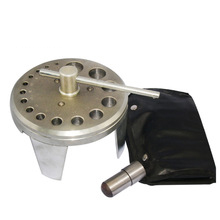
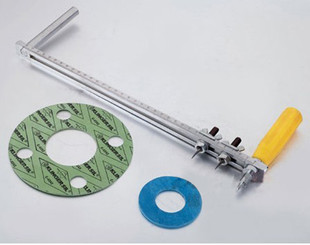
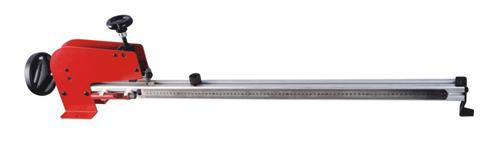
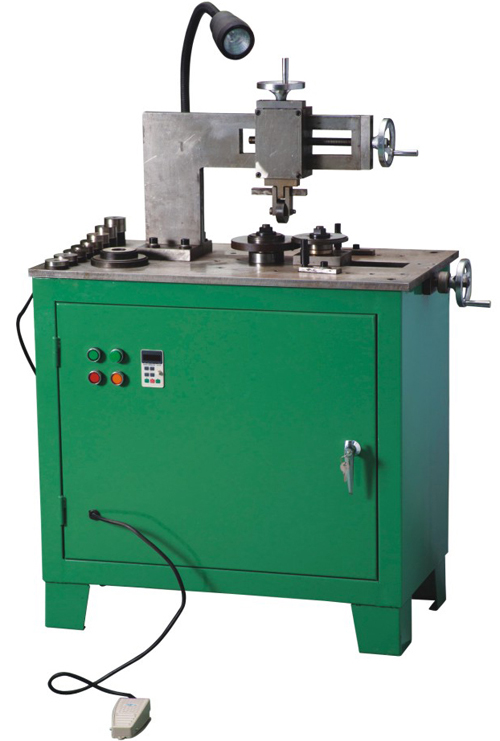
In the precise world of industrial sealing and flange assembly, the right Gasket Tools are not merely accessories; they are fundamental to ensuring safety, preventing leaks, and achieving optimal bolted joint integrity. An improper installation, often due to inadequate or incorrect tools, is a leading cause of gasket failure, leading to costly downtime, environmental hazards, and safety risks. This comprehensive guide delves into the critical aspects of professional gasket installation toolkits, detailing the parameters that define quality and showcasing the engineered solutions available from industry leaders like Kaxite Sealing.
A complete gasket tool set is designed to address every step of the safe gasket replacement procedure. Here are the essential components:
Understanding the technical specifications of gasket tools is key to selecting the right equipment for your application's pressure, temperature, and safety requirements.
| Tool Type | Key Parameters | Material & Construction | Application Note |
|---|---|---|---|
| Rigid Scraper | Blade hardness (HRC), Blade width, Handle grip type | High-carbon steel blade, Ergonomic polymer handle | For heavy-duty removal; blade angle must be maintained to avoid gouging. |
| Surface Conditioning Disc | Abrasive grit (e.g., 36, 80, 120), Disc diameter, Max RPM rating | Non-woven abrasive nylon, Aluminum oxide or silicon carbide mineral | Select grit based on required surface finish (Ra value). Always use with a backing pad. |
| Brass Wire Brush | Wire diameter, Bristle density, Handle type | Brass bristles (softer than steel), Wood or plastic block handle | Ideal for cleaning without sparking and for delicate surfaces where scoring must be avoided. |
| Tool Type | Key Parameters | Performance Specifications | Critical Feature |
|---|---|---|---|
| Alignment Pins (Tapered) | Pin diameter range, Taper angle, Material grade | Tensile strength (min. 1000 MPa), Hardness | Must be hardened to resist deformation. Kaxite Sealing pins feature a knurled grip for easy handling. |
| Calibrated Torque Wrench | Torque range (e.g., 20-200 Nm), Accuracy (±%), Drive size (1/2", 3/4") | Traceable calibration certificate, Reversible ratchet head | Accuracy is paramount. Regular calibration is mandatory. Click-type is common for general service. |
| Hydraulic Torque Wrench | Max output torque, Hydraulic pressure required, Square drive size | Low-height reaction arm, 360° swivel hose | For high-torque applications on large flanges. Provides exceptional accuracy and repeatability. |
Q: Why can't I use a standard wire brush or chisel for gasket removal?
A: Using improper tools like steel chisels or hard wire brushes is a primary cause of flange damage. They can score, gouge, or warp the finely machined flange face. Even minor scratches can create leak paths. Professional gasket scrapers are designed with the correct blade hardness and angle, and brass brushes are non-sparking and softer than most flange materials, protecting the sealing surface integrity.
Q: How often should torque wrenches be calibrated?
A: The calibration interval depends on usage frequency, industry standards (like ASME PCC-1), and tool type. As a general rule, a torque wrench used daily should be calibrated every 3-6 months or after 5,000 cycles. If dropped or subjected to overload, it must be calibrated immediately before further use. Kaxite Sealing recommends and provides traceable calibration services to ensure ongoing accuracy.
Q: Is lubricating bolts really necessary if I'm using a calibrated torque wrench?
A: Absolutely. Torque is a poor indicator of actual bolt tension; up to 90% of the applied torque can be consumed overcoming friction. Without proper, consistent lubrication on bolt threads and nut faces, friction coefficients vary wildly. This leads to uneven clamp load across the flange, even if each bolt is torqued to the same value. A dedicated, high-quality anti-seize lubricant is essential.
Q: What is the purpose of alignment pins, and when are they required?
A: Alignment pins are used to align the bolt holes of two flange faces perfectly before inserting the remaining bolts. This is critical when dealing with large, heavy flanges or gaskets that are easily damaged by shear forces (like PTFE or graphite). They prevent cross-threading, ease assembly, and ensure the gasket is centered and not pinched. They are highly recommended for all flanges over 4 inches and for any critical service application.
Q: Can I use any abrasive disc to clean a flange face?
A: No. The surface finish (often measured as Ra, Roughness average) is a specified parameter for gasket performance. Using too coarse a grit (like a 24-grit grinding disc) will make the surface too rough, causing excessive gasket creep and embedding. The goal is to clean, not aggressively re-machine. For most applications, non-woven abrasive discs with grits between 80 and 120 are suitable for final preparation, following initial scraping.
Q: What advantages do Kaxite Sealing gasket tools offer over generic options?
A> Kaxite Sealing designs its gasket tool systems with a deep understanding of bolted joint engineering. Our tools are not just standalone items but part of a cohesive system. Advantages include: tools engineered to work together seamlessly (e.g., scraper blades matched to recommended surface prep discs), materials selected for durability and safety (non-sparking, high-strength alloys), and comprehensive support including technical data sheets, recommended procedures, and calibration services. We focus on providing reliability and repeatability that generic hardware store tools cannot guarantee.
The selection of Gasket Tools must align with the gasket type, flange size, and service conditions. For soft gaskets (rubber, compressed non-asbestos), surface finish requirements are less stringent than for hard gaskets (spiral wound, ring-type joint). High-pressure applications demand more rigorous torque control and alignment procedures. Investing in a systematic toolkit from a trusted manufacturer like Kaxite Sealing ensures that every variable in the flange assembly process is controlled, transforming installation from a manual task into a repeatable, engineered procedure. This systematic approach is the definitive method for achieving leak-free start-ups and long-term operational reliability.