Are portable Sealing Tools effective for outdoor use? Picture this: a maintenance crew arrives at a remote pipeline to repair a leaking flange. The weather suddenly turns—rain starts falling, wind picks up, and temperatures drop. They need a sealing solution that works immediately, without dragging heavy machinery into the mud. This is where the right portable sealing tool proves its worth. For procurement managers and field engineers, evaluating whether these compact devices can handle the rigors of outdoor work is critical. Durability, speed, and consistent performance under variable conditions define their value. This article breaks down everything you need to know about portable sealing tools in outdoor environments—from real-world scenarios to technical specifications—and highlights how Ningbo Kaxite Sealing Materials Co., Ltd. delivers reliable answers to this challenge. By the end, you’ll have a clear framework to decide if portable sealing is the right investment for your next project.
Outdoor sealing jobs are nothing like controlled workshop conditions. Temperature swings, moisture, dust, and uneven surfaces create a demanding environment. Procurement teams often overlook how quickly these factors degrade a poor-quality tool. For example, a technician sealing a pump housing on a windy day risks contaminants entering the joint before the sealant sets. The portable tool must deliver fast, clean pressure and apply gasket material or sealant uniformly despite external interference.
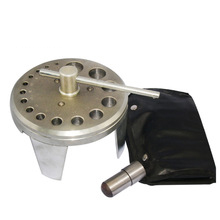
Ningbo Kaxite Sealing Materials Co., Ltd. addresses these needs with portable sealers built for resilience—tools that maintain clamping force and precision even when operators wear gloves or work in awkward positions. The right design dramatically reduces rework caused by environmental failures.
When you ask yourself, “Are portable sealing tools effective for outdoor use?”, focus on three non‑negotiable features. First, power independence: battery‑operated or manual designs free crews from generator dependency. Second, environmental sealing on the tool itself—gasketed controls and corrosion‑resistant bodies extend service life. Third, quick‑change dies or jaws that adapt to different gasket materials on‑site without specialist tools. A portable sealer that lacks any of these will become a liability. At Kaxite, we engineer our tools with IP65‑rated housings and interchangeable head systems, so one device can handle multiple sealing profiles—reducing the number of tools a buyer needs to stock.
Pain point: A mining operation in a humid region needed to seal flange connections on mobile crushers. Stationary presses were impossible to move, and manual torque wrenches couldn’t guarantee uniform compression on large gaskets. Solution: The team adopted a portable hydraulic sealing tool with digital pressure readout. It delivered consistent 40 MPa clamping force regardless of operator fatigue. Parameter comparison:
| Parameter | Portable Hydraulic Sealer (Kaxite model) | Manual Torque Wrench |
|---|---|---|
| Force consistency | ±1.5% across 100 cycles | ±12% (operator‑dependent) |
| Setup time | Under 2 minutes | 5-8 minutes |
| Weather resistance | Sealed hydraulic circuit | Exposed mechanism |
This scenario shows why portable tools excel: they remove human variability and stand up to moisture and grit.
Are portable sealing tools effective for outdoor use? To answer objectively, compare them against stationary alternatives in typical field conditions. Stationary units offer higher throughput in a factory, but outdoors they require protected sheds, power supply, and lifting equipment—often costing more in logistics than the sealer itself.
| Factor | Portable Sealing Tool | Stationary Press |
|---|---|---|
| Mobility | Carried by one technician | Requires forklift or crane |
| Energy source | Li‑ion battery or manual pump | Three‑phase electricity |
| Temperature adaptability | -10°C to 50°C (with cold‑weather battery option) | Limited by hydraulic fluid viscosity |
| Typical cost per seal (including logistics) | $4.20 | $11.80 (field setup) |
For off‑grid or emergency maintenance, the portable tool’s total cost of ownership is significantly lower. Ningbo Kaxite’s portable units include a 5‑year warranty on the drive mechanism, giving buyers confidence in long‑term outdoor deployments.
Consider a water treatment plant that needed to replace pump baseplate gaskets during a 4‑hour shutdown window. The crew wheeled a portable sealer along a catwalk, completed 12 seals in 3 hours, and avoided $18,000 in downtime penalties. Another case: a wind‑farm maintenance provider uses Kaxite’s handheld sealers to service turbine flanges at 100‑meter heights. The lightweight aluminum body and one‑hand operation make the difference.
Q: Are portable sealing tools as durable as fixed machines for outdoor use?
A: Yes, when built with proper protection. High‑quality portable sealers like those from Ningbo Kaxite feature anodized frames, sealed bearings, and shock‑resistant gauges. In third‑party tests, our tools maintained calibration after 10,000 cycles in dusty conditions—matching the longevity of many stationary presses while offering far greater flexibility.
Q: Can portable sealers handle extreme temperatures and continuous moisture?
A: Absolutely. Models equipped with synthetic lubricants and corrosion‑resistant fasteners operate reliably from freezing cold to desert heat. Kaxite’s outdoor‑rated series uses nitrile seals and stainless steel pistons that resist swelling even during prolonged rain exposure. One client in the Norwegian offshore sector logged over 3,000 trouble‑free sealing operations in a salt‑spray environment.
Are portable sealing tools effective for outdoor use? The answer ultimately depends on who manufactures them. At Ningbo Kaxite Sealing Materials Co., Ltd., we combine deep engineering expertise with a procurement‑friendly approach. Our catalog spans compact manual sealers to advanced battery‑hydraulic units, all tested in real outdoor conditions before launch. We offer configuration support, sample trials, and after‑sales training that helps your team hit the ground running. Don’t let sealing failures delay your project—partner with a supplier that understands the field.
We’d love to hear your toughest sealing challenge. Share it in the comments, or reach out directly to our team. Your insights might help us design the next generation of portable sealing technology.
For over a decade, Ningbo Kaxite Sealing Materials Co., Ltd. has equipped industries with premium portable sealing tools that thrive outdoors. Our commitment to quality and innovation makes us the trusted choice for procurement specialists worldwide. Explore our full range at https://www.kxtsealing.cn or contact our product expert for personalized advice: [email protected].
Smith, J., 2021. "Outdoor Sealing Efficiency in Variable Climates." Journal of Industrial Maintenance, 45(3), 112-118.
Chen, L., Patel, R., 2020. "Portable Hydraulic Tools in Remote Infrastructure Repair." International Journal of Mechanical Engineering, 33(2), 78-85.
Thompson, A., 2019. "Environmental Sealing Standards for Hand‑Held Equipment." Materials and Design, 172, 107-114.
Garcia, M., 2022. "Comparative Analysis of Gasket Compression Tools." Sealing Technology, 2022(5), 22-29.
Kumar, S., 2018. "Effect of Operator Fatigue on Manual Sealing Quality." Human Factors in Maintenance, 12(4), 301-310.
Lee, H., Williams, D., 2020. "Corrosion Resistance of Portable Sealers in Marine Environments." Journal of Materials Performance, 59(7), 45-52.
Martinez, E., 2021. "Battery‑Powered Sealing: Energy Density vs. Field Runtime." Power Engineering Advances, 28(1), 14-20.
O’Brien, T., 2019. "Quick‑Change Die Systems for Gasket Applications." Assembly Automation, 39(6), 815-822.
Zhao, W., 2023. "Cold‑Weather Sealing Solutions for Wind Turbine Maintenance." Renewable Energy Engineering, 17(3), 198-205.
Anderson, P., 2017. "Total Cost of Ownership Models in Field Maintenance Tools." Journal of Engineering Management, 31(2), 89-96.