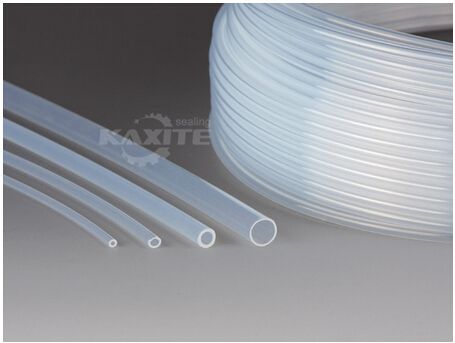
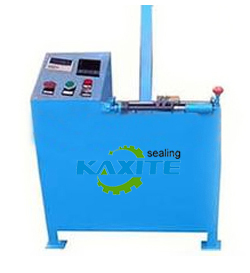
For over two decades in the fluid handling and sealing industry, professionals have consistently turned to one material for the most challenging environments: Polytetrafluoroethylene, or PTFE. At Kaxite Sealing, we have dedicated our expertise to engineering premium-grade PTFE tubing that sets the benchmark for reliability, chemical resistance, and thermal stability. This guide delves into the technical specifications, applications, and critical considerations when selecting PTFE tube, providing the detailed information needed for your project's success.
PTFE is a synthetic fluoropolymer renowned for its exceptional properties. It is chemically inert, meaning it resists attack from virtually all industrial chemicals and solvents. It operates reliably across a vast temperature range, possesses an extremely low coefficient of friction, and is an excellent electrical insulator. These characteristics make PTFE tube an indispensable component in industries where failure is not an option.
Our PTFE tubing is manufactured to the highest standards, ensuring consistent quality and performance. Below are the key parameters that define our product range.
| Property | Performance Rating | Details / Notes |
|---|---|---|
| Chemical Resistance | Excellent | Resistant to virtually all chemicals, including strong acids, bases, and solvents. Exceptions include molten alkali metals and certain fluorine compounds at high pressure/temperature. |
| Coefficient of Friction | 0.05 - 0.10 | One of the lowest of any solid material, providing non-stick and self-lubricating properties. |
| Dielectric Strength | 19.7 kV/mm (500 V/mil) | Excellent electrical insulator, even in high-temperature and humid conditions. |
| Water Absorption | < 0.01% | Essentially zero, making it ideal for moisture-sensitive applications. |
| Flame Resistance | Self-extinguishing | Rated UL94 V-0; will not support combustion. | UV & Weather Resistance | Good to Excellent | Highly resistant to degradation from sunlight and outdoor exposure when using stabilized grades. |
Kaxite Sealing offers PTFE tubing in a wide array of sizes. Custom sizes are available upon request. Standard tolerances conform to industry norms.
| Nominal Bore (ID) (mm) | Wall Thickness (mm) | Standard Length | Tolerance (ID ± mm) | Tolerance (Wall ± %) |
|---|---|---|---|---|
| 1 - 5 | 0.5 - 1.0 | 1 meter coils or straight lengths | 0.10 | 15% |
| 6 - 20 | 1.0 - 2.0 | Straight lengths up to 3 meters | 0.15 | 12% |
| 21 - 50 | 2.0 - 4.0 | Straight lengths up to 2 meters | 0.20 | 10% |
| 51 - 100 | 3.0 - 6.0 | Straight lengths up to 1.5 meters | 0.30 | 10% |
The unique property profile of our PTFE tubing makes it suitable for a diverse range of critical applications:
Q: What is the main advantage of using PTFE tube over other plastic tubes like PVC, PU, or Nylon?
A: The primary advantage is its unparalleled chemical inertness and extreme temperature range. While PVC, PU, and Nylon have specific strengths, they cannot match PTFE's near-universal resistance to chemicals combined with stable performance from deep cryogenic temperatures up to 260°C. This makes PTFE the default choice for highly corrosive or high-purity applications where other materials would fail.
Q: Can Kaxite Sealing PTFE tubing be used for potable water or food applications?
A: Yes, absolutely. Our tubing manufactured from 100% virgin PTFE resin is compliant with FDA CFR 21.177.1550 for food contact applications. It is non-toxic, does not leach contaminants, and does not support bacterial growth, making it excellent for potable water lines, dairy processing, and beverage dispensing systems.
Q: How do I connect or fit PTFE tubing? Does it require special fittings?
A: PTFE is a semi-rigid material with low elasticity, so it does not create a seal like flexible tubing via compression on a barb. Standard connections use:
Q: What are the pressure ratings for your PTFE tubing?
A: Pressure rating is a function of tube dimensions (ID and wall thickness), temperature, and end fittings. As a general guideline, small-bore tubing with thick walls can handle higher pressures. For example, a 4mm ID tube with a 1mm wall may have a burst pressure exceeding 100 bar at room temperature. However, the working pressure is significantly lower and is always limited by the fitting connection. We provide detailed pressure vs. temperature charts for our standard products upon request, as safe operation depends on your specific application conditions.
Q: Does Kaxite Sealing offer colored, reinforced, or conductive PTFE tubing?
A: Yes, we offer specialized variants beyond natural white virgin PTFE. This includes:
Q: How should I store and handle PTFE tubing?
A: Store tubing in a cool, dry place away from direct sunlight. While PTFE is robust, it can be scratched or damaged by sharp objects. Avoid kinking or bending below the minimum bend radius, which is typically 5-10 times the outer diameter, to prevent stress cracking. Always cut tubing cleanly and squarely using a sharp blade or tube cutter to ensure proper fitting engagement.
Selecting Kaxite Sealing means partnering with a specialist focused on performance and reliability. Our commitment extends beyond supplying a commodity product. We provide: