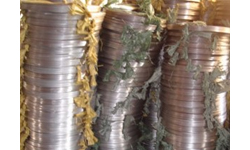
In the demanding world of industrial sealing, selecting the right gasket material is critical for safety, efficiency, and operational longevity. For over two decades, Kaxite Sealing has been at the forefront of advanced sealing solutions, developing high-performance materials that meet the toughest challenges. Among our flagship products, expanded graphite gaskets stand out for their exceptional versatility and reliability. This comprehensive guide delves into the technical specifications, advantages, and application guidelines for these superior sealing components, providing the detailed information engineers and procurement specialists need to make informed decisions.
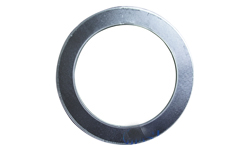
Expanded graphite gaskets are manufactured from exfoliated or expanded graphite, a form of graphite that has been treated to expand its structure volumetrically. This process creates a pure graphite material with excellent conformability, thermal stability, and sealing properties. Unlike traditional compressed non-asbestos sheets, expanded graphite offers a unique combination of flexibility and resilience, forming a tight seal even on slightly irregular flanges. Kaxite Sealing utilizes premium-grade raw materials and a controlled manufacturing process to ensure our gaskets deliver consistent, leak-free performance across a wide temperature and pressure range.
The performance of an expanded graphite gasket is defined by its physical and mechanical properties. Kaxite Sealing's expanded graphite gaskets are engineered to exceed industry standards. Below are the typical specifications for our standard grade material.
| Property | Test Standard | Typical Value | Unit |
|---|---|---|---|
| Density (Nominal) | ASTM F1315 | 100 | lb/ft³ (1.6 g/cm³) |
| Tensile Strength (MD) | ASTM F152 | 1800 | psi (12.4 MPa) |
| Compressibility | ASTM F36 | 25 - 45 | % @ 10,000 psi |
| Recovery | ASTM F36 | 15 - 35 | % |
| Stress Relaxation | ASTM F38 | < 15 | % @ 600°F (315°C) |
| Thermal Conductivity | ASTM E1225 | 70 - 150 | W/m·K |
| Maximum Service Temperature (Oxidizing) | - | 900 | °F (485°C) |
| Maximum Service Temperature (Inert/Vacuum) | - | 3000 | °F (1650°C) |
| pH Value | ASTM E70 | 5 - 7 | - |
| Chloride Content | ASTM D512 | < 50 | ppm |
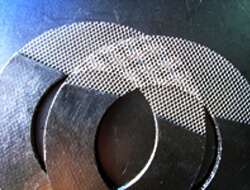
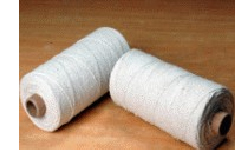
Kaxite Sealing provides expanded graphite in various forms to suit specific application requirements:
Q: What are the primary limitations of expanded graphite gaskets?
A: While highly versatile, they have two key limitations. First, in continuous oxidizing atmospheres above 900°F (485°C), graphite can oxidize, leading to material loss and potential leakage; for such applications, specialized grades with oxidation inhibitors may be considered. Second, pure graphite foil can be susceptible to galvanic corrosion when in direct contact with dissimilar metals in the presence of an electrolyte. Using a metal-reinforced or metal-cored version from Kaxite Sealing mitigates this issue.
Q: How do I select the correct thickness and density for my application?
A: Selection depends on flange type, surface finish, pressure, and temperature. For standard raised face flanges with a serrated finish, a density of 100 lb/ft³ and a thickness of 1/16" (1.5mm) is common. For higher pressures or smoother flange surfaces, a higher density or a metal-reinforced version may be required to prevent extrusion. Our technical team at Kaxite Sealing can provide specific recommendations based on your service conditions.
Q: Can expanded graphite gaskets be used for all chemical services?
A: Expanded graphite has excellent resistance to a vast array of chemicals, including most acids, alkalis, solvents, and hydrocarbons. However, it is not recommended for use with strong oxidizing agents at high concentrations (e.g., fuming nitric acid, concentrated sulfuric acid above certain temperatures) or in highly reactive halogen environments without consulting compatibility charts. Kaxite Sealing provides detailed chemical resistance guides upon request.
Q: What is the proper installation procedure for these gaskets?
A: Correct installation is crucial. Ensure flanges are clean, undamaged, and aligned. Never reuse an expanded graphite gasket. Place the gasket centered on the flange. Use a calibrated torque wrench and follow a star-pattern tightening sequence to achieve the recommended bolt stress. It is often advisable to re-torque the bolts after the first heat cycle in high-temperature applications. Refer to ASME PCC-1 guidelines for best practices.
Q: How do Kaxite expanded graphite gaskets compare to PTFE or compressed non-asbestos gaskets?
A: Each material has its niche. Compared to PTFE, Kaxite graphite handles much higher temperatures and has better creep resistance. Compared to compressed non-asbestos (CNAF) sheets, graphite offers far superior thermal conductivity, a wider temperature range, better chemical resistance to many media, and requires lower bolt load to achieve an effective seal. For demanding thermal cycling or high-temperature services, graphite is typically the superior choice.
Q: Are there special storage or handling requirements?
A: Store in a cool, dry place away from direct sunlight and moisture. Flexible graphite foil is delicate; handle with care to avoid tears or punctures. For pure foil sheets, use clean gloves to prevent oil contamination from skin. Reinforced or cored gaskets are more robust for handling. Keep in original packaging until ready for installation.
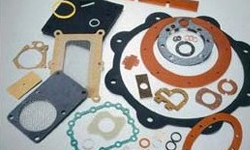
The unique properties of Kaxite Sealing's expanded graphite gaskets make them the preferred choice across numerous sectors: