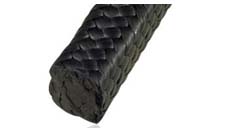
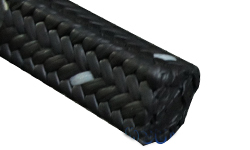
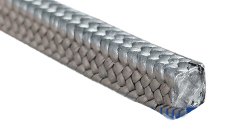
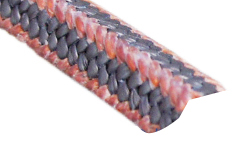
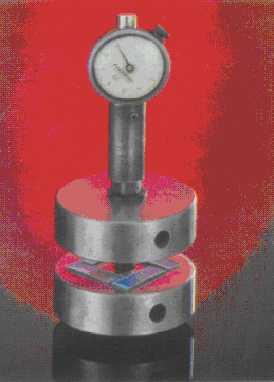
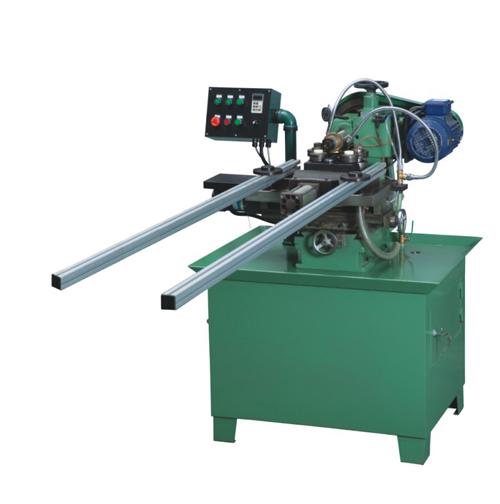
In the demanding world of industrial sealing, reliability and longevity are non-negotiable. When critical applications require a packing solution that can withstand extreme temperatures, aggressive chemicals, and high pressures, standard materials often fall short. This is where advanced composite materials provide the answer. Graphite PTFE Packing represents a significant leap forward, combining the unique properties of two high-performance materials to create a sealing solution that outperforms traditional options. As a leader in sealing technology, Kaxite Sealing has engineered a premium Graphite PTFE Packing designed to deliver unmatched performance in the most challenging environments, from chemical processing and pharmaceutical manufacturing to power generation and marine applications.
Our packing is meticulously manufactured using a specialized process that seamlessly integrates expanded PTFE (polytetrafluoroethylene) with high-purity, flexible graphite. This synergy creates a material that is inherently self-lubricating, chemically inert, and exceptionally resilient. The PTFE component provides outstanding chemical resistance and a low coefficient of friction, while the graphite infill offers superior thermal conductivity, enhanced conformability, and excellent resistance to thermal cycling. The result is a durable, versatile packing that maintains a reliable seal under dynamic conditions, reduces shaft or stem wear, and significantly extends maintenance intervals, leading to lower total cost of ownership.
The performance of Kaxite Sealing Graphite PTFE Packing is defined by its precise engineering and material composition. Below are the detailed specifications that inform proper selection and application.
| Parameter | Specification / Value | Standard / Test Method |
|---|---|---|
| Base Material | Expanded PTFE Filament Yarn Impregnated with High-Purity Flexible Graphite | Kaxite Proprietary Process |
| Color | Black | Visual |
| Specific Gravity | 1.5 - 1.7 g/cm³ | ASTM D792 |
| Tensile Strength | ≥ 3,500 psi (24 MPa) | ASTM D2256 |
| Thermal Conductivity | 5 - 10 W/m·K (axial direction) | ASTM E1461 |
| PH Range | 0 - 14 | N/A |
| Characteristic | Range | Notes |
|---|---|---|
| Temperature Range | -212°F to +600°F (-100°C to +315°C) | Short peaks up to +750°F (+400°C) possible in non-oxidizing service. |
| Maximum Surface Speed | 25 ft/s (7.6 m/s) | For rotating equipment; depends on pressure and cooling. |
| Maximum Pressure | 2,500 psi (172 bar) Rotating 3,500 psi (241 bar) Reciprocating |
Valve stem and pump shaft applications respectively. |
| Chemical Resistance | Excellent to virtually all chemicals | Resistant to all acids, alkalis, solvents, and aggressive media. Exceptions: molten alkali metals, fluorine at high T/P. |
What are the primary applications for Graphite PTFE Packing?
Graphite PTFE Packing from Kaxite Sealing is engineered for demanding service across numerous industries. Its most common applications include sealing pump shafts, mixer shafts, and valve stems in chemical and petrochemical plants handling corrosive fluids. It is extensively used in pharmaceutical and food processing for its cleanliness and compliance. Other key uses are in power plant boiler feed pumps, seawater cooling pumps in marine and offshore operations, and in cryogenic services for handling LNG or liquid gases.
How does Graphite PTFE Packing compare to traditional braided PTFE or pure graphite packing?
It combines the best attributes of both. Traditional braided PTFE packing offers excellent chemical resistance but can have limitations with high temperatures and thermal conductivity, sometimes suffering from cold flow. Pure graphite foil or ribbon packing excels at high temperatures and thermal conductivity but can be less robust mechanically and more susceptible to erosion in aggressive fluids. Our composite material provides the universal chemical resistance of PTFE with the enhanced thermal stability, conductivity, and creep resistance imparted by graphite, resulting in a more durable and versatile all-around performer.
Is this packing suitable for high-speed rotary equipment?
Yes, it is an excellent choice for many high-speed rotary applications. The inherent self-lubricating properties of both PTFE and graphite create a low-friction interface with the shaft, minimizing heat generation and wear. Its excellent thermal conductivity helps dissipate frictional heat away from the packing area. For optimal performance in high-speed services, proper gland adjustment, adequate flushing/cooling (if specified), and correct installation are crucial. We recommend consulting Kaxite Sealing's engineering guidelines for specific speed and pressure limits.
What is the recommended installation procedure for Kaxite Sealing Graphite PTFE Packing?
Proper installation is key to achieving maximum service life. First, ensure the equipment (shaft, sleeve, stuffing box) is clean, smooth, and free of damage. Cut packing rings on a clean mandrel of the correct diameter using a sharp blade; avoid pre-formed spiral wrapping. Stagger ring joints by 90 degrees on successive rings. Install rings one at a time, seating each firmly using a split bushing or appropriate tool. Tighten the gland follower finger-tight only for initial start-up. After a short run-in period (typically 15-30 minutes), perform a follow-up adjustment to achieve the desired slight leakage for cooling (if applicable) or a drip-free seal as required by the application. Never over-tighten.
Can this packing be used in potable water or FDA-related applications?
Our standard Graphite PTFE Packing is manufactured from materials that are inherently chemically inert and non-toxic. However, for applications with direct contact with potable water or requiring formal FDA compliance for food and drug processing, Kaxite Sealing offers specific grades that are certified and manufactured under controlled conditions to meet the relevant regulatory standards, such as NSF/ANSI 61 or FDA CFR 21. Please contact our technical sales team to specify the compliant grade for such applications.
How do I select the correct size and style (spool vs. die-formed rings)?
Selection depends on the equipment and preference. The correct packing cross-section (e.g., 1/4", 3/8", 1/2") is determined by the stuffing box depth and shaft diameter—refer to equipment manuals or our sizing charts. Spool or coil packing is versatile and cost-effective for maintenance shops, allowing cuts for various boxes. Pre-cut, die-formed rings from Kaxite Sealing offer superior consistency, easier and faster installation, and optimal density for a perfect seal from the first ring, making them ideal for critical applications and reducing installation errors.