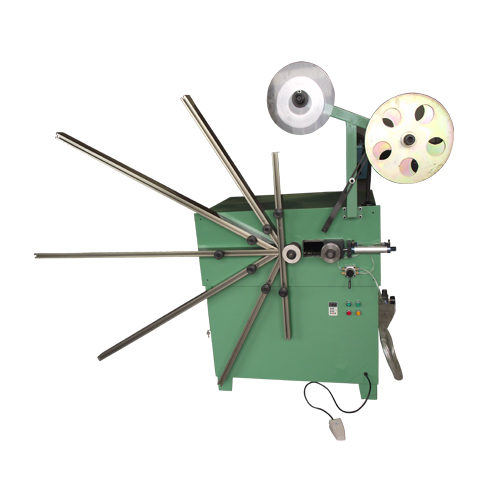
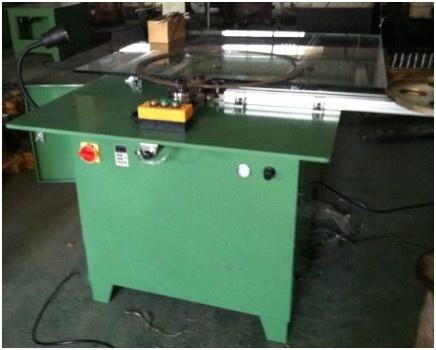
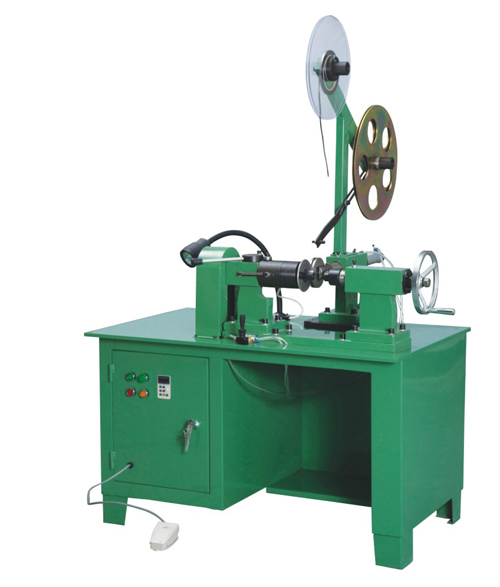
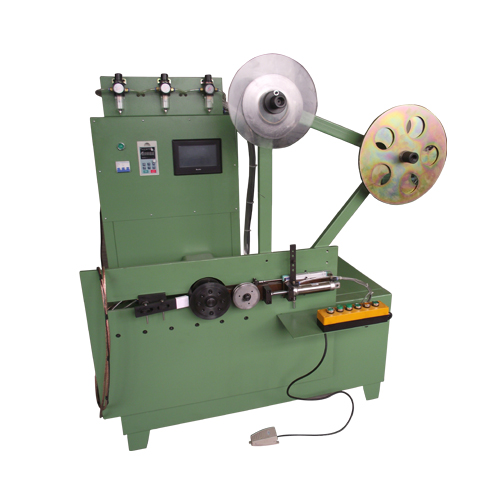
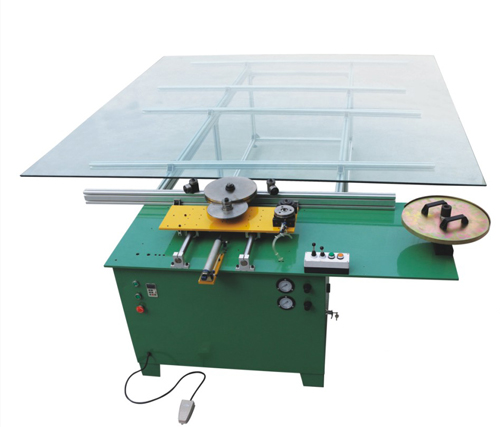
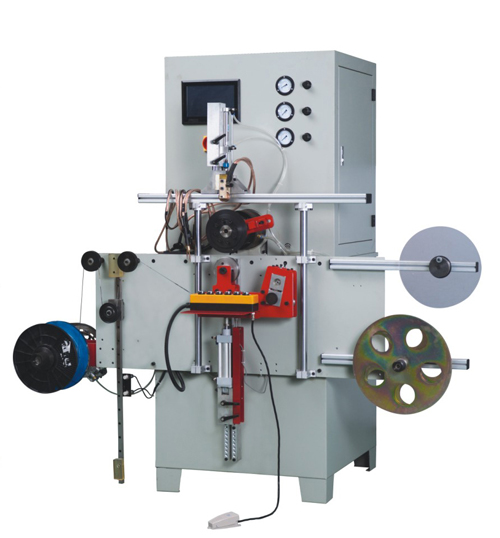
In the world of industrial sealing, precision, reliability, and consistency are non-negotiable. The production of spiral wound gaskets, critical components for flanged connections in piping systems, demands specialized equipment engineered for excellence. At Kaxite Sealing, we understand that the quality of the gasket begins with the quality of the machine that produces it. Our advanced line of Machines for Spiral Wound Gaskets represents the culmination of decades of engineering innovation, designed to deliver unparalleled performance, durability, and operational efficiency for manufacturers worldwide.
These machines are not mere tools; they are sophisticated production systems that transform precision-wound metal strip and filler material into robust, high-integrity seals capable of withstanding extreme pressures, temperatures, and corrosive media. Investing in the right machinery is investing in the foundation of your product's quality and your company's reputation.
Our machines are built to exacting standards, incorporating robust construction, user-friendly controls, and adaptive technology to meet diverse production needs. Below is a detailed breakdown of the key parameters and features that define our equipment.
| Feature Category | Description | Benefit to Manufacturer |
|---|---|---|
| Precision Winding Mechanism | Utilizes precision-ground cam profiles and linear guides to ensure perfectly concentric winding with uniform layer spacing. | Produces gaskets with consistent density and compression characteristics, eliminating leaks. |
| Multi-Axis Filler Insertion | Independent servo control for filler material feed, allowing for simultaneous winding of metal and filler at precisely calibrated ratios. | Enables production of complex gasket types (e.g., inner/outer ring, centering ring) and ensures optimal filler distribution. |
| Automated Vision Inspection (Optional) | High-resolution camera system integrated into the winding path to detect strip defects, filler gaps, or winding anomalies in real-time. | Significantly enhances quality control, reduces waste, and provides data for process optimization. |
| Data Logging & Connectivity | Standard Ethernet connectivity and data export functionality for production parameters, cycle counts, and error logs. | Facilitates integration into Industry 4.0 smart factories, enabling predictive maintenance and production analytics. |
| Modular Design | Key components are designed as modules (unwind stands, tensioners, winding heads) for easier maintenance and future upgrades. | Reduces mean time to repair (MTTR) and extends the machine's operational lifecycle and adaptability. |
Selecting the correct machine model depends on your specific production volume, gasket size range, and material requirements. The following tables provide a clear comparison to aid in your decision-making process.
| Model | Max Gasket OD (mm/inches) | Metal Strip Width Range (mm) | Typical Production Output* | Power Requirement | Footprint (LxW, approx.) |
|---|---|---|---|---|---|
| KX-SWG300 | 300 mm / 12" | 3.0 - 6.0 mm | Medium-volume, small to medium sizes | 5.5 kW / 3-Phase | 2.5m x 1.8m |
| KX-SWG450 | 450 mm / 18" | 3.0 - 8.0 mm | High-volume, versatile range | 7.5 kW / 3-Phase | 3.0m x 2.2m |
| KX-SWG600 | 600 mm / 24" | 4.0 - 10.0 mm | High-volume, standard industrial sizes | 11 kW / 3-Phase | 3.8m x 2.5m |
| KX-SWG800 | 800 mm / 32" | 4.5 - 12.0 mm | Heavy-duty, large diameter gaskets | 15 kW / 3-Phase | 4.5m x 3.0m |
*Output varies based on gasket size, material, and operator skill.
| Performance Metric | Specification / Capability | Industry Standard Comparison |
|---|---|---|
| Winding Tension Accuracy | ± 2% of set value across the entire speed range. | Typical industry machines offer ± 5-10%. |
| Concentricity Tolerance | < 0.1 mm on finished gasket OD for sizes up to 600mm. | Often > 0.2 mm on standard machines. |
| Repeatability (Layer Count) | Precise layer control with < 0.5 layer variance per programmed recipe. | Manual or less precise systems can have variances of 2+ layers. |
| Changeover Time (for new size) | As low as 15-20 minutes with quick-change tooling system. | Can be 45-60 minutes on conventional machines. |
| Noise Level during Operation | < 75 dB(A) at 1 meter distance. | Often exceeds 80-85 dB(A) on older models. |
Q: What are the main advantages of using a dedicated machine for spiral wound gaskets over manual or semi-automatic methods?
A: Dedicated machines like those from Kaxite Sealing offer transformative advantages: Consistency & Quality: Automated tension and speed control produce every gasket to identical specifications, eliminating human error and ensuring reliable sealing performance. Efficiency & Output: They significantly increase production speed, reduce labor costs, and allow one operator to manage multiple machines. Material Savings: Precise control minimizes strip and filler waste. Versatility: They can easily handle a wide range of materials and complex gasket designs that are impractical to make manually. Data Traceability: Production parameters are logged, providing essential data for quality assurance and process validation.
Q: How do I choose the right machine model for my factory's needs?
A: Selection should be based on several key factors: Maximum Gasket Size: Determine the largest outer diameter (OD) you need to produce. Choose a model whose maximum capacity exceeds this by a comfortable margin (15-20%). Production Volume: Higher-volume shops benefit from the speed and automation of models like the KX-SWG450 or KX-SWG600. Material Types: Ensure the machine can handle the specific metal strip widths and filler material types (especially abrasive ones like ceramic) you use. Available Space & Power: Check the machine's footprint and electrical requirements against your workshop's infrastructure. Future Growth: Consider a slightly larger model if you plan to expand your product range. The team at Kaxite Sealing can provide detailed consultation based on your specific requirements.
Q: What kind of maintenance do these machines require?
A: Kaxite Sealing machines are designed for robust operation with straightforward maintenance. Key routines include: Daily/Weekly: Cleaning of guide paths and removal of material dust, visual inspection of wear parts (guides, rollers), and checking lubrication points on bearings and slides. Monthly/Quarterly: Verifying tension system calibration, inspecting and tightening mechanical fasteners, and checking the alignment of critical components. Annual/As-needed: More in-depth inspection of servo motors and drives, potential replacement of high-wear consumable parts (like specific guide inserts), and a full system diagnostic via the PLC. We provide comprehensive maintenance manuals, spare parts lists, and offer service contracts for proactive support.
Q: Can your machines produce gaskets with inner rings, outer rings, or centering rings?
A: Absolutely. This is a standard capability for our machines. The process involves programming the winding sequence into the PLC. The machine will wind the spiral layers to a specified inner or outer diameter, pause for the manual or automated placement of the solid metal ring (which is typically pre-formed), and then continue winding to secure it in place or wind over it as required by the design (e.g., V-profile centering rings). Our multi-axis filler control is particularly important here to manage the filler material accurately around the ring components.
Q: What training and support does Kaxite Sealing provide with the purchase of a machine?
A: We believe comprehensive support is critical for your success. Our standard package includes: On-site Installation & Commissioning: A Kaxite technician will install the machine, calibrate it, and run the first production samples with your team. Hands-on Operational Training: In-depth training for operators on machine setup, daily operation, basic programming, routine maintenance, and troubleshooting common issues. Technical Documentation: Detailed manuals (electronic and hard copy) covering operation, maintenance, parts diagrams, and PLC programming guides. Ongoing Remote & Phone Support: Access to our technical support team for assistance. We also offer advanced training workshops and readily available spare parts through our global logistics network.
Q: Are the machines compatible with Industry 4.0 or smart factory initiatives?
A: Yes, our machines are built with modern connectivity in mind. Standard features like Ethernet connectivity and data logging allow for integration into factory networks. Production data (cycle counts, run times, error codes, parameter sets) can be exported for analysis in Manufacturing Execution Systems (MES) or Enterprise Resource Planning (ERP) software. Optional features, such as the automated vision inspection system, generate quality data that can be linked to individual gasket batches. This facilitates traceability, predictive maintenance scheduling, and overall production optimization, making Kaxite Sealing equipment a future-proof investment for smart manufacturing environments.
The decision to implement or upgrade your spiral wound gasket manufacturing line is significant. The machinery you choose directly impacts product quality, production costs, and your ability to meet market demands. Kaxite Sealing's machines are engineered not just to meet today's standards but to anticipate tomorrow's challenges. From the robust KX-SWG300 for specialized shops to the high-output KX-SWG800 for major industrial suppliers, our range offers a solution for every scale of operation. Each machine embodies our commitment to precision engineering, operational simplicity, and long-term durability. By controlling every aspect of the winding process with digital accuracy, you gain complete control over the quality and consistency of your final product, ensuring that every gasket bearing your name—and manufactured on a Kaxite Sealing machine—delivers the reliable, leak-free performance that industry depends on.