The Complete Guide to Industrial Rubber Sheet: Your Ultimate Material Solution
In the vast landscape of industrial materials, few components are as versatile, reliable, and indispensable as the rubber sheet. For decades, this fundamental product has served as the backbone of countless applications, from sealing critical joints in aerospace to providing anti-vibration mounts in heavy machinery. At Kaxite Sealing, we have dedicated over two decades to mastering the science and application of high-performance rubber sheeting. Our mission is to provide engineers, procurement specialists, and fabricators with not just a material, but a engineered solution that guarantees performance, durability, and value.
A rubber sheet is far more than a simple slab of elastomer. It is a precisely formulated barrier, a custom-designed gasket, a protective layer, and a noise-dampening pad. Its effectiveness hinges on the correct selection of compound, hardness, thickness, and reinforcement to match specific environmental and operational demands. Choosing the wrong type can lead to premature failure, costly downtime, and safety risks. This guide delves deep into the technical specifications, material types, and application best practices for industrial rubber sheeting, with a focus on the premium-grade solutions offered by Kaxite Sealing.
Core Material Types and Their Properties
The performance of a rubber sheet is primarily determined by its base polymer. Each type offers a unique balance of properties tailored to resist specific challenges.
- Nitrile Rubber (NBR): The industry standard for oil and fuel resistance. Ideal for gaskets in automotive, hydraulic, and fuel handling systems. It offers excellent abrasion resistance and compression set properties.
- Neoprene (CR): Known for its good all-around resistance to weathering, ozone, moderate oils, and flames. Commonly used for outdoor pads, weather seals, and marine applications.
- EPDM Rubber: Exceptional for weathering, ozone, steam, and hot water. Its superior resistance to polar fluids and sunlight makes it perfect for automotive weather-stripping, roofing membranes, and cooling system gaskets.
- Silicone Rubber: Excels in extreme temperature ranges, from -60°C to 230°C+. It offers excellent flexibility and stability, making it suitable for food-grade, medical, and high-temperature sealing applications.
- Natural Rubber (NR): Provides outstanding tensile strength, elasticity, and tear resistance. Best for applications requiring high dynamic flexing, such as anti-vibration mounts, bumpers, and conveyor belt skirting.
- Fluoroelastomer (FKM/Viton®): The premium choice for extreme chemical and high-temperature resistance. Used in aggressive chemical processing, aerospace, and oil & gas industries where harsh solvents and acids are present.
Detailed Product Parameters & Specifications
At Kaxite Sealing, every rubber sheet we produce is characterized by a comprehensive set of measurable parameters. Understanding these specs is crucial for specification and quality assurance.
| Parameter | Description | Standard Range / Common Values | Test Method |
|---|---|---|---|
| Hardness (Shore A) | Measures resistance to indentation. Lower numbers are softer; higher are harder. | 40° to 90° Shore A | ASTM D2240 |
| Tensile Strength | The maximum stress the material can withstand while being stretched before breaking. | 10 MPa to 25 MPa (varies by compound) | ASTM D412 |
| Elongation at Break | The percentage increase in length before the sample breaks under tension. | 200% to 600% | |
| Compression Set | Measures the material's ability to return to its original thickness after prolonged compression. | < 25% (72 hrs @ 70°C, common for NBR/EPDM) | ASTM D395 |
| Temperature Range | The continuous operating temperature span the material can endure without significant degradation. | e.g., NBR: -40°C to +120°C | Silicone: -60°C to +230°C | Material Specific |
| Thickness Tolerance | Allowed deviation from the nominal sheet thickness. | ±0.2mm to ±0.5mm (depending on thickness) | ASTM D3767 |
| Specific Gravity | Density relative to water. Affects weight and material cost per unit volume. | 1.0 to 1.8 g/cm³ | ASTM D792 |
| Flammability Rating | Resistance to ignition and flame spread. | UL 94 HB, V-0, or equivalent (for rated compounds like Neoprene) | UL 94 / ASTM D3801 |
Additional Key Features:
- Reinforcements: Fabrics (cotton, polyester) or metal inserts can be laminated for increased dimensional stability, tear resistance, and pressure handling.
- Surface Finish: Available in smooth, textured, or adhesive-backed (pressure-sensitive) finishes to suit application needs.
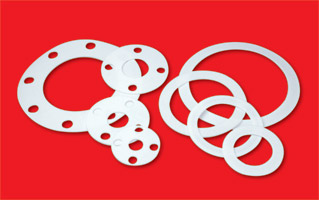
- Custom Die-Cutting: Kaxite Sealing offers precision die-cutting services to provide ready-to-install gaskets and seals, reducing waste and assembly time.
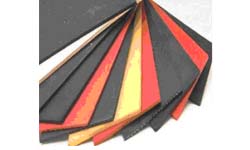
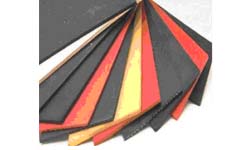
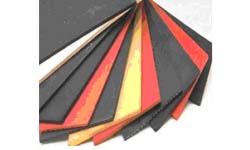
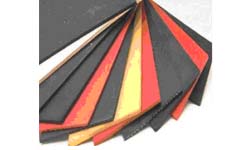
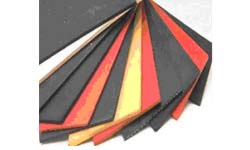
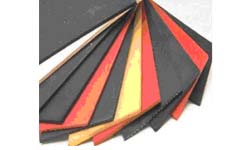
- Color Coding: Standard black is common, but compounds like silicone and EPDM can be produced in various colors for identification or aesthetic purposes.
Frequently Asked Questions (FAQs) About Rubber Sheets
Q: How do I select the right rubber sheet material for my application?
A: Material selection is a critical first step. You must identify the primary environmental and operational challenges: 1) Fluid Exposure: Determine the specific chemicals, oils, solvents, or water the sheet will contact. Cross-reference with a chemical resistance chart for the polymer types (e.g., NBR for oils, FKM for aggressive solvents). 2) Temperature Range: Consider both minimum and maximum continuous operating temperatures, as well as any peak temperatures. 3) Physical Demands: Assess requirements for hardness (soft for sealing, harder for abrasion resistance), tensile strength, and whether the part will be static or dynamically flexed. 4) Regulatory Needs: Check for requirements like FDA compliance, UL flame ratings, or RoHS directives. Kaxite Sealing's technical support team can assist with this analysis.
Q: What is the difference between a molded rubber gasket and a gasket cut from a rubber sheet?
A: Molded gaskets are produced by injecting or compressing rubber compound into a specific mold cavity. This is cost-effective for very high volumes of identical, often complex-shaped parts with consistent cross-sections (e.g., O-rings, shaped seals). Gaskets cut from a rubber sheet, whether die-cut, water-jet cut, or hand-cut, are ideal for prototypes, low to medium volumes, large flat gaskets, or when design flexibility is needed. Sheet-based fabrication allows for quick changes in size and shape without expensive mold tooling. For critical flange seals, sheets can be spliced or custom-cut to exact dimensions, a service expertly provided by Kaxite Sealing.
Q: How important is the hardness (durometer) of a rubber sheet, and how is it measured?
A: Hardness, measured in Shore A, is fundamentally important as it directly affects sealing force, conformability, and load-bearing capacity. A softer sheet (e.g., 50 Shore A) will more easily conform to irregular surfaces, creating a better seal with lower bolt torque, making it ideal for static seals on uneven flanges. A harder sheet (e.g., 70-80 Shore A) offers greater resistance to extrusion under high pressure, provides better structural support as a mount, and resists abrasion more effectively. It is measured using a durometer gauge that presses a standardized indentor into the material; the depth of penetration correlates to the Shore A scale. Consistency in hardness is a key quality indicator for Kaxite Sealing products.
Q: Can rubber sheets be used for outdoor and UV-exposed applications?
A: Not all rubber sheets are suitable for prolonged outdoor exposure. Standard materials like natural rubber and some synthetic types will degrade, crack, and harden when exposed to sunlight (UV), ozone, and weathering. For outdoor use, you must select compounds specifically formulated with anti-oxidants and anti-ozonants. EPDM rubber is renowned for its exceptional weather and UV resistance, making it the top choice for roofing, outdoor seals, and automotive exterior parts. Certain grades of Neoprene also offer good weather resistance. Always specify "weather-resistant" or "UV-stabilized" grades when ordering from your supplier.
Q: How should I store rubber sheets to maximize their shelf life before use?
A: Proper storage is essential to prevent premature aging. Rubber sheets should be stored in a cool, dark, dry, and well-ventilated area. The ideal temperature range is between 10°C and 25°C (50°F and 77°F). Avoid storage near heat sources, steam pipes, or in direct sunlight. Keep sheets away from sources of ozone (like electric motors) and avoid contact with solvents, oils, or corrosive chemicals. Sheets should be stored flat, not on their edge, to prevent permanent deformation. It is also advisable to avoid compressing them under heavy weight. When stored correctly, most synthetic rubber sheets from Kaxite Sealing can have a shelf life of several years without significant property loss.
Q: What are the advantages of choosing Kaxite Sealing for my rubber sheet requirements?
A: Choosing Kaxite Sealing means partnering with a specialist focused on sealing solutions. Our advantages include: 1) Technical Expertise: Over 20 years of experience allows us to provide precise material recommendations and solve complex application challenges. 2) Quality Assurance: We implement rigorous batch testing against international standards (ASTM, ISO) to ensure every sheet meets published specifications. 3) Consistency: Our controlled manufacturing process guarantees uniform thickness, hardness, and compound properties across entire production runs. 4) Customization: We go beyond standard sheets, offering custom compounding, fabric reinforcement, adhesive backing, and precision cutting to your exact drawings. 5) Global Support: We serve a worldwide clientele with reliable logistics and responsive customer service, ensuring you get the right material, on time, every time.
Applications Across Industries
The utility of a high-quality rubber sheet is demonstrated in its cross-industry application.
- Automotive & Transportation: Gaskets for engine covers, fluid systems, vibration-damping mounts, interior trim, and weather seals for doors and windows.
- Manufacturing & Machinery: Liners for chemical tanks, conveyor belt skirting, protective pads for equipment, seals for hydraulic and pneumatic systems, and noise reduction panels.
- Construction & Infrastructure: Expansion joint seals in concrete, waterproofing membranes, pipe gaskets, and anti-vibration pads for structural supports.
- Food & Beverage: FDA-compliant silicone or EPDM sheets for conveyor belts, processing table covers, and seals in bottling equipment.
- Energy & Utilities: Insulating mats in electrical applications, gaskets for pump and valve housings in water treatment, and seals in offshore oil & gas platforms.