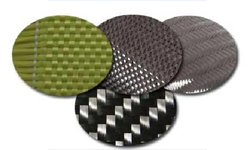
Carbon fiber is a high-strength, lightweight material composed of thin, crystalline filaments of carbon. These fibers are typically bundled into tows and woven into fabrics, which are then combined with a polymer resin matrix to form a composite material. The resulting composite, often called carbon fiber reinforced polymer (CFRP) or simply carbon fiber, offers an exceptional strength-to-weight ratio, surpassing that of steel while being significantly lighter. Its unique properties, including high stiffness, low thermal expansion, and excellent fatigue resistance, make it indispensable in aerospace, automotive, sporting goods, and increasingly, in industrial sealing and component manufacturing.
The superiority of carbon fiber stems from its fundamental structure and the composite engineering process. At Kaxite Sealing, we leverage these inherent properties to create sealing solutions that perform under extreme conditions.
Kaxite Sealing specializes in engineering-grade carbon fiber composites tailored for demanding sealing, gasketing, and structural component applications. Our materials are meticulously manufactured to ensure consistency, performance, and reliability.
| Product Series | Resin Matrix | Fiber Type & Weave | Typical Thickness | Density | Tensile Strength | Max. Continuous Temp. | Key Applications |
|---|---|---|---|---|---|---|---|
| KX-CF-EPOXY | High-Temp Epoxy | 3K Plain Weave | 0.5mm - 3.0mm | 1.55 g/cm³ | 600 MPa | 120°C (250°F) | Gaskets, Shims, Insulating Plates |
| KX-CF-PHENOLIC | Phenolic | 12K Twill Weave | 1.0mm - 10.0mm | 1.45 g/cm³ | 500 MPa | 180°C (355°F) | High-Temp Seals, Brake Components |
| KX-CF-PEEK | PEEK (Polyether Ether Ketone) | Unidirectional & Fabric | 0.2mm - 5.0mm | 1.60 g/cm³ | 700 MPa | 260°C (500°F) | Chemical Process Seals, Aerospace Components |
| KX-CF-SILICONE | Silicone Rubber | Chopped Fiber Mat | 0.8mm - 6.0mm | 1.70 g/cm³ | 20 MPa* | 230°C (450°F) | Flexible High-Temp Gaskets, EMI Shielding |
Q: Is carbon fiber stronger than steel?
A: Yes, but with crucial context. By weight, carbon fiber composites are significantly stronger (have a higher strength-to-weight ratio) than steel. In a direct tensile test, a carbon fiber composite can be 5 times stronger than steel while being about 70% lighter. However, its properties are anisotropic, meaning strength is highest along the fiber direction. It also behaves differently under impact or compression compared to isotropic metals like steel.
Q: What are the main disadvantages of carbon fiber?
A: The primary disadvantages include cost, as raw materials and manufacturing processes are expensive compared to metals and fiberglass. It can be brittle and susceptible to impact damage, often fracturing instead of denting. Repair can be complex. Furthermore, its conductive nature can cause galvanic corrosion when in direct contact with certain metals unless properly isolated.
Q: How is carbon fiber made?
A: The process starts with a precursor, usually polyacrylonitrile (PAN) fiber. This fiber is stretched and heated to very high temperatures in an inert atmosphere through a process called pyrolysis. This drives off non-carbon atoms, leaving behind long, tightly bonded chains of carbon crystals. These filaments are then spun into yarns (tows), which are woven into fabric. The fabric is impregnated with resin and cured in molds under heat and pressure to form the final composite part.
Q: Can carbon fiber be recycled?
A: Recycling carbon fiber composites is challenging but an active area of development. Mechanical recycling grinds down parts for use as filler material. Thermal processes like pyrolysis can burn off the resin to recover the fibers, though they may be shortened or degraded. Chemical recycling aims to dissolve the resin. While virgin fiber is predominant, recycled carbon fiber is becoming more available for non-structural applications.
Q: Why would I choose a carbon fiber gasket from Kaxite Sealing over a traditional material?
A: Kaxite Sealing carbon fiber gaskets offer unique advantages where performance is critical. They provide exceptional creep resistance, maintaining bolt load and seal integrity under high temperatures and pressures where compressed non-asbestos fibers (CNAF) might fail. Their low thermal expansion ensures a stable seal across temperature cycles. They are ideal for applications involving hydrocarbons, steam, and aggressive chemicals that degrade elastomers. For weight-sensitive applications like aerospace or high-performance automotive, they contribute to overall weight reduction.
Q: How do I specify and order custom carbon fiber parts from Kaxite Sealing?
A: Providing detailed specifications is key. You should supply a drawing or CAD model with critical dimensions and tolerances. Specify the operating environment: temperature range, media (chemicals, oils, fuels), pressure, and required properties (strength, stiffness, conductivity, flame resistance). Our engineering team at Kaxite Sealing will then recommend the optimal resin/fiber combination from our product series and propose the most efficient manufacturing method, whether it's precure machining, molding, or lay-up.
Q: Does carbon fiber conduct electricity?
A: Yes, standard carbon fiber composites are electrically conductive along the fiber direction. This property is leveraged for electrostatic dissipation (ESD) and electromagnetic interference (EMI) shielding. If electrical insulation is required, Kaxite Sealing can supply composites with specialized surface treatments or insulating layers to break conductivity.
Q: What maintenance do carbon fiber components require?
A: Carbon fiber itself is highly inert and requires minimal maintenance. For sealing components, standard flange and joint maintenance practices apply. Surface cleaning with mild soap and water is usually sufficient. Avoid abrasive cleaners that can scratch the resin surface. Inspect for any signs of impact damage, delamination, or excessive wear. For structural parts, regular visual inspection for cracks or fiber breakage is recommended, especially after impact events.
The versatility of carbon fiber composites makes them suitable for a vast array of applications. Kaxite Sealing focuses on leveraging these properties for precision industrial components.