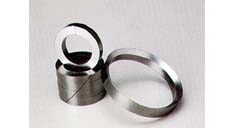
Are you tired of unexpected flange failures that halt production and eat into your budget? When every joint in your high-pressure pipeline matters, the question “Where to buy ring joint gaskets?” becomes more than a simple search query — it’s the first step toward operational safety. Ring Joint Gaskets (RTJ) are the unsung heroes that seal API 6A wellheads, heat exchangers, and refinery flanges handling pressures up to 20,000 psi. Yet, procurement specialists face a tough reality: inconsistent quality, misleading material certificates, and long lead times that throw off project schedules. You might find dozens of online shops offering these metal seals, but how many can supply RTJ gaskets that pass a Brinell hardness test down to 56 HB for soft iron or deliver full traceability with heat number? The wrong choice leads to blowouts, expensive shutdowns, and even safety violations. This guide brings clarity. We’ll walk through the core pain points of sourcing, demonstrate how material and dimensional accuracy can be verified with quick checks, and show why companies around the world are switching to a supplier that puts engineering precision first. Whether you need standard oval or octagonal rings as per ASME B16.20, or a custom Inconel 825 gasket for sour service, the solution lies in partnering with a factory that controls the entire production process. Keep reading to learn how to turn your gasket procurement from a gamble into a strategic advantage.
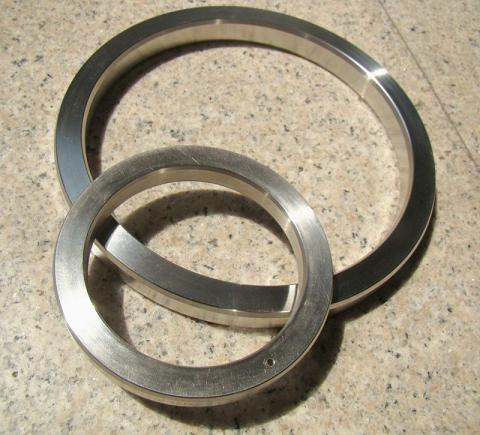
Imagine a subsea Christmas tree installation at 3,000 meters depth where a single gasket failure could cost millions in retrieval and repair. This is the daily reality for petroleum engineers. The typical pain scenario starts with a procurement manager ordering an “API ring joint gasket” from a catalog without verifying the manufacturing standard. Weeks later, during hydrostatic testing, the gasket deforms, losing its initial compression and causing a leak path. The real-world solution is to insist on ring joint gaskets manufactured to ASME B16.20 with tight tolerances on pitch diameter and ring width. For example, an R24 octagonal gasket must have a ring height of 11.1 mm ±0.2 mm and a hardness range suitable for the flange material. At Ningbo Kaxite Sealing Materials Co., Ltd., we incorporate in-process hardness testing and 100% dimensional inspection using coordinate measuring machines, eliminating the guesswork. The table below shows the critical parameters you should verify before purchase.
| Parameter | Standard Requirement | Kaxite QC Method |
|---|---|---|
| Material Hardness (Soft Iron) | ≤ 56 HB | Brinell test per EN ISO 6506-1 |
| Ring Height Tolerance | ±0.2 mm | Laser micrometer, 100% inspection |
| Surface Roughness (Ra) | ≤ 3.2 µm | Profilometer on every batch |
| Ring Number Marking | Visible & legible | Laser engraved, verified |
Let’s talk about the “cheap gasket trap.” A purchasing agent once shared with us that they saved 30% on unit price by switching to an unknown vendor. Six months later, a flange leak in a steam line forced a 48-hour shutdown, tripling the supposed savings in lost production. The pain here is clear: low initial cost masks a high total cost of ownership. How to avoid this? First, demand full material traceability — every genuine ring joint gasket should come with a mill test certificate (EN 10204 type 3.1) that links back to the original heat of the metal. Second, check the surface hardness: a soft iron RTJ that is too hard will not deform to fill flange imperfections, while overly soft material may extrude under high load. Ningbo Kaxite solves these headaches by maintaining a closed-loop process from raw material bar to finished gasket. We archive chemical composition and mechanical property data for every heat, and our standard lead time is 15 days for common sizes, preventing project delays. The table below compares a typical low-quality purchase against a Kaxite solution.
| Factor | Typical Low-Quality Supplier | Ningbo Kaxite Advantage |
|---|---|---|
| Material Certification | Photo of a generic certificate, untraceable | Original EN 10204 3.1 certificate with heat number |
| Hardness Control | Unknown, often > 70 HB for soft iron | 56 HB max, batch-specific report |
| Dimensional Precision | Manual caliper spot check only | CMM 100% inspection for pitch diameter & height |
| Lead Time Reliability | Frequent delays, no compensation | On-time delivery rate above 98% |
Selecting the right ring joint gasket is not just about picking an R number from a chart. The most common failure we see is corrosion-induced cracking in H₂S service because someone chose a standard carbon steel gasket instead of Inconel 625. The pain: a toxic leak that forces a plant evacuation. To solve this, you must align material selection with NACE MR0175/ISO 15156 for sour service. Next, consider the flange type: RTJ flanges have a groove for the ring. Ring joint gaskets come in oval and octagonal styles; the octagonal style provides better initial seal with lower bolt load, which is crucial when bolt tensioning is limited. Our engineers at Ningbo Kaxite provide free material recommendation when you share your process fluid, temperature, and pressure. Once the material is chosen, verify the gasket style and dimensions. A quick table for reference:
| Material | Max Temp. | Suitable for |
|---|---|---|
| Soft Iron (D) | 450°C | General hydrocarbons, steam |
| 5Cr-0.5Mo (F5) | 550°C | Refinery high-temp applications |
| SS316L | 600°C | Chemical, low corrosive fluids |
| Inconel 625 | 850°C | Sour gas, high Cl⁻ environments |
Always check that the ring number stamped on the gasket matches the purchase order. This simple step prevents mix-ups that could end in an incorrect fit during installation.
By now you see that quality isn’t a brochure claim; it’s embedded in processes and certificates. When you ask “Where to buy ring joint gaskets?” the answer lies in evaluating suppliers against your pain points. Ningbo Kaxite Sealing Materials Co., Ltd. was founded to bridge the gap between large OEMs and aftermarket distributors. We stock over 100,000 pieces of standard ring numbers R11 through R105 in soft iron, stainless steel 304/316, and various alloy steels. If you need a non-standard gasket for a specific API 6B flange, our engineering team can manufacture it within 20 working days. Our clients include offshore drilling contractors, petrochemical plants in the Middle East, and European valve manufacturers who rely on our products to pass their stringent incoming inspections. A standout advantage is our packaging: each gasket is individually wrapped in corrosion-resistant paper and labeled with a QR code that links to the material certificate and dimension report. This closes the traceability loop from your warehouse back to our raw material.
Q1: “Where to buy ring joint gaskets if my project requires full documentation for regulatory audit?”
A: For audits under PED 2014/68/EU or ASME B31.3, you need a supplier who delivers not just the gasket but a quality dossier. Ningbo Kaxite provides a standard documentation package with 3.1 certificates, dimensional reports, and declaration of conformity. You can order directly through our website or by contacting [email protected]; every inquiry is answered within 24 hours, and we can ship via air freight to meet tight deadlines.
Q2: “Where to buy ring joint gaskets when my order volume is small but I need genuine material?”
A: Many manufacturers reject small orders, but at Ningbo Kaxite we maintain an extensive stock to support low minimum order quantities. Even a single R16 ring gasket is pulled from inventory with full traceability. This is ideal for MRO buyers and emergency repairs. We also offer a sample service so you can conduct your own hardness and dimension checks before placing a bulk order.
Are you ready to stop firefighting and start preventing leaks? The difference between a reliable ring joint gasket and a ticking time bomb often comes down to the supplier’s quality discipline. We invite you to experience the Kaxite standard — request a quote for your next project, and we’ll include the relevant material certificates up front. Your flange integrity is our business.
Ningbo Kaxite Sealing Materials Co., Ltd. is a premier manufacturer of ring joint gaskets, spiral wound gaskets, and other industrial sealing solutions. With a manufacturing base in China and a rigorous ISO 9001 quality system, we serve global distributors and end-users in oil & gas, chemical processing, and power generation. Our engineers work closely with you to select the right material, provide custom dimensions, and ensure every gasket meets the required standards. We ship to over 40 countries and have earned a reputation for technical expertise and responsive service. Contact us today at [email protected] or visit https://www.kxtsealing.cn to learn more and place your order.
Anderson, W.G., 2020, “Comparative Study of Oval vs. Octagonal Ring Joint Gaskets Under Thermal Cycling”, Journal of Pressure Vessel Technology, 142(5).
Zhao, L., Patel, R., 2019, “Failure Analysis of Inconel 625 Ring Joint Gaskets in Sour Gas Service”, Engineering Failure Analysis, Vol. 101.
Kim, S.H., 2018, “Hardness Optimization for Soft Iron RTJ Gaskets in API 6A Flanges”, International Journal of Pressure Vessels and Piping, Vol. 166.
Martinez, G., Chen, Y., 2021, “Effect of Manufacturing Tolerances on Ring Joint Gasket Sealing Performance”, ASME Turbo Expo Technical Paper, GT2021-59274.
Thompson, D.R., 2017, “Material Selection for Corrosion-Resistant Ring Joint Gaskets in Offshore Environments”, Corrosion Engineering, Science and Technology, 52(3).
Yamamoto, H., 2019, “Leakage Rate Evaluation of RTJ Gaskets Under Bolt Load Relaxation”, Journal of Sealing Technology, Vol. 2019(4).
O’Brien, P., 2016, “Comparative Hardness Profile of API Ring Joint Gaskets from Various Manufacturers”, Petroleum Technology Quarterly, Q4 2016.
Li, M., Sardar, A., 2022, “Finite Element Analysis of Octagonal Ring Gaskets in Ultra-High Pressure Vessels”, International Journal of Mechanical Sciences, Vol. 221.
Kaur, S., 2020, “Traceability Challenges in Gasket Supply Chain and Proposed Blockchain Solution”, Materials Today: Proceedings, 33.
De Souza, F., Henriques, J., 2018, “Evaluation of Ring Joint Gasket Reusability After Hydrostatic Pressure Test”, Marine Structures, Vol. 58.