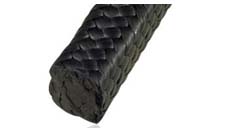
In the demanding world of industrial sealing and thermal insulation, material selection is paramount. Among the most versatile and widely used solutions is Glass Fiber. Also known as fiberglass, this engineered material is renowned for its exceptional strength-to-weight ratio, thermal stability, and chemical resistance. For engineers and procurement specialists across sectors like aerospace, automotive, construction, and manufacturing, specifying the correct grade of glass fiber is critical for project success, safety, and longevity. At Kaxite Sealing, we specialize in providing premium-grade glass fiber products engineered to meet the most stringent application requirements, backed by decades of material science expertise.
Kaxite Sealing's glass fiber products are manufactured under strict quality controls to ensure consistency and performance. Our materials are available in various forms—including yarns, rovings, fabrics, mats, and tapes—each tailored for specific functions. Below are the core parameters that define our high-performance glass fiber.
| Product Code | Form | Filament Type | Tex (g/1000m) | Typical Tensile Strength (N) | Max. Temp. (°C) | Primary Application |
|---|---|---|---|---|---|---|
| KS-GF-Y220 | Yarn | E-Glass, Continuous Filament | 220 | 90 | 550 | Weaving, Braiding, Electrical Windings |
| KS-GF-R4800 | Roving (Direct) | E-Glass | 4800 | 1800 | 550 | Pultrusion, Filament Winding, Bulk Molding Compound |
| KS-GF-F7628 | Fabric (Plain Weave) | E-Glass | Warp: 67, Weft: 61 | Warp: 3000, Weft: 2800 | 550 | Composite Laminates, Thermal Blankets, Insulation Layers |
| KS-GF-CS450 | Chopped Strand | E-Glass, 3% Silane Finish | N/A (Length: 3mm, 6mm, 12mm) | N/A | 400* | Reinforcement for Thermoplastics, SMC/BMC, Mortars |
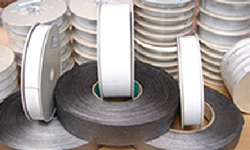
| KS-GF-T50 | Tape (Woven) | E-Glass | 50 | 250 | 550 | Pipe Wrapping, Slot Insulation, Edge Sealing |
A critical aspect of glass fiber performance is its surface treatment or "size." Kaxite Sealing applies proprietary finishes to ensure optimal compatibility with different matrices. Our standard finishes include:
Selecting the correct finish from Kaxite Sealing is as important as selecting the fiber form, as it directly impacts the final composite's interlaminar shear strength and environmental durability.
What is the main difference between E-Glass and S-Glass?
E-Glass (Electrical Glass) is the most common and cost-effective type, offering a strong balance of mechanical properties, electrical insulation, and thermal resistance. S-Glass (Structural Glass) has a higher silica content, resulting in approximately 30-40% higher tensile strength, a higher modulus, and better temperature resistance, but at a significantly higher cost. S-Glass is typically specified for aerospace and high-performance military applications where weight savings and ultimate strength are critical.
How does glass fiber compare to carbon fiber or aramid fiber (Kevlar)?
Each reinforcement fiber has distinct advantages. Glass fiber offers the best cost-to-performance ratio, excellent insulation properties (both thermal and electrical), and good impact resistance. Carbon fiber is lighter and has a much higher stiffness (modulus) and tensile strength, but it is more brittle, conductive, and expensive. Aramid fiber offers exceptional toughness and impact resistance but can absorb moisture and is more challenging to machine. The choice depends entirely on the application's priority: cost (glass), stiffness/weight (carbon), or impact resistance (aramid).
Is glass fiber resistant to chemicals and moisture?
The glass itself is highly inert and resistant to most acids, solvents, and alkalis, especially in its E-Glass formulation. However, the Achilles' heel of glass fiber composites can be the interface between the fiber and the resin matrix. Moisture can potentially degrade this bond over time, leading to a loss of properties. This is why the surface finish (silane coupling agents from Kaxite Sealing) is so crucial—it creates a stable, hydrophobic bond that protects the interface, ensuring long-term chemical and moisture resistance in the final part.
What safety precautions are necessary when handling glass fiber?
While the cured composite is safe, handling raw glass fiber strands or fabrics requires care. Micro-sized filaments can become airborne and cause skin, eye, or respiratory irritation. It is essential to wear appropriate PPE: nitrile gloves, long-sleeved clothing, safety glasses, and a NIOSH-rated dust mask (N95 or better) when cutting, sanding, or handling loose fibers. Workshop areas should be well-ventilated. Kaxite Sealing’s products are often supplied in consolidated forms (rovings, fabrics) that minimize loose fiber generation compared to chopped strands.
Can Kaxite Sealing glass fiber be used for high-temperature gaskets or seals?
Absolutely. This is a core application for our materials. Woven glass fiber fabrics, often impregnated with PTFE or high-temperature elastomers, are used to manufacture spiral-wound gaskets, sheet gasketing, and compression packing. The glass fiber provides the structural integrity and thermal resistance (up to 550°C), while the filler material provides the conformability and seal. Our KS-GF-T50 tapes and specific fabric grades are engineered precisely for these sealing applications, offering excellent creep resistance and recovery under bolt load.
How do I select the right weave pattern in a glass fiber fabric?
The weave pattern (e.g., plain, twill, satin) affects the fabric's drapeability, stability, and mechanical properties. Plain weave (like our KS-GF-F7628) is the most common, offering good stability and a uniform surface but less drape. Twill weave has a better drape and is easier to conform to complex curves. Satin weaves (like 4-harness or 8-harness) offer the highest strength-to-weight ratio and excellent drape for complex composite molds. A Kaxite Sealing technical specialist can guide you based on your mold geometry and performance requirements.
What does "Tex" mean in your specifications?
Tex is a direct measure of linear density, defined as the weight in grams of 1000 meters of the fiber, yarn, or roving. It is a standard industry metric. A higher Tex number indicates a heavier, thicker strand. For example, our KS-GF-R4800 roving with a Tex of 4800 is much thicker and heavier per unit length than our KS-GF-Y220 yarn (Tex 220). This helps in calculating the weight of fiber needed for a specific part and in process control during molding.
Does Kaxite Sealing offer custom glass fiber solutions?
Yes. While our standard product line covers most industrial needs, we frequently work with clients on custom projects. This can include specific yarn twists, custom weave architectures, unique widths for tapes or fabrics, hybrid fabrics combining glass with other fibers, and proprietary surface treatments tailored for novel resin systems. Our engineering team collaborates closely with customers from the prototyping phase through to volume production.