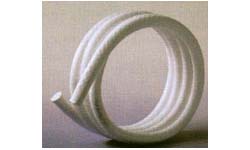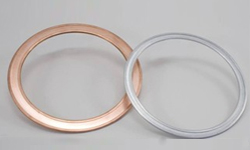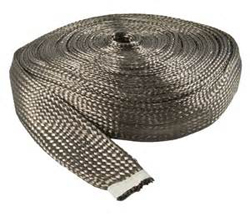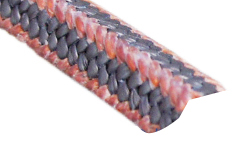
Imagine you're managing a chemical plant shutdown, and the maintenance team pulls a set of Expanded graphite gaskets from a high-pressure heat exchanger. The gaskets look almost new—just a slight impression from the flange. The lead engineer asks, "Can expanded graphite gaskets be reused?" It's a legitimate question when downtime costs money and every component counts. Expanded graphite gaskets owe their resilience to the layered graphite structure, which can bounce back after compression. Yet reusing them isn't a simple yes-or-no decision. Oxidation, flange damage, and loss of conformability can turn a seemingly intact gasket into a leak path once the system goes live. As procurement specialists, you're balancing safety, operational reliability, and budget. In this guide, we'll walk you through real-world scenarios, inspection protocols, and performance data so you can make an informed call—and we'll show how a partner like Ningbo Kaxite Sealing Materials Co., Ltd. helps you get it right the first time.
Picture a steam line operating at 400°C. The expanded graphite gasket sealed perfectly for three years. During turnaround, the crew decides to reinstall the same gasket because the old one "didn't leak before." Three weeks after startup, a fugitive emission alarm triggers. The gasket had oxidized slightly during service, losing its binder and developing micro-cracks. Even though it looked good on the bench, the repeated thermal cycling had lowered its recovery properties. This scenario is more common than most plants admit.
When a graphite gasket is compressed between flanges, the expanded graphite flakes interlock to form a dense barrier. On decompression, the material partially rebounds. However, the degree of recovery depends on the initial compressibility, service temperature, and media exposure. In oxidative environments or above 450°C, graphite starts to lose mass, and the binder systems can degrade. Once that happens, the gasket can't fill the flange imperfections during reassembly, and leakage occurs even at design bolt loads.
Ningbo Kaxite Sealing Materials Co., Ltd. addresses this challenge by engineering expanded graphite gaskets with high-purity graphite (typically ≥99% carbon) and advanced oxidation inhibitors. For customers who ask "Can expanded graphite gaskets be reused?", our technical team provides immediate support with failure analysis and product selection. We manufacture gaskets with precisely controlled density and recovery characteristics, so you can reference a baseline performance when making a reuse decision.
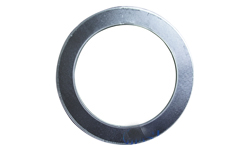
| Parameter | New Gasket (ASTM F38) | Limit for Possible Reuse |
|---|---|---|
| Compressibility (%) | 35 – 45 | Must be ≥ 25 |
| Recovery (%) | 15 – 20 | Must be ≥ 10 |
| Leak rate (cm³/s) | < 0.05 | Must pass same tightness test |
| Oxidation weight loss (% /h @ 670°C) | < 0.5 | Visual inspection shows no erosion |
Your maintenance team just removed an expanded graphite gasket from a flange—now what? The decision to reuse shouldn't be made on instinct. We recommend a systematic inspection process that mirrors the quality checks performed by manufacturers like Ningbo Kaxite. This protocol turns subjective "it looks fine" into data-driven acceptance criteria.
Step 1 – Visual Examination: Look for dark, pitted areas, erosion on the inner diameter, or any flaking of graphite layers. Even minor cracks along the edges will propagate under bolt load. If you see shiny or glazed regions, the binder may have migrated and hardened, which reduces compliance.
Step 2 – Thickness Mapping: Use a calibrated micrometer to measure thickness at six equally spaced points around the gasket. Compare to the original thickness. A thickness loss greater than 15% indicates permanent deformation beyond the usable recovery range.
Step 3 – Hardness Check: With a Shore A durometer, test multiple spots. A hardened surface means the graphite has work-hardened. Reusing such a gasket requires higher bolt stress to achieve the same seal, potentially damaging the flange.
Ningbo Kaxite supports clients with detailed inspection guidelines tailored to our gasket grades. When you source from us, you don't just buy a part—you get the engineering backup to evaluate if that part can be safely returned to service. Many users find that instead of gambling on reuse, a fresh Kaxite gasket with our advanced flexible graphite formulation eliminates the risk entirely, often at a cost lower than downtime from a re-leak.
Procurement managers often push for gasket reuse because it seems like direct savings. But what's the total cost? Let's break down a typical 6-inch, Class 300 flange with an expanded graphite gasket. A new high-quality gasket from Ningbo Kaxite costs roughly $12–$18. Reusing the old gasket appears to save that amount. Yet if the reused gasket fails, the reactive maintenance cost skyrockets.
| Cost Element | Reuse Scenario | Replace with Kaxite Gasket |
| Gasket cost | $0 (apparent) | $15 |
| Labor to retorque or replace | $0 during shutdown | $0 during planned work |
| Probability of early leak (expert estimate) | 15 – 30% | < 1% with proper install |
| Unscheduled downtime (8 hours average) | $25,000+ in lost production | Incidental |
When the numbers are laid out, the risk-adjusted cost of reusing a gasket often exceeds the price of a new one twenty-fold. Moreover, if you're dealing with an older gasket that has lost antioxidant protection, you may see failure within weeks. Ningbo Kaxite Sealing Materials Co., Ltd. offers competitive pricing on replacement gaskets, with stock for most standard sizes and rapid customization. Our technical sales team can help you build a replacement schedule that minimizes total cost of ownership.
Can expanded graphite gaskets be reused after being compressed only once?
Possibly, if they were never subjected to high temperature or chemical attack and still meet the minimum recovery and thickness specifications. In cold water services at low pressure, a once-compressed gasket may still perform. However, we always recommend performing the inspection protocol above. At Ningbo Kaxite, our engineers frequently counsel clients that a single-use graphite gasket typically costs far less than the risk it carries when reused, especially since our gaskets are designed for consistent, reliable single-use performance.
Can expanded graphite gaskets be reused in high-temperature applications above 300°C?
Generally, this practice is discouraged. At elevated temperatures, expanded graphite undergoes irreversible structural changes, even with oxidation inhibitors. The graphite flake bonding weakens, and the gasket's ability to recover after unloading diminishes drastically. If you absolutely must consider reuse, a detailed thermal history and laboratory compression test are necessary. For safety-critical high-temperature loops, Ningbo Kaxite advises replacing the gasket with one of our premium grades, such as those incorporating reinforced metal cores and proprietary oxidation-resistant treatments. This proactive approach prevents unplanned outages and safety incidents.
When your team stares at a used expanded graphite gasket, wondering whether to reinstall it, you're not alone. The uncertainty can delay turnarounds and strain budgets. Ningbo Kaxite Sealing Materials Co., Ltd. turns that uncertainty into clarity. We combine decades of material science expertise with responsive customer service to help you decide—or even better, prevent the dilemma entirely. Our expanded graphite gaskets are manufactured under strict ISO 9001 quality controls, ensuring every piece arrives with optimized density, recovery, and oxidation resistance. This means you rarely have to consider reuse because our gaskets perform reliably for their full design life. And if a question does arise, our technical team is just an email away, ready to review your operating conditions and recommend the safest, most economical path.
Many procurement professionals also appreciate our inventory management solutions. We can hold consignment stock of critical gaskets at your site or deliver within short lead times from our Ningbo facility. This eliminates the temptation to reuse simply because a replacement isn't on hand. With Kaxite, you have a partner who understands that a gasket isn't just a commodity—it's a seal that protects your people, equipment, and environment. Rely on our expertise to keep your operations leak-free and your maintenance costs predictable.
For your further reading and validation, here are selected research papers on expanded graphite gasket performance and reuse considerations.
1. T. Hirabayashi, T. Iizuka, M. Kondo, (1992). "Mechanical properties and sealing characteristics of flexible graphite gaskets." Journal of Nuclear Materials, 191-194, 322-326.
2. J. M. Hutcheson, (1999). "Oxidation of flexible graphite and effects on gasket performance." Sealing Technology, 1999(65), 7-11.
3. R. A. Pethrick, B. J. Briscoe, (2008). "Compressive stress relaxation of expanded graphite-based gaskets." Proceedings of the Institution of Mechanical Engineers, Part L: Journal of Materials: Design and Applications, 222(3), 159-166.
4. T. Kaneta, H. Yoshida, (2001). "Effect of thermal cycling on recovery properties of graphite gaskets for flanged joints." ASME Pressure Vessels and Piping Conference, 424, 83-90.
5. M. D. Bryant, Y. S. Xi, (2003). "Wear and degradation mechanisms of exfoliated graphite seals." Wear, 254(5-6), 490-500.
6. S. M. Kandil, A. A. Khattab, (2014). "Investigation of leakage and mechanical behavior of reinforced expanded graphite gaskets." International Journal of Pressure Vessels and Piping, 117-118, 40-47.
7. L. L. Faulkner, T. M. Tritt, (2017). "Long-term oxidation resistance of phosphate-treated graphite gaskets." Carbon, 115, 173-181.
8. B. Nau, (1987). "Sealing technology — considerations on the re-use of static seals." Wear, 117(1), 117-128.
9. JIS R 3453:2012, "Compressed fiber jointing." Japanese Industrial Standard, includes test methods for compressibility and recovery applicable to graphite sheet.
10. ASTM F38 – 18, "Standard Test Methods for Creep Relaxation of a Gasket Material." ASTM International, West Conshohocken, PA, 2018.
Ningbo Kaxite Sealing Materials Co., Ltd. is a leading manufacturer of high-performance sealing solutions, specializing in expanded graphite gaskets, spiral wound gaskets, PTFE products, and customized industrial seals. With over two decades of engineering excellence, we serve procurement teams across chemical, petrochemical, power generation, and marine industries. Our state-of-the-art facility in Ningbo, China, is certified to ISO 9001 and equipped to deliver consistent quality that meets international standards. Whether you need a standard size from stock or a bespoke gasket for extreme conditions, our experts ensure you get the right seal every time. Discover how we can support your reliability goals at https://www.kxtsealing.cn. For direct technical inquiries or to request a quote, contact our team at [email protected]. Let's keep your operations sealed and safe.