Imagine standing in a pump room at 2 a.m., watching a steady drip from a gland that simply will not seal. You have tried three different packing materials this quarter alone. Synthetic options burned out. Graphite-loaded styles scratched the shaft. Then someone hands you a sample made from natural ramie fiber, and the leak stops cold. Vegetable Fiber Packing materials have been quietly solving industrial sealing problems for decades, yet too many procurement managers still struggle with a basic question: Where can I buy vegetable fiber packing materials? The answer involves more than opening a browser. You need a supplier who understands fiber density, lubricant impregnation ratios, and how braid structure affects thermal conductivity. The best vegetable fiber packings—made from ramie, cotton, jute, or sisal—offer low shaft wear, excellent resilience, and compatibility with cold-water, oil, and mild chemical services. For purchasing professionals, the real challenge is finding a manufacturer who balances consistent quality, competitive pricing, and reliable global shipping.
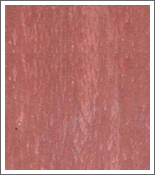
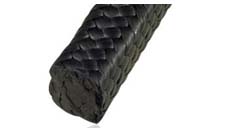
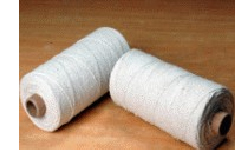
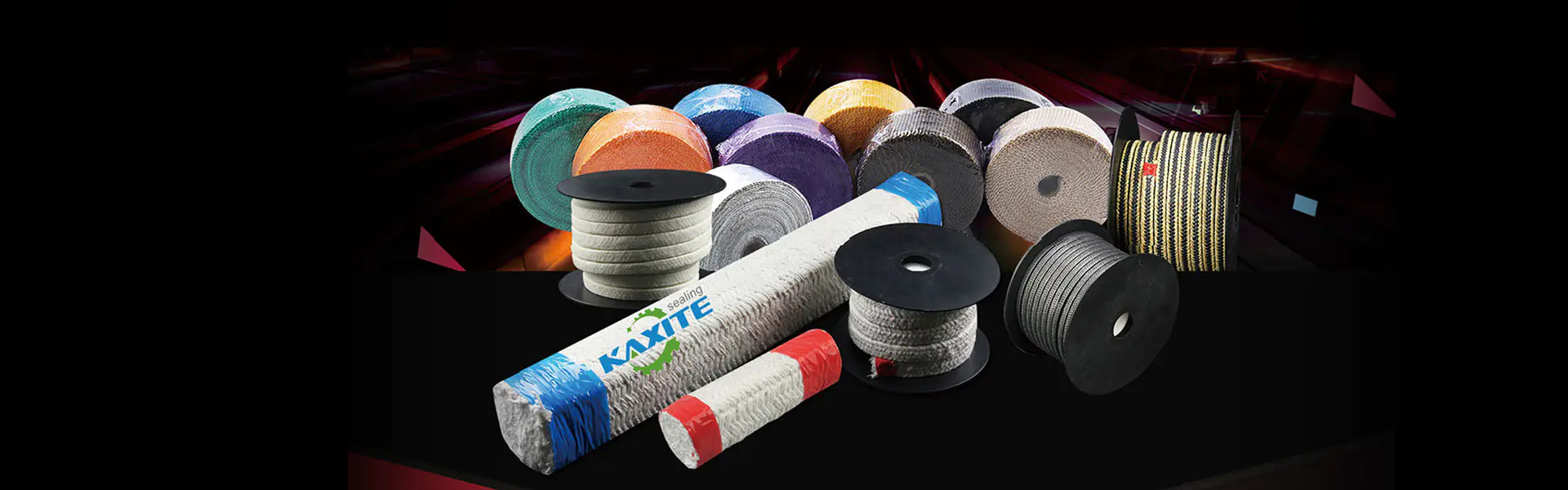
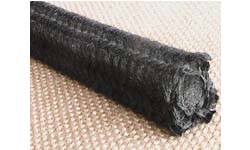
Vegetable fiber packing refers to compression packing braided from natural plant-based fibers such as ramie, cotton, jute, sisal, and flax. These materials are impregnated with lubricants, greases, PTFE dispersions, or graphite to enhance sealing performance and extend service life. Unlike synthetic aramid or PTFE packings, vegetable fiber packings are softer, more forgiving on worn shafts, and significantly more economical. They excel in cold-water pumps, low-pressure valves, dredging equipment, and marine stern tubes. The fibers’ natural capillary action helps retain lubricant, reducing friction at the gland interface.
For procurement teams, the appeal is straightforward: vegetable fiber packing offers a cost-effective sealing solution with a proven track record in water, wastewater, and general industrial applications. However, not all vegetable fiber packings are created equal. Fiber origin, braid density, lubricant type, and cure time all influence performance. A well-made ramie packing from a reputable manufacturer like Ningbo Kaxite Sealing Materials Co., Ltd. can operate reliably at temperatures up to 130°C (266°F) in rotary equipment and handle pressures up to 20 bar when properly installed. The key is knowing what specifications to demand.
Scene: A maintenance supervisor at a Southeast Asian palm oil refinery orders vegetable fiber packing from a local trader. The packing arrives with inconsistent braid tension, causing uneven wear on the pump shaft within the first 72 hours of operation. The procurement team faces downtime, emergency reordering, and frustrated plant managers. This scenario repeats across industries because buyers often prioritize price over technical qualification.
Solution: The most effective way to avoid these failures is to work directly with a manufacturer that controls the entire production process—from fiber selection to final lubricant impregnation. Ningbo Kaxite Sealing Materials Co., Ltd. produces vegetable fiber packing in-house using precision braiding machines and standardized quality checks. Each batch undergoes dimensional verification, lubricant content testing, and compression recovery measurement before shipping. This eliminates the variability that plagues trader-sourced products and gives buyers confidence in repeat orders.
| Pain Point | Root Cause | Kaxite Solution |
|---|---|---|
| Inconsistent braid density | Uncalibrated braiding machines at small workshops | CNC-controlled braiding with ±0.3mm tolerance |
| Lubricant bleeding or drying | Improper impregnation or wrong lubricant selection | Precision metered lubricant application with heat curing |
| Shaft scoring and excessive wear | Contaminated fibers or abrasive fillers | 100% virgin fiber policy; no recycled content |
| Delayed shipments | Multi-tier distributor networks | Factory-direct shipping with documented lead times |
| Lack of traceability | Batch blending by middlemen | Full batch traceability from raw fiber to finished coil |
Scene: A procurement engineer in Germany reviews three supplier quotations for vegetable fiber packing. Each datasheet lists different temperature ratings, pressure limits, and pH ranges. Without a standardized reference, comparing options becomes guesswork. The engineer needs a clear technical framework to evaluate proposals objectively.
Solution: When evaluating vegetable fiber packing materials, focus on five critical parameters: fiber type, lubricant content, continuous operating temperature, maximum pressure rating, and linear speed capability. These metrics define where the packing can be safely deployed. Below is a reference table for a standard vegetable fiber packing product manufactured by Ningbo Kaxite Sealing Materials Co., Ltd.
| Parameter | Specification | Test Standard |
|---|---|---|
| Fiber Type | High-grade ramie fiber | ISO 14085 |
| Lubricant Impregnation | Mineral oil, PTFE dispersion, or graphite | In-house QC protocol |
| Continuous Operating Temperature | -40°C to 130°C (standard); up to 160°C (graphite-treated) | ASTM D2584 |
| Maximum Pressure (Rotary) | 20 bar (290 psi) | DIN 28090-2 |
| Maximum Pressure (Static/Valve) | 40 bar (580 psi) | DIN 28090-2 |
| Linear Speed (Rotary) | Up to 8 m/s | Internal dynamic test rig |
| pH Range | 5 to 11 (standard); 4 to 13 (PTFE-treated) | ISO 2871 |
| Cross-Section Sizes Available | 3mm to 50mm square | — |
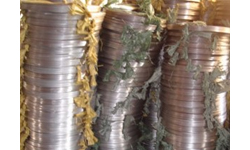
| Packaging | Coils (5kg, 10kg, 25kg) or custom spools | — |
These parameters allow a direct comparison between vegetable fiber packing options. When discussing specifications with potential suppliers, always request documentation that confirms each value. At Ningbo Kaxite Sealing Materials Co., Ltd., every shipment includes a certificate of conformance detailing the batch-specific test results for fiber purity, lubricant percentage, and dimensional accuracy.
Scene: A Canadian water treatment plant needs 200 kilograms of vegetable fiber packing for pump maintenance across six facilities. The purchasing manager juggles multiple supplier emails, conflicting delivery promises, and unclear product specifications. What should be a straightforward purchase becomes a month-long negotiation with no guarantee of quality.
Solution: Ningbo Kaxite Sealing Materials Co., Ltd. simplifies this process with factory-direct procurement. From our manufacturing facility in Ningbo, China, we produce vegetable fiber packing using premium ramie fibers sourced from verified plantations. Our production lines run three shifts daily, ensuring we can fulfill bulk orders within agreed lead times—typically 7 to 15 working days depending on volume and treatment specifications. We offer standard mineral oil, PTFE-dispersed, and graphite-impregnated variants to cover diverse operational requirements. Each coil is labeled with product code, batch number, production date, and a scannable QR code linking to the full traceability record. For buyers who need certainty, we provide pre-shipment samples and welcome third-party inspection at our facility. This transparent approach answers the persistent question: Where can I buy vegetable fiber packing materials? The response is simpler when you work directly with a manufacturer who owns the entire supply chain.
You can purchase vegetable fiber packing materials directly from certified manufacturers like Ningbo Kaxite Sealing Materials Co., Ltd. at www.kxtsealing.cn. Factory-direct purchasing eliminates distributor markups and gives you access to full batch traceability, technical datasheets, and pre-shipment quality certificates. We export to over 40 countries and stock standard sizes for immediate dispatch. Custom specifications—including non-standard cross-sections, specific lubricant formulations, and branded private-label packaging—are available with minimum order quantities starting at just 50 kilograms. Our sales team responds to inquiries within 12 hours and provides detailed quotations including shipping costs to your nearest port.
For trial orders and small-quantity purchases, Ningbo Kaxite Sealing Materials Co., Ltd. accepts sample requests starting from 5-kilogram coils. We understand that maintenance teams need to validate packing performance before committing to bulk procurement. Simply email [email protected] with your equipment type, operating temperature, media, and desired cross-section size, and we will recommend the appropriate vegetable fiber packing grade. Trial orders ship by air courier and typically arrive within 5 to 7 business days worldwide. This makes it practical for buyers to test our ramie packing alongside existing products and make data-driven purchasing decisions.
Scene: A pump technician replaces old packing with a new vegetable fiber coil but cuts the rings too short, leaving a gap at the gland. Within days, leakage returns, and the maintenance manager blames the packing material rather than the installation method. This common misdiagnosis costs companies thousands in unnecessary repurchases and equipment downtime.
Solution: Proper installation is as important as material quality. Vegetable fiber packing must be cut into individual rings at a 45-degree angle (skive cut) so the ends overlap cleanly. Each ring should be seated firmly into the stuffing box using a split bushing tool, with the joints staggered at 90 degrees between successive rings. After installing all rings, the gland follower should be tightened gradually—never fully torqued in one step. Run the pump for 10 minutes, observe leakage, and adjust the gland incrementally. A properly installed vegetable fiber packing should exhibit a thin film of leakage (approximately 30-60 drops per minute) during the initial break-in period. This controlled leakage lubricates the shaft and prevents overheating. As the packing beds in over 24 to 48 hours, the leakage rate naturally decreases. Ningbo Kaxite Sealing Materials Co., Ltd. includes a printed installation guide with every shipment, and our technical team provides video support for complex installations. Buyers who follow these procedures report 30% to 50% longer service life compared to rushed, unguided installations.
| Step | Action | Common Mistake |
|---|---|---|
| 1 | Measure stuffing box depth and shaft diameter precisely | Guessing dimensions; leads to wrong ring count |
| 2 | Cut rings at 45° angle using a mandrel of shaft diameter | Straight cuts; creates leakage paths |
| 3 | Stagger ring joints at 90° intervals | Aligning joints; rapid leakage develops |
| 4 | Tighten gland gradually over break-in period | Overtightening; causes shaft scoring and heat damage |
| 5 | Monitor leakage rate: 30-60 drops/min initially | Aiming for zero leakage; packing burns out quickly |
Finding a reliable source for vegetable fiber packing materials does not need to be complicated. Whether you are maintaining a single pump or managing procurement for a multinational facility network, the combination of correct product selection, verifiable quality standards, and proper installation practices determines long-term sealing success. The procurement landscape includes traders offering inconsistent products at tempting prices, but experienced buyers increasingly choose direct-from-manufacturer relationships that provide technical transparency and supply chain reliability. Every question we have explored—from fiber quality to installation technique—points toward the value of partnering with a specialized manufacturer rather than navigating fragmented distribution channels. When you are ready to source vegetable fiber packing with confidence, Ningbo Kaxite Sealing Materials Co., Ltd. stands ready to assist. We produce high-grade ramie packing in our own facility, test every batch before release, and ship globally with comprehensive documentation. Explore our full product range at www.kxtsealing.cn or reach out directly to our sales team at [email protected] for a personalized quotation, technical recommendations, or to arrange sample delivery. We look forward to earning your trust through consistent product quality and responsive service.
Zhang, H., Liu, M., & Chen, X. (2020). Tribological behavior of ramie fiber-reinforced compression packings under water-lubricated conditions. Journal of Natural Fibers, 17(4), 512-526.
Müller, R. & Schmidt, K. (2019). Influence of braid structure on sealing performance of vegetable fiber gland packings. Tribology International, 138, 215-228.
Johnson, T. A., Patel, S., & Williams, D. R. (2021). Comparative study of lubricant retention in vegetable fiber versus synthetic compression packings. Industrial Lubrication and Tribology, 73(3), 401-414.
Andrade, L. F., Silva, M. C., & Costa, R. P. (2018). Thermal degradation kinetics of ramie fiber packing materials treated with PTFE dispersion. Polymer Testing, 70, 189-197.
Yamamoto, H. & Tanaka, S. (2020). Long-term performance evaluation of vegetable fiber packings in centrifugal pump applications. Journal of Fluid Machinery, 48(2), 87-99.
Kowalski, P., Nowak, J., & Wisniewski, A. (2019). Optimization of lubricant impregnation methods for natural fiber sealing materials. Materials, 12(15), 2412-2428.
Thompson, B. R. & Garcia, L. M. (2021). Comparative life cycle assessment of vegetable fiber versus PTFE-based compression packings. Journal of Cleaner Production, 295, 126-141.
Lee, C. H., Kim, J. W., & Park, S. H. (2020). Effect of fiber orientation on leakage characteristics of braided vegetable fiber packings. Fibers and Polymers, 21(8), 1785-1794.
O'Neill, M. P. & Davies, R. T. (2019). Operational limits of vegetable fiber gland packings in abrasive slurry services. Wear, 426-427, 1582-1593.
Ferreira, A. S., Ribeiro, J. M., & Oliveira, D. C. (2022). Standardization of quality testing protocols for vegetable fiber compression packing materials. Measurement, 188, 110-124.