When uncompromising sealing integrity meets demanding industrial applications, the engineering choice often narrows down to one reliable solution: Corrugated Gaskets. These are not your average flat seals; they are precision-engineered components designed to handle extreme pressures, temperatures, and corrosive media where other gaskets fail. At Kaxite Sealing, we have refined the art and science of corrugated gasket manufacturing for decades, producing seals that set the benchmark for performance and durability in critical service environments.
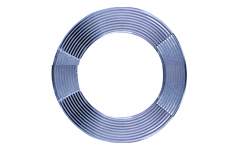
The fundamental advantage of a corrugated gasket lies in its unique geometry. The series of concentric, machined grooves (corrugations) on its face create a series of line contacts with the flange surfaces. This design offers multiple, parallel sealing lines, drastically enhancing the seal's effectiveness compared to a single, broad contact surface. The corrugations also impart remarkable flexibility and resilience, allowing the gasket to accommodate flange irregularities, thermal cycling, and system vibrations without losing its sealing force. This makes them indispensable in industries ranging from oil and gas and chemical processing to power generation and aerospace.
To specify the correct corrugated gasket for your application, a deep understanding of its technical parameters is essential. Below is a detailed breakdown of the key specifications and material options we offer at Kaxite Sealing.
The performance of a corrugated gasket is heavily dependent on the material combination. Kaxite Sealing provides a vast selection to meet specific chemical, thermal, and pressure needs.
| Metal Core Material | Common Facing Materials | Temperature Range | Pressure Range | Primary Applications & Resistance |
|---|---|---|---|---|
| 304 / 304L Stainless Steel | Flexible Graphite, PTFE, Ceramic Fiber | -250°C to 550°C (-418°F to 1022°F)* | Up to 300 Bar (4350 psi) | General chemical, food & beverage, steam; good corrosion resistance. |
| 316 / 316L Stainless Steel | Flexible Graphite, PTFE | -250°C to 550°C (-418°F to 1022°F)* | Up to 300 Bar (4350 psi) | Chloride environments, chemical processing, pharmaceuticals; superior pitting resistance. |
| Alloy 625 (Inconel®) | Flexible Graphite | -200°C to 980°C (-328°F to 1796°F)* | Very High (Application Specific) | Extreme temperatures, high-pressure steam, sour gas (H2S), marine applications. |
| Titanium | Flexible Graphite | -196°C to 500°C (-321°F to 932°F) | High | Oxidizing acids, chloride solutions, seawater; excellent strength-to-weight ratio. |
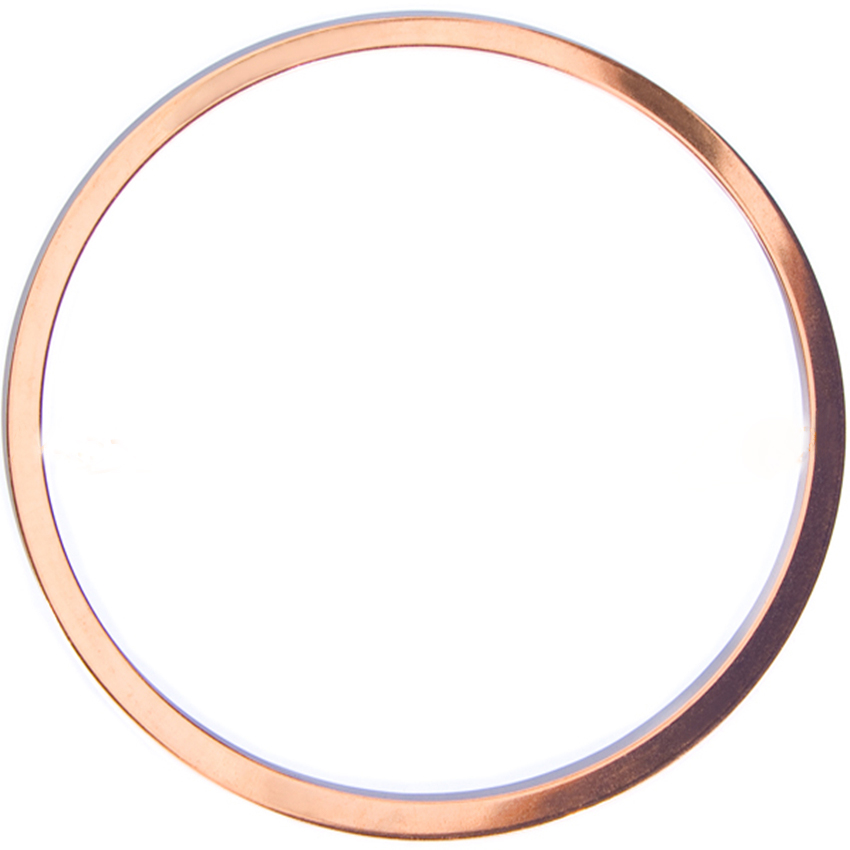
| Copper | N/A (Often used plain) | -250°C to 300°C (-418°F to 572°F) | Medium | Heat exchangers, fuel systems, vacuum applications; high thermal conductivity. |
*Temperature range is highly dependent on the facing material selected. Graphite facing extends the upper limit in inert atmospheres.
A: Corrugated gaskets offer a superior balance of sealing performance and mechanical strength. Compared to flat gaskets, they require significantly lower bolt load to achieve a tight seal, reducing flange stress and the risk of bolt failure. Their multiple sealing lines are more effective. Versus spiral wound gaskets, corrugated gaskets often provide better performance in low bolt-load situations and have a more predictable seating behavior. They are also generally more compact and can be ideal for applications with limited space.
A: Material selection is a three-step process focused on compatibility. First, identify the media (chemicals, gas, steam) the gasket will contact to ensure both the metal core and facing are chemically resistant. Second, determine the continuous and peak operating temperatures to select materials that will not degrade. Third, consider the system pressure to ensure the metal core has adequate strength. Kaxite Sealing's engineering team can provide detailed material selection charts and consult on specific media compatibility to ensure optimal, long-lasting performance.
A: Yes, but the gasket style must be chosen correctly. Plain corrugated gaskets or those with soft facings on both sides are typically used for raised face (RF) flanges, sealing within the raised area. For flat face (FF) flanges, a corrugated gasket with an outer retaining ring (often made of carbon or stainless steel) is mandatory. This ring prevents over-compression of the gasket, protects the soft corrugations from blow-out, and provides alignment during assembly, which is crucial for flat face connections.
A> There is no universal torque value. The correct bolt torque depends on the gasket's size, thickness, metal core material, facing material, the flange's bolt material, grade, and lubrication. Using an incorrect torque is a leading cause of seal failure. Always refer to the detailed installation instructions provided by Kaxite Sealing with your gasket, which will include a calculated bolt load and corresponding torque values. Following a cross-pattern tightening sequence in multiple incremental steps is critical to achieve even compression.
A> As a general rule, corrugated gaskets are designed for single use. Once compressed during installation, the metal corrugations and the facing material (like graphite) undergo plastic deformation to conform to the flange surfaces. Reusing a gasket that has been previously compressed and likely contaminated will almost certainly result in a leak. For operational safety and reliability, Kaxite Sealing always recommends installing a new, unused gasket for every flange connection.
A> At Kaxite Sealing, quality is embedded in our manufacturing process. We implement strict raw material verification, employing certified mill test reports (MTRs) for all metal cores. Our CNC machining ensures dimensional accuracy to micron-level tolerances. For critical applications, we provide full material traceability with unique heat/lot numbers on each gasket or batch. Optional 3rd party inspection and additional testing (like positive material identification - PMI) are available to meet the most stringent project specifications in offshore, subsea, and nuclear industries.