How Strong and Durable Is Carbon Fiber? It's a question every engineer and procurement specialist asks when considering materials for high-performance applications. Imagine designing a next-generation aerospace component or a critical sealing solution for industrial machinery. The choice of material isn't just about specs; it's about reliability under extreme stress, longevity against corrosive environments, and ultimately, project success. Carbon Fiber composites have revolutionized industries by offering an unparalleled strength-to-weight ratio. But what does "strong and durable" truly mean in practical terms? This article will break down the science behind carbon fiber's legendary performance and translate it into actionable insights for your sourcing decisions. By understanding its real-world capabilities, you can confidently specify materials that ensure product integrity and operational efficiency. We will also explore how Ningbo Kaxite Sealing Materials Co., Ltd. leverages advanced carbon fiber technology to solve specific engineering challenges, providing durable sealing solutions that stand the test of time and pressure.
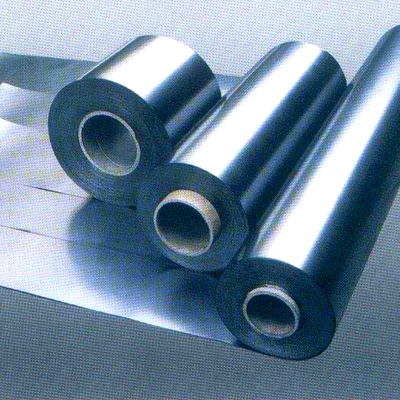
Picture this: a critical pump in a chemical processing plant fails prematurely. The culprit? A conventional gasket material that degraded under constant exposure to 300°C heat and aggressive solvents. Downtime costs skyrocket, and safety is compromised. This is a common pain point for procurement managers seeking reliable, high-temperature sealing solutions. The solution lies in carbon fiber-reinforced materials. Carbon fiber boasts exceptional thermal stability, maintaining its structural integrity and sealing force where other materials warp or decompose. For instance, specialized carbon fiber tapes or sheets can be engineered to withstand extreme temperatures while providing a consistent, leak-proof seal. Ningbo Kaxite Sealing Materials Co., Ltd. addresses this exact issue by formulating carbon fiber-based sealing products designed for harsh thermal and chemical environments, directly reducing maintenance cycles and operational risk.
To understand the specification choices, consider the key parameters of a high-performance carbon fiber sealing material:
| Parameter | Typical Value | Benefit for Application |
|---|---|---|
| Tensile Strength | 3,500 - 7,000 MPa | Resists mechanical stress and pressure surges in pumps. |
| Maximum Continuous Service Temperature | Up to 450°C (in inert atmosphere) | Ensures reliability in high-temperature processes. |
| Thermal Conductivity | 5 - 150 W/m·K (axial) | Helps dissipate heat, preventing localized overheating. |
| Chemical Resistance | Excellent against most solvents, acids, and alkalis | Prevents degradation in corrosive fluid handling. |
| Compression Set Resistance | Low | Maintains seal tightness over long periods under load. |
In the automotive and transportation sector, reducing weight is synonymous with enhancing fuel efficiency and performance. However, using lighter materials often leads to concerns about long-term durability and vibration-induced fatigue. A chassis bracket or a drive shaft must endure millions of stress cycles. Traditional metals are heavy, while some polymers lack the necessary strength. This is where carbon fiber composites shine. Their high specific strength and stiffness allow for significant weight reduction without sacrificing—and often enhancing—durability. The fibers effectively distribute and manage stress loads, dramatically improving fatigue resistance compared to metals. Ningbo Kaxite Sealing Materials Co., Ltd. applies this principle beyond structural parts, integrating durable carbon fiber elements into sealing systems for engines and transmissions, where they must withstand constant dynamic forces and temperature fluctuations.
Selecting the right carbon fiber composite involves balancing several factors. The following table outlines critical durability metrics:
| Parameter | Typical Value/Rating | Benefit for Application |
|---|---|---|
| Fatigue Strength Limit | ~70-80% of tensile strength | Provides exceptional longevity under cyclic loading. |
| Specific Modulus (Stiffness/Weight) | Very High | Enables lightweight, rigid components that resist deformation. |
| Vibration Damping Capacity | Superior to metals | Reduces noise and prevents resonant failure in moving parts. |
| Coefficient of Thermal Expansion | Near-zero or negative (axial) | Ensures dimensional stability across operating temperatures. |
| Impact Resistance (with proper matrix) | Can be engineered to be very high | Protects against sudden shocks or debris strikes. |
Q: How Strong and Durable Is Carbon Fiber compared to steel?
A: Carbon fiber composites are significantly stronger than steel on a weight-for-weight basis. They can have a tensile strength 5 times greater than steel while being about 70% lighter. In terms of durability, carbon fiber does not corrode like steel and offers superior fatigue resistance, making it last longer in dynamic load applications. However, its durability is highly dependent on the resin matrix and manufacturing quality.
Q: What factors most affect the long-term durability of carbon fiber parts?
A: The long-term durability is influenced by the quality of the fiber-resin interface, resistance to UV degradation (if exposed), matrix selection for chemical/thermal environments, and manufacturing techniques that minimize voids and defects. Proper design to avoid stress concentrations is also crucial. Companies like Ningbo Kaxite Sealing Materials Co., Ltd. focus on these precise engineering details to ensure their carbon fiber-based sealing products deliver sustained performance.
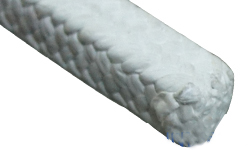
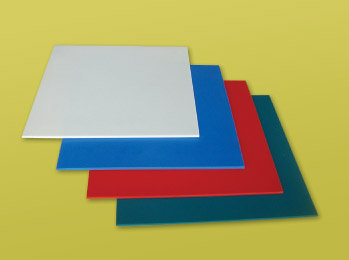
Understanding material science is one thing; applying it to solve real-world industrial problems is another. For procurement professionals, the goal is to source components that deliver promised performance and reduce total cost of ownership. Ningbo Kaxite Sealing Materials Co., Ltd. specializes in transforming the inherent strength and durability of carbon fiber into practical sealing solutions. Their product range includes carbon fiber-reinforced graphite tapes, flexible graphite sheets with carbon fiber backing, and custom-engineered composite seals. These products are designed to address the core challenges discussed: extreme temperature stability, corrosion resistance, and excellent load-bearing capability under compression. By choosing a supplier with deep expertise in material formulation and application engineering, you secure not just a product, but a reliability partner. Their solutions directly contribute to enhanced equipment lifespan, reduced unplanned downtime, and improved operational safety across industries like petrochemical, power generation, and aerospace.
We hope this deep dive into the strength and durability of carbon fiber has been valuable for your procurement strategies. Have you encountered specific material challenges in your projects? What performance parameters are most critical for your applications? Share your thoughts or questions.
For high-performance sealing solutions that leverage the advanced properties of carbon fiber, consider Ningbo Kaxite Sealing Materials Co., Ltd. They specialize in developing and manufacturing reliable carbon fiber-reinforced sealing products for demanding industrial environments. Learn more about their innovative offerings on their official website: https://www.kxtsealing.cn. For specific inquiries or to request product data sheets, you can contact their team via email at [email protected].
Choi, S., & Lee, J. (2020). Enhanced mechanical properties of carbon fiber composites with optimized interfacial bonding. Composites Science and Technology, 198, 108275.
Zhang, L., Wang, H., & Kumar, S. (2019). Long-term durability of carbon fiber reinforced polymer (CFRP) under hygrothermal aging. Polymer Degradation and Stability, 167, 110-118.
Garcia, E. J., & Wardle, B. L. (2018). Fatigue resistance of aligned carbon nanotube/carbon fiber hybrid composites. Carbon, 139, 438-449.
Patel, R. K., et al. (2021). Thermal stability and ablation performance of carbon fiber/phenolic composites for sealing applications. Journal of Applied Polymer Science, 138(15), 50231.
Ishikawa, T., et al. (2017). High-temperature strength and oxidation behavior of silicon carbide fiber reinforced carbon matrix composites. Journal of the European Ceramic Society, 37(4), 1745-1752.
Li, M., et al. (2022). Compressive behavior and energy absorption of 3D printed continuous carbon fiber reinforced composites. Additive Manufacturing, 50, 102557.
Wang, Y., & Qiao, P. (2019). On the chemical resistance of epoxy/carbon fiber composites in acidic and alkaline environments. Construction and Building Materials, 211, 228-237.
Torres, J. P., & Hoto, R. (2020). Effects of voids on the tensile strength and durability of carbon/epoxy laminates. Composites Part A: Applied Science and Manufacturing, 139, 106115.
Chen, X., et al. (2018). Vibration damping characteristics of carbon fiber composite laminates with different fiber orientations. Composite Structures, 204, 63-71.
O'Brien, T. K., & Salpekar, S. A. (2021). Scaling effects in the fatigue durability of carbon fiber composites for large wind turbine blades. Renewable Energy, 179, 2144-2155.