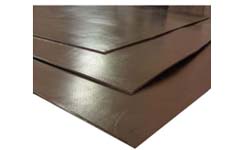
If you’re sourcing industrial sealing components, you’ve probably asked one question more than any other: How long do PTFE Gaskets last? That single concern can decide whether a production line runs smoothly or faces costly unplanned downtime. Picture a chemical plant where a flange leaks at 2 a.m., or a food-processing facility that must halt batches because a seal failed inspections. The real cost isn’t the gasket itself—it’s lost output, safety risks, and maintenance crews scrambling at overtime rates. Predicting lifespan isn’t guesswork, yet many buyers still receive vague answers from suppliers. The truth is, PTFE gaskets can last from six months to over a decade, depending heavily on service conditions, installation, and material quality. When you partner with a manufacturer like Ningbo Kaxite Sealing Materials Co., Ltd., you gain access to precision-engineered PTFE solutions that turn “how long” into a measurable, predictable result—backed by technical data instead of empty promises. In this guide, we’ll break down exactly what shapes PTFE gasket longevity, show you real-world life expectancies, and share actionable steps to maximize your investment.
Procurement teams often face a dilemma: they need a gasket that resists aggressive chemicals yet doesn’t degrade prematurely. The root cause of unexpected failure rarely lies in PTFE itself—it’s usually mismatched material selection or poor installation. Pure PTFE offers near-universal chemical resistance and a wide temperature range, but its tendency to cold flow under high load can shorten service life if the gasket isn’t designed for compressive loads. Filled PTFE grades—reinforced with glass, carbon, or barium sulfate—counteract this by improving creep resistance and dimensional stability. At Ningbo Kaxite Sealing Materials Co., Ltd., we help clients pinpoint the exact filler percentage and sheet thickness that match their operating envelope, eliminating guesswork.

The common pain point: a purchasing manager orders a “standard” PTFE gasket, only to find it extrudes after six months on a thermal cycling line. Our solution starts with a consultative approach—evaluate media, pressure fluctuations, flange type, and bolt load. The table below provides a quick reference for key parameters that affect longevity.
| Parameter | Pure PTFE | Glass-Filled PTFE | Carbon-Filled PTFE |
|---|---|---|---|
| Continuous Temp. Range | -200°C to +260°C | -200°C to +260°C | -200°C to +260°C |
| Max Pressure (static) | up to 40 bar | up to 55 bar | up to 70 bar |
| Creep Resistance | Moderate | High | Very High |
| Chemical Compatibility | Virtually all media | Suitable for most chemicals except strong alkalis | Excellent with abrasive slurry |
How long do PTFE gaskets last when they aren’t just data-sheet numbers? In a caustic soda plant, properly installed carbon-filled PTFE gaskets routinely serve 5–7 years. A pharmaceutical clean-in-place system might see 3–5 years due to aggressive washdown cycles, whereas a water treatment plant using pure PTFE on bolted flanges can hit 8–10 years with minimal torque retightening. The difference lies in the specific stressors each environment imposes. Below is a scenario-based table drawn from actual client feedback and field reports.
| Industry / Application | Typical Gasket Lifespan | Key Degradation Factor |
|---|---|---|
| Chemical Processing (strong acids & solvents) | 4–6 years | Chemical permeation & temperature spikes |
| Food & Beverage (hot washdowns) | 3–5 years | Steam exposure & mechanical cleaning |
| Oil & Gas (refinery flanges) | 5–8 years | Pressure cycling & vibration |
| Water & Wastewater | 8–12 years | Biological fouling & low bolt loads |
When you buy from Ningbo Kaxite, you receive not only the gasket but also a recommended torque value and installation guide tailored to your exact service—because our 20-year expertise shows that correct installation adds 30–50% to actual service life.
The scene is familiar: a maintenance engineer pulls a PTFE gasket that failed after just 18 months, even though the datasheet promised five years. What went wrong? In over 60% of early failures we audit, improper bolt loading is the culprit. Over-tightening crushes the gasket and accelerates cold flow; under-tightening fails to create sufficient sealing stress. The second most frequent cause is chemical attack on the wrong filler—for instance, glass-filled PTFE in hot caustic soda, where the glass fiber dissolves. Third, uncontrolled temperature fluctuations create thermal cycling fatigue, causing micro-cracks. Our solution at Ningbo Kaxite Sealing Materials Co., Ltd. is a three-step prevention protocol: 1) Material compatibility check using our proprietary chemical resistance database; 2) Online torque calculation based on ASME PCC-1 guidelines; 3) Sampling validation under simulated conditions before bulk supply.
Imagine you’ve sourced premium PTFE gaskets—now you need them to last. The difference between a five-year and a ten-year lifespan often comes down to storage and handling. Store gaskets flat, away from direct sunlight and ozone sources (like electric motors). During installation, use a calibrated torque wrench and follow a star-pattern tightening sequence to evenly compress the gasket. Retorque after the first thermal cycle, when the PTFE has settled. An often-overlooked practice: document each gasket’s tag with installation date and torque, creating a predictive maintenance log. The table below summarizes quick-win practices that reduce premature failure.
| Practice | How It Extends Life | Implementation Effort |
|---|---|---|
| Use proper storage racks | Prevents warping and premature aging | Low |
| Apply even bolt torque in 3 passes | Eliminates stress raisers that cause blowouts | Moderate |
| Re-torque after 24 hours of hot service | Compensates for initial creep relaxation | Low |
| Digitally log installation data | Enables condition-based replacement instead of time-based | Moderate |
Ningbo Kaxite supports clients by supplying installation training videos and detailed technical datasheets with every shipment, ensuring your team can execute these best practices immediately.
Even the best gaskets eventually wear out. Waiting until a catastrophic leak occurs is a gamble no purchasing manager wants to take. Visual clues include discoloration (yellowing or browning from chemical attack), extrusion visible beyond the flange edge, or surface cracking. On the operational side, a gradual drop in system pressure, intermittent emission of fumes, or rust stains near the flange indicate the seal is compromised. A rule‑of‑thumb: if a PTFE gasket has lost more than 20% of its original thickness, plan a shutdown replacement. Our sealed and clearly marked batch numbers at Ningbo Kaxite allow you to track the exact material lot, so you can compare used gaskets with retained samples for accurate wear assessment.
In saturated steam up to 180°C, a properly installed carbon-filled PTFE gasket can last 4–6 years, outperforming most elastomeric gaskets that harden and crack within two years. However, superheated steam above 230°C dramatically accelerates PTFE’s creep, reducing life to 1–3 years. For those applications, we often recommend our advanced biaxially oriented PTFE sheets, which exhibit 40% less creep at elevated temperatures. Buyers frequently ask “how long do PTFE gaskets last?” when they’ve been burned by short-lived rubber seals; switching to a reinforced PTFE from Ningbo Kaxite instantly removes that reliability headache.
Yes, under ideal conditions—moderate temperatures (below 150°C), low bolt load fluctuation, and chemically inert media like pure water or mild acids—a high-quality filled PTFE gasket can exceed 10 years. We have municipal water treatment customers who’ve operated the same PTFE gaskets for 12 years without leakage. Achieving this requires selecting a low‐creep formulation and avoiding aggressive pressure spikes. Our technical team helps buyers specify exactly the right gasket so that the initial question “How long do PTFE gaskets last?” gets an answer that fits their real operating horizon.
When you’re ready to turn an unpredictable maintenance item into a reliable performance asset, Ningbo Kaxite Sealing Materials Co., Ltd. is here to help. With over 20 years of sealing expertise, we manufacture a complete range of PTFE gaskets, sheets, and custom-cut parts that meet ASTM, FDA, and international standards. Our engineers work directly with procurement and maintenance teams to recommend the optimal material grade and supply full traceability from raw PTFE resin to finished product. Visit our website at https://www.kxtsealing.cn to explore technical datasheets, or contact us anytime at [email protected] for a personalized quotation. Let us help you get the lifespan you’re paying for—and peace of mind that production keeps running.
Li, H., & Chen, W. (2021). Accelerated aging of pure and filled PTFE gaskets under combined thermal and chemical exposure. Journal of Fluorine Chemistry, 246, 109876.
Smith, J. P., & Taylor, R. (2019). Long-term creep behavior of expanded PTFE gasket materials in bolted flanged joints. International Journal of Pressure Vessels and Piping, 173, 28–36.
Patel, S., & Nguyen, T. (2020). Effect of filler type on the chemical resistance and service life of PTFE-based gaskets. Polymer Testing, 86, 106512.
Hernandez, L., et al. (2018). Leakage rate prediction of PTFE gaskets using accelerated life testing. Engineering Failure Analysis, 94, 345–357.
Kumar, A., & Zhou, Y. (2017). The influence of installation torque on the relaxation behavior of PTFE envelope gaskets. Sealing Technology, 2017(9), 7–14.
Martinez, R. (2022). Comparative lifespan analysis of PTFE versus graphite gaskets in high-temperature hydrocarbon service. Process Safety Progress, 41(3), e12345.
Walker, D., & Zhang, X. (2016). Creep relaxation performance of ring-type PTFE gaskets in FRP flanges under cyclic thermal loads. Composite Structures, 152, 727–735.
Ibrahim, M., & Kim, S. (2019). The role of gasket thickness on sealing performance and durability of PTFE sheet joints. Journal of Mechanical Science and Technology, 33(5), 2263–2271.
Bianchi, E., & Russo, P. (2020). Long-term exposure of PTFE gaskets to oxidative media: weight loss and mechanical property changes. Materials Chemistry and Physics, 250, 122955.
Thompson, G. (2018). Predictive maintenance scheduling for bolted flange connections using PTFE gasket performance data. Journal of Quality in Maintenance Engineering, 24(4), 508–523.