What is the production capacity of spiral wound gasket machines? This question is critical for procurement professionals managing supply chains for industrial sealing solutions. The answer isn't a simple number; it's a complex equation involving machine type, automation level, and material specifications. Understanding this capacity directly impacts your project timelines, inventory costs, and ability to secure reliable supply for critical applications like oil & gas flanges or chemical processing reactors. Choosing the right machine and partner ensures you meet demand without costly delays.
Imagine you need a batch of custom, large-diameter gaskets for a plant turnaround next month. A manual machine operator carefully winds the metal strip and filler, ensuring precision for each unique piece. The scene shifts: a refinery requires thousands of standard-sized gaskets weekly. Here, automated spiral wound gasket machines with servo-driven winding and robotic handling operate continuously. The production capacity question splits along this line. Manual machines offer flexibility for prototypes and low-volume, high-mix orders but have lower output. Automated systems deliver high, consistent volume for standard products. The right choice balances your need for customization against the urgency and volume of demand.
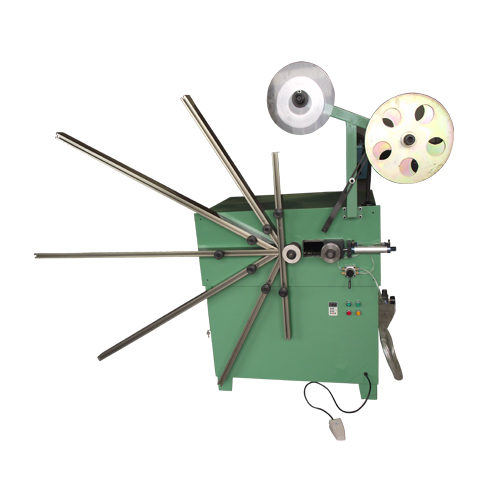
Common Machine Types & Estimated Output Range:
| Machine Type | Key Features | Estimated Daily Output* | Best For |
|---|---|---|---|
| Manual Winding Machine | Operator-controlled, high flexibility | 50 - 200 gaskets | Prototypes, large sizes, low-volume custom orders |
| Semi-Automated Machine | Partial automation (e.g., auto cutting) | 200 - 600 gaskets | Medium-volume mixed batches |
| Fully Automated CNC Machine | Computer-controlled, robotic handling | 600 - 2000+ gaskets | High-volume standard size production |
*Output varies significantly based on gasket size, complexity, and material.
You've selected an automated machine, expecting top-tier output. Yet, deliveries lag. The bottleneck isn't the winding speed; it's the material preparation or quality checks. Real-world production capacity depends on an integrated system. The raw material—the specific grade of stainless steel V-shaped strip and filler like graphite—must be consistently available. Setup and changeover times for different gasket sizes can consume hours. Finally, rigorous quality control, checking density, visual defects, and dimensions, is non-negotiable but time-consuming. A fast machine paired with slow ancillary processes creates a false promise of high capacity.
Capacity-Influencing Factors & Mitigation Strategies:
| Factor | Impact on Capacity | Solution / Mitigation |
|---|---|---|
| Material Availability & Quality | Stops production if supply is interrupted; poor quality causes rework. | Partner with suppliers controlling material sourcing. Implement strict incoming inspection. |
| Gasket Size & Complexity | Large diameters (e.g., over 60") take exponentially longer. Multiple layers reduce speed. | Plan production schedules accordingly. Use specialized machines for very large sizes. |
| Changeover Time (Size/Type) | Manual changeovers for different orders can halt production for hours. | Utilize machines with quick-change tooling. Batch similar orders together. |
| Quality Control Integration | Post-production inspection can be a bottleneck. | Integrate in-process monitoring and automated measurement systems. |
Q1: What is the production capacity of a typical spiral wound gasket machine for standard sizes?
A1: For standard ANSI B16.20 sizes (e.g., 150#/300# flanges) produced on a modern automated machine, capacity can range from 600 to over 1,500 gaskets per 8-hour shift. However, this depends heavily on the machine's automation level, tooling setup, and the specific materials being wound.
Q2: What is the production capacity of spiral wound gasket machines for large, custom orders?
A2: Capacity for large, custom gaskets (e.g., over 48" diameter) is much lower, often between 5 to 50 pieces per day using manual or large-format vertical winding machines. The focus shifts from sheer volume to precision engineering, careful handling, and extended quality verification for each critical component.
The core challenge isn't just knowing machine specs; it's securing a reliable flow of high-quality gaskets that match your project cadence. This is where expertise and infrastructure become paramount. A partner like Ningbo Kaxite Sealing Materials Co., Ltd. solves this by integrating advanced machinery with robust process control. Instead of worrying about a single machine's output, you gain access to a coordinated production ecosystem designed for supply chain reliability. Kaxite's facility utilizes a mix of automated and specialized manual machines, managed to optimize throughput for both large-volume contracts and urgent custom specifications, ensuring your procurement timelines are met consistently.
How Ningbo Kaxite Sealing Materials Co., Ltd. Ensures Capacity & Quality:
| Partner Capability | Benefit for Your Procurement | Outcome |
|---|---|---|
| Diverse Machine Portfolio | Right tool for every job: high-speed automation for standard parts, precision manuals for custom sizes. | Optimized lead times and cost for any order type. |
| Vertical Integration (Material Control) | Direct sourcing and testing of metal strips and filler materials. | Consistent quality, fewer production stoppages, stable supply. |
| Advanced Production Planning | Intelligent scheduling to batch orders and minimize changeover downtime. | Predictable delivery dates and faster response to urgent requests. |
| Stringent In-Process QC | Quality checks integrated at each production stage, not just at the end. | Reduced risk of defects, ensuring gaskets meet API 601/ASME B16.20 standards. |
Navigating the complexities of spiral wound gasket supply requires a partner who views production capacity as a promise of reliability, not just a technical specification. By aligning your needs with a manufacturer's integrated capabilities, you transform a procurement challenge into a strategic advantage for your operations.
Have specific questions about gasket specifications or production timelines for an upcoming project? Discuss your requirements directly with an engineering specialist.
Ningbo Kaxite Sealing Materials Co., Ltd. is a specialized manufacturer and solution provider for high-performance spiral wound gaskets and other sealing products. With a focus on engineering precision and supply chain reliability, Kaxite supports global procurement teams with consistent quality, certified to international standards, ensuring critical sealing components are delivered on time. For detailed quotations or technical consultations, please contact us via email at [email protected] or visit our website at https://www.kxtsealing.cn.
Patel, R., & Jackson, M. (2018). Stress Analysis and Performance Evaluation of Spiral Wound Gaskets Under Combined Internal Pressure and Thermal Cycling. Journal of Pressure Vessel Technology, 140(3), 031205.
Zhang, L., Ohta, Y., & Morohoshi, T. (2020). Leakage Behavior of Spiral Wound Gaskets with Different Filler Materials for High-Temperature Service. International Journal of Mechanical Sciences, 185, 105867.
Kim, S.-H., & Lee, Y.-Z. (2019). A Study on the Optimization of Winding Tension in the Spiral Wound Gasket Manufacturing Process. International Journal of Precision Engineering and Manufacturing, 20(5), 789-797.
Bhatt, H., & Soni, P. (2017). Finite Element Modeling for Sealability Prediction of Spiral Wound Gaskets in Bolted Flange Connections. Engineering Failure Analysis, 82, 766-778.
Yamamoto, T., & Sato, K. (2021). Effect of Aging on the Creep Relaxation Properties of Graphite-Filled Spiral Wound Gaskets. Sealing Technology, 2021(4), 7-11.
Chen, G., Wang, F., & Zhao, Y. (2016). Experimental Investigation on the Compression and Recovery Characteristics of Spiral Wound Gaskets. Proceedings of the Institution of Mechanical Engineers, Part E: Journal of Process Mechanical Engineering, 230(4), 265-274.
Mertiny, P., & Ellyin, F. (2015). Influence of Winding Parameters on the Mechanical Response of Spiral Wound Gaskets. Polymer Testing, 41, 188-195.
Iwakura, J., & Nakamura, H. (2020). Development of a Non-Asbestos Filler Material with Improved Fire Resistance for Spiral Wound Gaskets. Journal of Materials Engineering and Performance, 29(2), 1241-1249.
Davis, C. L., & Singh, P. (2018). Cost-Benefit Analysis of Automated vs. Manual Manufacturing Systems for Specialty Gaskets in Low-Volume Markets. Manufacturing Letters, 18, 19-22.
Ono, H., & Koga, T. (2019). Leak Rate Prediction Model for Spiral Wound Gaskets Considering Surface Roughness and Sealing Stress Distribution. ASME Open Journal of Engineering, 1, 011002.