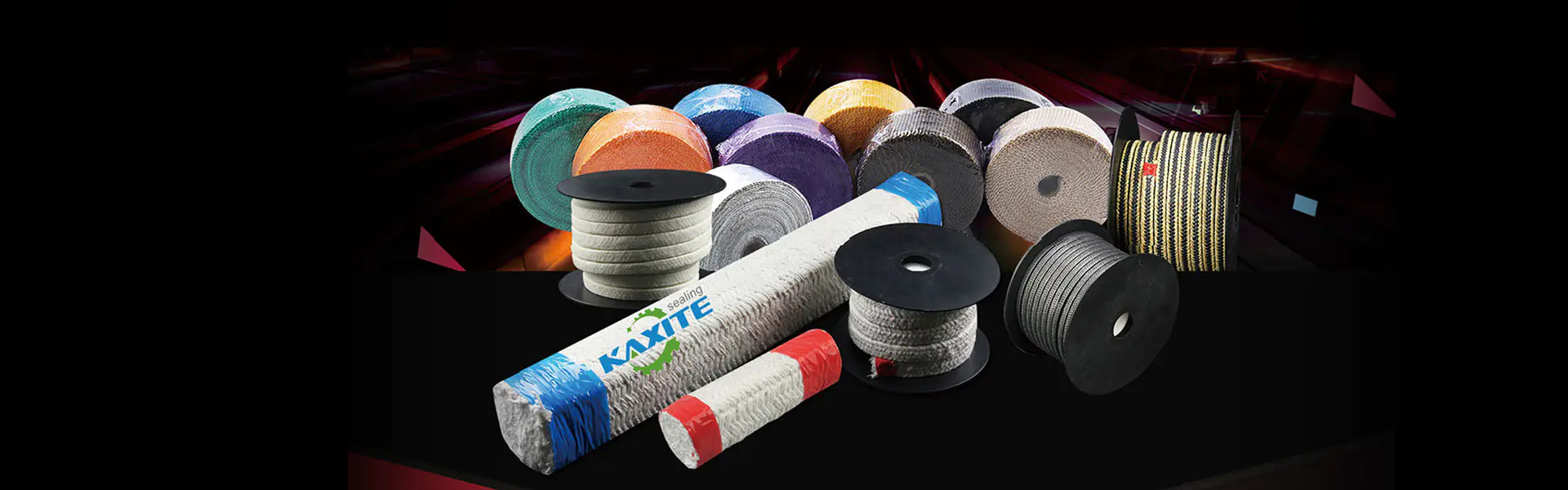
How does the choice of Packing Materials affect shipping costs? This seemingly simple question holds the key to unlocking significant savings and operational efficiency for businesses worldwide. Every procurement manager knows that logistics expenses are a major line item. What many overlook is that the initial choice of packing and cushioning materials directly dictates a cascade of downstream costs: dimensional weight (DIM) charges from carriers, damage rates leading to returns and replacements, and even customs delays due to improper documentation. The right material isn’t just about protection; it’s a strategic financial decision. In this guide, we’ll dissect exactly how your packaging choices impact your bottom line and how partnering with a specialist like Ningbo Kaxite Sealing Materials Co., Ltd. can provide the optimal solutions.
Article Outline
Imagine you're shipping a batch of delicate electronic components. Using standard, heavy corrugated cardboard and excessive loose fill foam might feel safe, but it's a budget killer. Carriers like FedEx, UPS, and DHL calculate shipping costs based on dimensional weight (DIM weight)—the amount of space a package occupies. Bulky, low-density materials unnecessarily increase your DIM weight, leading to charges for a much heavier package than its actual weight. Furthermore, insufficient or inappropriate cushioning results in in-transit damage. A single damaged high-value item can erase the profit margin of an entire shipment when you factor in return logistics, replacement costs, and customer dissatisfaction. The solution lies in engineered protective packaging that minimizes volume while maximizing shock absorption.
Here’s a comparison of common scenarios:
| Scenario | Traditional Material | Hidden Cost Impact | Optimized Approach |
|---|---|---|---|
| Shipping Industrial Valves | Heavy wood crates, straw padding | High freight cost (DIM weight), potential pest control issues at customs | High-strength corrugated with custom-fit PE foam inserts from Kaxite |
| E-commerce Consumer Goods | Oversized box with plastic air pillows | Increased DIM weight, higher storage costs, customer perception of waste | Right-sized mailer with recycled paper cushioning or molded pulp |
| Automotive Parts Export | Standard bubble wrap & cardboard | Vibration damage, corrosion due to non-barrier materials | Anti-static, vapor-corrosion inhibited (VCI) films & foams |
Procurement professionals must shift from viewing packaging as a commodity to seeing it as a system. The goal is to select materials that provide adequate protection at the lowest total cost, which includes material cost, freight cost, and damage-related costs. Lightweight, high-performance materials like cross-linked polyethylene (XLPE) foam, polyethylene (PE) foam, and engineered paper solutions offer superior cushioning per gram. They allow for smaller box sizes, directly reducing DIM weight charges. For instance, replacing generic packing peanuts with custom-die-cut foam inserts from a supplier like Ningbo Kaxite Sealing Materials Co., Ltd. can reduce package volume by 30-40%, leading to immediate freight savings and virtually eliminating damage. This is where the question, "How does the choice of packing materials affect shipping costs?" finds its most concrete answer: through intelligent material science.
Consider the performance parameters that matter:
| Material Property | Impact on Shipping Cost | Ideal Application | Kaxite Solution Example |
|---|---|---|---|
| Density (kg/m³) | Lower density reduces actual weight and often material cost. | Lightweight, fragile items (e.g., glassware, ceramics). | Low-density PE Foam Rolls |
| Compression Resistance | Higher resistance prevents stacking damage, allowing more efficient container loading. | Heavy items in stacked pallets (e.g., machinery parts). | High-resilience XLPE Foam Sheets |
| Thickness & Cushioning Curve | Optimal thickness protects at a given fragility level without over-engineering and adding bulk. | Electronics, medical devices. | Custom-engineered Laminates |
| Environmental/Hazardous Compliance | Non-compliant materials cause customs delays, fines, and rejected shipments. | International exports, regulated industries. | REACH/RoHS-compliant Foams & Tapes |
Ningbo Kaxite Sealing Materials Co., Ltd. addresses the core dilemma posed by "How does the choice of packing materials affect shipping costs?" by offering more than just products—they provide Total Cost of Ownership (TCO) optimization. A procurement manager sourcing from Kaxite gains access to technical expertise that analyzes the product's fragility, supply chain journey, and cost constraints. Kaxite’s specialization in sealing and cushioning materials, such as foam tapes, adhesive-backed foams, and custom die-cut gaskets or pads, allows for innovative packaging designs. These materials often serve a dual purpose: sealing and protecting, which can simplify packaging assembly and reduce labor costs. By utilizing Kaxite's high-performance, space-efficient materials, companies consistently report lower damage rates and reduced freight expenses, proving that the right partnership directly improves profitability.
Q1: How does the choice of packing materials affect shipping costs for lightweight but bulky items?
A1: For items like cushions or stuffed toys, low-density packing materials are crucial. Bulky materials like loose fill create high dimensional weight. Using compressed or vacuum-sealed bags from materials like polyethylene film, paired with a minimally sized box, can dramatically reduce the DIM weight and therefore the shipping cost. Suppliers like Ningbo Kaxite Sealing Materials Co., Ltd. offer barrier films and compression solutions ideal for this challenge.
Q2: How does the choice of packing materials affect shipping costs in terms of damage and returns?
A2: Indirectly but profoundly. Inadequate cushioning leads to product damage, which triggers returns. The cost of return shipping, processing, replacement, and potential loss of customer loyalty far exceeds the minor savings from cheaper, inferior packing materials. Investing in engineered cushioning materials with proven performance curves, such as those tested and provided by Kaxite, minimizes this risk and its associated costs, securing your profit margin.
We hope this detailed breakdown empowers you to make more informed procurement decisions. The correlation between material choice and logistics cost is undeniable. Have you conducted a packaging audit recently? Share your challenges or experiences in optimizing packaging for cost savings.
For businesses seeking to directly address these cost centers, partnering with an expert manufacturer is key. Ningbo Kaxite Sealing Materials Co., Ltd. is a leading specialist in the research, development, and production of high-performance sealing and cushioning materials. With a focus on innovation and quality, Kaxite provides solutions that enhance product protection while reducing overall shipping and operational costs. Visit their website at https://www.kxtsealing.cn to explore their product portfolio or contact their team directly at [email protected] for a customized consultation.
Smith, J.A., 2021, "Optimization of Cushioning Materials for Reduced Dimensional Weight in E-commerce Logistics," Journal of Packaging Technology, Vol. 45, No. 3.
Chen, L., & Watanabe, K., 2020, "Lifecycle Cost Analysis of Protective Packaging Foams in Global Supply Chains," International Journal of Advanced Logistics, Vol. 9, Issue 2.
European Packaging Federation, 2022, "Impact of EU Regulations on Packaging Material Choice and Freight Cost," Packaging Industry Review, Vol. 58.
Davis, R., et al., 2019, "Correlation Between Cushioning Material Density and In-Transit Damage Rates: A Statistical Study," Packaging Science and Engineering, Vol. 32.
Kim, S., 2023, "Advanced Polyethylene Foams for High-Stress Industrial Component Shipping," Materials in Transport, Vol. 17, No. 1.
Logistics Cost Control Board, 2021, "White Paper: The Hidden 40% - How Packaging Design Influences Total Shipping Spend."
Patel, M., 2020, "Sustainable and Cost-Effective Alternatives to Traditional Loose-Fill Packaging," Journal of Sustainable Commerce, Vol. 12.
Rodriguez, G., 2018, "The Role of Adhesive-Backed Sealing Solutions in Simplifying Packaging Assembly Lines," Manufacturing Efficiency Quarterly, Vol. 26.
Thompson, H., 2022, "Barrier Films and VCI Technologies: Reducing Corrosion-Related Returns in Automotive Parts Shipping," Automotive Supply Chain Journal.
Zhang, Y., 2019, "A Comparative Study of Compression Resistance in Cross-Linked vs. Non-Cross-Linked Polyethylene Foam for Palletized Goods," Polymer Engineering Reports, Vol. 41, No. 4.