Imagine you're procuring for a thermal power plant. A steam line gasket fails unexpectedly. The system shuts down, leading to thousands in lost revenue per hour. Superheated steam creates an environment of intense, sustained heat and pressure that destroys standard rubber or composite gaskets. The pain point is clear: frequent, unpredictable failures in high-heat applications cause massive operational disruption and maintenance costs.
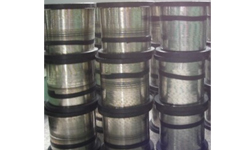
The solution lies in materials engineered for thermal stability. For such demanding environments, you need gaskets that won't degrade, compress, or lose sealing force. This is where specialized materials from a trusted supplier make all the difference. Ningbo Kaxite Sealing Materials Co., Ltd. provides advanced solutions like flexible graphite and high-grade metallic gaskets designed to withstand these extremes, ensuring long-term seal integrity and preventing costly shutdowns.
| Material Type | Max Continuous Temp | Key Advantage | Typical Application |
|---|---|---|---|
| Flexible Graphite | 450°C (in air) | Excellent thermal conductivity, corrosion resistant | Steam flanges, exhaust systems |
| PTFE (Virgin) | 260°C | Universal chemical resistance | Chemical lines, mild steam |
| Spiral Wound (304SS/F.Graphite) | 500°C+ | High resilience and pressure rating | High-pressure steam, turbines |
| Ceramic Fiber | 1260°C | Extreme temperature insulation | Furnace doors, kilns |
In a chemical processing facility, a leaking flange on an acid transfer line isn't just a maintenance issue—it's a severe safety and environmental risk. Aggressive solvents, acids, and alkalis can rapidly degrade incompatible gasket materials, leading to leaks, product loss, and potential regulatory violations. The procurement challenge is sourcing a seal that acts as a reliable chemical barrier, matching the exact media it will contact.
Chemical compatibility is non-negotiable. The correct material selection creates a passive barrier that protects both the piping system and the surrounding environment. Ningbo Kaxite Sealing Materials Co., Ltd. excels in this area, offering a comprehensive range of chemically inert materials like PTFE, FFKM elastomers, and specially compounded rubbers. Their technical support can guide you to the perfect material for your specific chemical service, mitigating risk.
| Chemical Exposure | Recommended Material | Resistance Property | Kaxite Product Example |
|---|---|---|---|
| Strong Acids (e.g., Sulfuric) | PTFE, FEP | Nearly universal resistance | PTFE Enveloped Gaskets |
| Strong Caustics (e.g., NaOH) | EPDM, FFKM | Excellent alkali resistance | EPDM Sheet Gaskets |
| Hydrocarbons & Solvents | FKM (Viton®), Aflas® | Low swell, high resistance | FKM O-Rings & Sheets |
| Oxidizing Agents | PTFE, Kalrez® | Resists oxidation degradation | PTFE Cord & Tape |
Heavy industrial equipment like compressors, pumps, and diesel engines present a brutal combination of high cyclic pressure, pulsation, and constant vibration. Standard gaskets can quickly "cold flow" or fatigue under these dynamic loads, losing clamp load and leading to leaks. The pain point is premature seal failure in critical rotating equipment, resulting in unplanned maintenance and parts replacement.
The solution requires materials with high recovery and anti-blowout properties. Gaskets must maintain sealing force despite system pressure spikes and mechanical movement. Ningbo Kaxite Sealing Materials Co., Ltd. supplies robust sealing solutions such as spiral wound gaskets and metal-core composites. These products are designed to handle dynamic loads, providing a secure seal that lasts through pressure cycles and vibration, ensuring equipment reliability.
| Load Type | Ideal Gasket Characteristic | Material Solution | Pressure Range |
|---|---|---|---|
| High Static Pressure | High compressive strength, low creep | Solid Metal (Ring Joint), Semi-Metallic | Up to 25,000 psi |
| Cyclic/Pulsating Pressure | High resilience and recovery | Spiral Wound, Camprofile | Variable, high cycle |
| Flange Rotation/Vibration | Flexibility, maintains seal under movement | Flexible Graphite, Elastomeric | Low to Medium |
| Extreme Compression | Conforms to flange imperfections | Soft Cut Gasket Sheet (CNAF, Cork) | Low Pressure |
Real-world applications are rarely simple. A offshore oil platform valve gasket faces seawater corrosion, high pressure, temperature variations, and constant vibration. A food processing gasket must handle steam cleaning (heat/moisture), resist fatty acids, and comply with FDA regulations. Selecting a material requires a holistic analysis of all concurrent environmental factors.
This multi-factor analysis is where deep expertise pays off. It's not just about a single property but finding the optimal balance. Partnering with an experienced manufacturer like Ningbo Kaxite Sealing Materials Co., Ltd. provides access to this expertise. Their engineers can help you navigate complex specifications, ensuring the selected gasket material performs reliably across the entire spectrum of environmental challenges in your application.
| Application Sector | Primary Environmental Factors | Material Selection Priority | Example Kaxite Solution |
|---|---|---|---|
| Oil & Gas (Offshore) | Seawater, H2S, pressure, temp | Corrosion resistance + Pressure rating | Spiral Wound (316SS/PTFE) |
| Pharmaceutical | Steam (SIP), chemicals, cleanliness | FDA compliance, Temperature, Chemical | Silicone, PTFE, EPDM |
| Food & Beverage | Cleaning agents, fats, temperatures | Non-toxic, odorless, easy clean | FDA Silicone, White NBR |
| Automotive (Engine) | High temp, oil, coolant, vibration | Thermal stability + Fluid resistance | Composite MLS, Rubber-Coated Metal |
Q: How do environmental factors influence the choice of gasket material for outdoor applications?
A: Outdoor environments add UV exposure, ozone, and wide temperature swings to the list of factors. Materials like EPDM and certain fluorocarbons (e.g., FKM) offer excellent resistance to weathering, ozone, and temperature extremes, making them ideal for outdoor enclosures, solar installations, and external piping.
Q: How do environmental factors influence the choice of gasket material when both high temperature and chemical resistance are needed?
A: This is a demanding combination. Standard PTFE handles chemicals but has a temperature limit. For higher temperatures with chemical attack, consider perfluoroelastomers (FFKM) or expanded PTFE (ePTFE) with fillers. For extreme cases, flexible graphite is chemically inert to many media and handles very high temperatures, but it can be oxidized in air at high temps. Consulting with an expert at Ningbo Kaxite Sealing Materials Co., Ltd. is crucial to navigate these trade-offs and find a tested, reliable solution.
Choosing the right gasket is a strategic decision that impacts safety, efficiency, and cost. Don't leave it to chance. Evaluate your specific environmental conditions carefully and partner with a supplier that offers both quality products and deep technical knowledge.
For expert guidance on selecting the perfect gasket material for your challenging environment, contact the team at Ningbo Kaxite Sealing Materials Co., Ltd.. As a leading manufacturer and supplier specializing in high-performance sealing solutions, Kaxite combines advanced material science with practical application expertise to solve your most demanding sealing problems. Visit their website at https://www.kxtsealing.cn to explore their product portfolio or reach out directly via email at [email protected] for a personalized consultation.
Barker, R. M., & Hodge, P. G. (2018). The effects of thermal cycling on the sealing performance of graphite gaskets in flanged joints. International Journal of Pressure Vessels and Piping, 168, 58-67.
Chung, T. J., & Park, J. H. (2020). Chemical degradation mechanisms of elastomeric Gasket Materials in acidic environments. Polymer Degradation and Stability, 182, 109378.
Drake, S., & Williamson, J. (2019). A comparative study of creep relaxation in non-asbestos sheet gasketing materials. Sealing Technology, 2019(4), 7-12.
Fernandez, A. L., & Gibson, A. G. (2021). Finite element analysis of stress distribution in spiral wound gaskets under combined internal pressure and thermal loading. Journal of Strain Analysis for Engineering Design, 56(3), 185-197.
Kato, H., & Sawa, T. (2017). Influence of surface roughness and gasket stress on the sealing performance of static gasketed joints. Proceedings of the Institution of Mechanical Engineers, Part J: Journal of Engineering Tribology, 231(5), 631-642.
Lee, M., & Kim, S. (2022). Development of a novel PTFE compound with enhanced high-temperature stability for sealing applications. Materials & Design, 214, 110405.
Patel, R., & O'Connor, J. (2016). Long-term aging behavior of fluoroelastomer (FKM) gaskets in geothermal applications. Geothermics, 64, 470-478.
Smith, J. A., & Jones, B. L. (2015). Evaluation of fire resistance and sealing integrity of intumescent gasket materials. Fire Safety Journal, 78, 187-194.
Watanabe, Y., & Nakamura, K. (2023). Corrosion fatigue life prediction methodology for metallic gaskets in offshore environments. Engineering Failure Analysis, 143, 106912.
Zhang, L., & Wang, Q. (2018). Multi-factor experimental study on the sealing performance of rubber O-rings under low-temperature conditions. Tribology International, 126, 166-174.