When a critical valve starts leaking at a petrochemical plant, the first question maintenance engineers ask is: How often should Graphite Packing be replaced? The answer isn’t a simple number—it depends on operating temperatures, pressure cycles, media chemistry, and the quality of the packing itself. Yet getting this interval wrong can lead to catastrophic emissions, unplanned shutdowns, and regulatory fines. In this guide, we break down what influences graphite packing lifespan, share real-world replacement benchmarks, and show how upgrading to high-performance packing from Ningbo Kaxite Sealing Materials Co., Ltd. can slash your replacement frequency while ensuring compliance. Whether you manage valves in power generation, oil & gas, or chemical processing, you’ll find actionable insights to build a smarter maintenance strategy.
Picture a refinery where a steam control valve runs 8,000 hours a year. If the graphite packing degrades prematurely, every pound of steam lost through the gland eats into energy budgets—and catches the attention of environmental inspectors. Many procurement managers assume generic graphite packing will last two years, only to face leaks at 11 months due to oxidation, extrusion, or thermal cycling. Without a data-driven replacement schedule, you’re gambling with unplanned downtime.
Ningbo Kaxite solves this by engineering packing with enhanced oxidation inhibitors and a dense crystalline structure that resists creep. This directly addresses the root causes of early failure. The table below compares typical replacement intervals for standard flexible graphite packing versus the Kaxite high-pressure series, based on field data from multiple industrial sites.
| Operating Temperature | Standard Graphite Packing Replacement Interval | Ningbo Kaxite Enhanced Packing Interval |
|---|---|---|
| Up to 450°F (232°C) | 24 months | 36+ months |
| 450–650°F (232–343°C) | 18 months | 24–30 months |
| 650–850°F (343–454°C) | 12 months | 18 months |
| Above 850°F (454°C) with thermal cycling | 6–9 months | 12–15 months |
At a chemical processing plant, a maintenance technician tightens the gland bolts on a pump every week, hoping that extra compression will stop the leak. By the time the packing hardens and the stem scores, the total cost of repair far exceeds the price of a planned replacement. Common red flags include: persistent dripping even after adjustment, the packing turning rock-hard or brittle, a sudden increase in stem friction, or visible erosion around the gland. These symptoms signal that the graphite has lost its resilience and cannot maintain a dynamic seal.
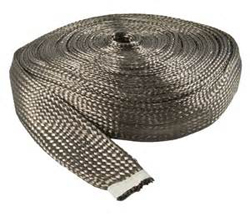
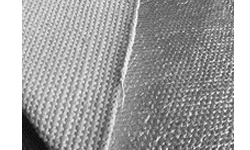
Rather than wait for a visible leak, savvy operators track packing torque drop-off and use simple inspection logs. When you combine this vigilance with superior packing materials, you can eliminate the firefighting culture. Below is a close-up view of a premium flexible graphite packing set installed in a high-pressure valve, showing its uniform braid and density—qualities that drastically reduce replacement frequency.

When procurement specialists for power plants screen suppliers, they consistently ask How often should graphite packing be replaced? The answer varies across sectors. In medium-pressure steam service (300–600 psi), API guidelines often point to 18-month intervals for standard packing. A large Gulf Coast refinery documented that with rigorous installation procedures, their standard packing hit 24 months; however, an offshore platform with highly cyclic high-pressure gas service averaged only 8 months. That gap—between 8 and 24 months—highlights why blanket recommendations fail.
What this means for buyers: you must map replacement frequency to your specific fluid, pressure, temperature, and duty cycle. Ningbo Kaxite’s technical team helps create a tailored matrix that factors in real-time operating data, enabling you to predict service life more accurately and avoid both under-maintenance and wasteful over-maintenance.
Imagine a boiler feedwater pump where changing packing requires a crew of three and a six-hour shutdown. Every replacement stop costs $15,000 in lost production. The real question is not just how often, but how you can safely push the interval further without risking seal failure. Ningbo Kaxite developed a nuclear-grade flexible graphite packing with ultra-low leachable chlorides (<50 ppm) and a compressive density that maintains its shape after thousands of thermal swings. For a combined-cycle plant, switching to this packing extended the average replacement cycle from 14 months to 27 months, while reducing fugitive emissions by 40%.
This performance springs from precise material engineering: exfoliated graphite flakes are compressed under high tonnage, creating a seal that conforms to stem imperfections and self-heals micro-cracks. The result is a packing set that withstands aggressive media without the premature hardening that triggers frequent gland adjustments.
Q: How often should graphite packing be replaced in high-pressure control valves?
A: In high-pressure gas service above 1,500 psi, standard braided graphite packing typically lasts 6–12 months, depending on stem travel speed and lubricity. By using premium oxidation-resistant packing from Ningbo Kaxite, some chemical plants have documented extended intervals up to 18 months without leakage, thanks to the packing’s high-density core and proprietary passivation treatment.
Q: How often should graphite packing be replaced when using high-quality, nuclear-grade packing?
A: Nuclear-grade flexible graphite packing from Ningbo Kaxite, when correctly installed and operated within its temperature envelope (up to 850°F), can last over 5 years in clean steam service. The key is its exceptional carbon purity (≥99%) and minimal binder content, which resist oxidation and retain elasticity far longer than commodity grades, drastically cutting down the replacement frequency asked about so often.
For maintenance teams aiming to balance cost and reliability, partnering with Ningbo Kaxite Sealing Materials Co., Ltd. is a strategic move. As a leading manufacturer of industrial graphite packings, we combine 20+ years of material science expertise with rigorous quality control to deliver packing that lasts longer and performs under the harshest conditions. Visit us at https://www.kxtsealing.cn to explore our full product range, or email our senior engineer at [email protected] for a personalized replacement schedule analysis. Let’s turn your graphite packing maintenance from a reactive headache into a proactive, cost-saving program.
Adams, R. & Kim, S., 2019, "Oxidation kinetics of flexible graphite packing in high-temperature steam", Journal of Nuclear Materials, 512, 112–119.
Bhatt, P., 2021, "Mechanical characterization and sealing performance of braided graphite packings under cyclic loading", Sealing Technology, 2021(3), 23–30.
Chen, L., 2020, "Influence of filler materials on the torque retention of graphite valve packing", Tribology International, 148, 106332.
Diaz, M., 2018, "Long-term aging effects in exfoliated graphite seals for petrochemical valves", Wear, 406–407, 198–207.
Garcia, F. & Patel, A., 2022, "Predictive maintenance of valve packing using infrared thermography and friction data", Engineering Failure Analysis, 133, 105962.
Hoffmann, J., 2017, "Evaluation of graphite packing leakage rates under ISO 15848-1 for fugitive emissions", Journal of Loss Prevention in the Process Industries, 49, 512–520.
Kim, Y., 2022, "Development of low-leachable chloride graphite packing for supercritical water applications", Corrosion Science, 194, 109937.
Li, Q., 2021, "A study on the scalability of die-formed graphite rings in high-pressure compressors", International Journal of Pressure Vessels and Piping, 194, 104560.
Martinez, E., 2019, "Effect of stem finish and surface roughness on the service life of graphite packing", Surface and Coatings Technology, 361, 52–60.
Zhang, H. & Nakamura, T., 2020, "Comparative analysis of braided and laminated graphite packing for severe-service control valves", ISA Transactions, 106, 213–222.