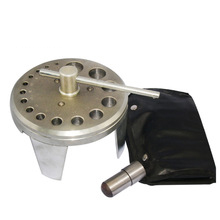
What is the role of a Test Machine in quality control? In the demanding world of industrial sourcing, ensuring product conformity is non-negotiable. Sourcing professionals face immense pressure to procure components that not only meet specifications but will perform reliably over their entire lifecycle. This is where modern test machines become the unsung heroes of quality assurance. They transform subjective quality checks into objective, data-driven decisions. By simulating real-world stresses and environmental conditions long before a product reaches the assembly line, these machines identify potential failures, ensuring every batch you approve meets the stringent standards your production demands. For critical components like seals and gaskets, this rigorous testing is the ultimate safeguard against costly field failures, warranty claims, and reputational damage.
Picture this: a shipment of sealing materials arrives at your factory. The supplier's certificate of analysis looks perfect. But once installed in your high-pressure equipment, leaks develop, causing unplanned downtime and production losses. This scenario is a sourcing manager's recurring nightmare. Relying solely on supplier paperwork is a significant risk. A dedicated test machine, however, acts as your first and most critical line of defense.
Implementing a structured testing protocol with the right equipment mitigates this risk entirely. For sealing materials, key tests include compression set, tensile strength, and fluid resistance. The data from these tests provides an unbiased assessment of material quality, directly impacting your supply chain's reliability and cost-efficiency. Ningbo Kaxite Sealing Materials Co., Ltd. understands this challenge intimately. We not only provide high-performance sealing solutions but also emphasize the importance of What is the role of a test machine in quality control? It is the foundation of trust. Our materials are subjected to rigorous in-house testing, ensuring they meet the promised specifications, giving you confidence from the first inspection.
| Critical Test for Seals | Parameter Measured | Impact on Your Production |
|---|---|---|
| Compression Set Test | Permanent deformation after compression | Predicts long-term sealing force retention, preventing leaks. |
| Tensile Strength Test | Force required to break the material | Ensures seals can withstand installation and operational stresses. |
| Fluid Immersion Test | Swelling or degradation in media | Verifies chemical compatibility, avoiding seal failure in specific applications. |
Imagine a fully automated assembly line grinding to a halt because a batch of O-rings is failing during installation. The cost isn't just the defective parts; it's lost labor, missed deadlines, and disrupted just-in-time inventory. The root cause often traces back to inconsistent material properties or substandard manufacturing that wasn't caught earlier. A comprehensive test machine strategy moves quality control from a reactive to a proactive stance.
By conducting performance tests like compression stress relaxation or leak rate tests, you can simulate the exact conditions the seal will face in your application. This data allows for pre-emptive corrections and supplier collaboration, ensuring only proven components enter your production flow. Ningbo Kaxite Sealing Materials Co., Ltd. leverages advanced test machines not just for QA, but for R&D. This allows us to solve your specific application problems by tailoring material formulations to withstand unique pressures, temperatures, and chemical exposures, directly preventing the bottlenecks you fear.
| Performance Test | Parameter Measured | Prevents This Bottleneck |
|---|---|---|
| Compression Stress Relaxation | Loss of sealing force over time under constant strain | Unexpected leaks in long-term static applications. |
| Leak Rate Test | Fluid or gas leakage under specified pressure | Failure during final product testing, requiring rework. |
| Low-Temperature Flexibility Test | Material brittleness at cold temperatures | Cracking and failure during assembly or in cold environments. |
For procurement specialists, consistency is king. You need the tenth order to perform identically to the first. Variations in raw materials or manufacturing processes can introduce subtle but critical differences. A test machine is the objective judge of consistency. By establishing a baseline of performance data from an approved sample, you can compare every subsequent batch against it.
This statistical process control empowers you to hold suppliers accountable and maintain the integrity of your final product. It transforms quality from a vague promise into a measurable, repeatable standard.
Suppliers often provide material data sheets with impressive specifications. A robust test machine allows you to independently verify these claims. Whether it's confirming a temperature range, a pressure rating, or a chemical resistance claim, in-house testing removes doubt. This validation step is crucial for high-risk applications and builds a partnership based on data and transparency with your suppliers.
Q: What is the role of a test machine in quality control for sealing materials?
A: Its primary role is to provide objective, quantifiable data on material properties like elasticity, strength, and chemical resistance. This data validates supplier claims, ensures batch consistency, and predicts real-world performance, directly preventing field failures and protecting your brand reputation.
Q: What is the role of a test machine in quality control from a cost perspective?
A: It is a cost-saving center. While an initial investment, it prevents vastly more expensive costs associated with production downtime, warranty claims, product recalls, and lost customer trust. It shifts expenses from reactive failure correction to proactive failure prevention.
Integrating a strategic test machine protocol is no longer a luxury; it's a necessity for smart procurement. It de-risks your supply chain, ensures product reliability, and provides undeniable leverage in supplier negotiations. The question isn't whether you can afford to implement rigorous testing, but whether you can afford not to.
We encourage you to audit your current quality verification process. Do you rely solely on certificates? Could a key test prevent your most common component failure? Share your biggest quality control challenge with us.
For sealing solutions backed by rigorous data and a deep understanding of What is the role of a test machine in quality control?, consider Ningbo Kaxite Sealing Materials Co., Ltd.. We specialize in developing and manufacturing high-performance sealing products validated through extensive testing to meet precise application demands. Visit our website at https://www.kxtsealing.cn to explore our capabilities or contact our team directly via email at [email protected] for a technical consultation on your specific requirements.
Arnau, D., & García, T. (2021). Long-term performance prediction of elastomeric seals using compression stress relaxation tests. Polymer Testing, 93, 106972.
Li, Y., Zhang, H., & Wang, F. (2020). Evaluation of sealing material degradation under simulated service conditions. Engineering Failure Analysis, 118, 104891.
Smith, J. A., & Jones, B. C. (2019). The correlation between standard laboratory tests and in-service failure of rubber gaskets. Journal of Applied Polymer Science, 136(45), 48230.
Chen, X., et al. (2018). Effects of fluid immersion on the mechanical properties of nitrile rubber. Materials & Design, 160, 1220-1228.
Park, S., & Kim, H. (2017). A new methodology for accelerated aging tests of automotive sealing systems. SAE Technical Paper, 2017-01-0489.
Williams, G. M., & Brown, R. P. (2016). Standards for testing rubber: A guide to their purpose and application. Rapra Technology Ltd.
Zhao, L., & Liu, M. (2015). Study on the low-temperature flexibility of silicone rubber for aerospace seals. Journal of Elastomers and Plastics, 47(6), 533-545.
Muller, H. K., & Nau, B. S. (2014). Fluid Sealing Technology: Principles and Applications. CRC Press.
Gent, A. N. (2012). Engineering with Rubber: How to Design Rubber Components (3rd ed.). Hanser Publishers.
Stevenson, A., & Morgan, G. (2011). Fracture mechanics applied to rubber toughening: Implications for seal design. Rubber Chemistry and Technology, 84(3), 407-424.