You’re a sourcing manager staring at a production halt caused by a leaking flange joint. The downtime costs are mounting, your team is frustrated, and the root cause keeps pointing to one overlooked detail: gasket installation. Knowing how to install sheet gasket Sealing Materials correctly isn’t just a maintenance checkbox—it’s the gatekeeper of process reliability, safety, and your bottom line. In industries where a single leak can trigger millions in lost product or environmental fines, mastering this seemingly simple task transforms you from a cost-center buyer into a strategic asset. At Ningbo Kaxite Sealing Materials Co., Ltd., we’ve witnessed how 80% of premature gasket failures trace back to installation errors, not material defects. That’s why we’ve engineered our sheet gasket products to work hand-in-hand with a foolproof installation approach. Whether you’re sealing high-temperature steam lines, corrosive chemicals, or hygienic food processing equipment, getting the install right is the cheapest insurance policy your facility can buy. This guide unpacks every nuance—from surface prep to torque sequencing—so you can finally answer “How to install sheet gasket sealing materials correctly?” with total confidence.
Imagine this scenario: a chemical transfer pump gasket fails after only three weeks in service. You check the spec sheet—the PTFE sheet gasket should have handled the media and temperature effortlessly. The investigation reveals that the flange wasn’t properly aligned during assembly. A mere 0.5 mm of offset concentrated stress on one side, causing cold flow and eventual blowout. This single installation oversight cost the plant $47,000 in emergency repairs, cleanup, and lost production. That’s the real-world price of guessing when someone asks “How to install sheet gasket sealing materials correctly?” At Ningbo Kaxite Sealing Materials Co., Ltd., we’ve meticulously analyzed hundreds of failure reports and found that installation-related factors cause more than half of all short-term leaks. What makes it especially painful is that these failures are entirely preventable. They don’t require expensive new equipment or exotic alloys—just disciplined adherence to a proven process. When you install a sheet gasket correctly, the material is allowed to flow into the microscopic flange imperfections, creating a continuous barrier that dynamically responds to temperature swings and pressure pulses. A well-installed gasket actually becomes part of the joint’s integrity, whereas a poorly installed one acts as a pre-engineered leak path. By the end of this section, you’ll see why procurement professionals who demand installation competency from their teams cut total sealing costs by up to 60% annually.
Picture a seasoned maintenance technician about to mount a new graphite sheet gasket. The flange surface shows a faint stain from the previous seal. He wipes it with a rag and proceeds. Six weeks later, a micro-leak appears exactly under that stain, because old adhesive residue prevented full surface contact. This is where “How to install sheet gasket sealing materials correctly?” starts, long before the gasket touches the metal. Surface preparation isn’t glamorous, but it’s where seals are won or lost. The flange faces must be free of rust, oil, old gasket fragments, and especially stubborn adhesive films. Even a particle as small as 150 microns can create a capillary leak path under high-pressure steam. Use brass scrapers instead of steel to avoid scratching the substrate, and finish with a non-chlorinated solvent wipe that leaves zero residue. Surface roughness plays an equally critical role. Most sheet gasket materials, including the reinforced graphite sheets from Ningbo Kaxite, perform optimally on surfaces with a roughness (Ra) between 3.2 and 6.3 μm. If the finish is too smooth, the gasket lacks mechanical grip; too rough, and it requires excessive compressive force that can crush the material. Measure the flatness with a feeler gauge and a straight edge: any deviation beyond 0.2 mm over a 200 mm span demands re-machining. The table below summarizes the recommended surface conditions for common gasket types.
| Gasket Material | Optimal Surface Roughness (Ra, µm) | Max Allowable Flatness Deviation (mm) | Required Cleaning Method |
|---|---|---|---|
| Non-asbestos fiber sheet | 3.2–6.3 | 0.2 | Brass scraper + isopropyl alcohol |
| Expanded PTFE sheet | 1.6–4.0 | 0.15 | Plastic scraper + acetone wipe |
| Reinforced graphite sheet | 3.2–6.3 | 0.2 | Brass scraper + clean cloth dry wipe |
| Compressed synthetic fiber | 6.3–12.5 | 0.25 | Wire brush (brass) + solvent degrease |
When you partner with Ningbo Kaxite Sealing Materials Co., Ltd., every shipment includes a surface prep checklist tailored to the specific product, because we know that education is the cheapest seal you’ll ever buy.
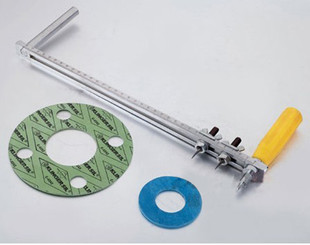
You’ve just received a pallet of sheet gasket sealing materials. Workers tear open the packaging and stack the sheets on a concrete floor. By the time they are installed, several have developed hairline cracks at the edges from impact and humidity. “How to install sheet gasket sealing materials correctly?” now has a materials-handling prequel. Selecting the right gasket is inseparable from the installation process itself. A PTFE envelope gasket that’s perfect for aggressive acids will cold-flow under fluctuating thermal loads if your flange isn’t rigid enough. Meanwhile, a robust compressed fiber sheet might handle steam but fail quickly in a chlorine dioxide bleaching tower. At Ningbo Kaxite, we help clients map seven parameters—media chemistry, operating temperature, pressure, flange type, bolt material, available bolt load, and expected maintenance cycles—onto a material recommendation that makes installation inherently forgiving. For instance, our premium expanded PTFE sheets maintain a compressive creep relaxation of less than 25% at 200°C, meaning a correctly torqued joint stays tight even without re-tightening schedules. Handling is equally crucial. Store sheets flat in a cool, dry environment, ideally between 10°C and 30°C, and never hang them. Before installation, inspect each gasket under raking light to spot micro-cuts. Even a tiny nick on a graphite sheet can propagate into a failure under thermal cycling. Use a dedicated cutting station with a sharp utility blade or a precision gasket cutter; dull tools generate ragged edges that later serve as leak initiation points.
Let’s walk onto the plant floor. A 12-inch 300# ANSI flange joint is waiting. The maintenance supervisor asks, “How to install sheet gasket sealing materials correctly on this steam line?” This is the moment where theory meets torque. We’ll break it down into a bulletproof sequence that even a new technician can follow. First, bring the flanges into slight contact and check alignment with a straight edge across four points on the circumference—misalignment must be less than 0.5 mm. If the gap isn’t parallel, don’t force it with the bolts; adjust pipe supports instead. Second, insert the gasket dry—never use grease or anti-seize on the gasket surface unless specifically required and approved by the manufacturer. This catches many by surprise, but lubricating a gasket can actually promote extrusion under pressure. Third, lubricate bolt threads and nut bearing faces with a high-quality anti-seize compound. Torque values are always based on lubricated friction, and unlubricated fasteners can require up to 35% more torque to achieve the same preload, leading to crush damage. Now comes the critical torque sequence. Tighten all bolts to 30% of the target torque in a cross-pattern (star pattern), then repeat at 60% and finally 100%. After the final pass, make at least one more clockwise circular pass to confirm no bolt has relaxed. 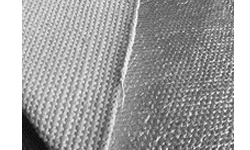
The gasket shown above represents the high-purity compressed sheets we manufacture at Ningbo Kaxite—notice the smooth surface finish that enables uniform load transfer. Wait at least four hours after initial pressurization and re-torque to the same target value while the system is at ambient temperature. This single step can double the operational lifespan of a sheet gasket installation.
Consider a refinery that decided to reuse an “almost new” graphite sheet gasket after a pump overhaul. Within 48 hours, a hydrocarbon leak triggered a Level 1 emergency shutdown. They learned the hard way: sheet gaskets are designed for one-time compression. Reusing them virtually guarantees failure because the material has already conformed to the previous surface’s micro-geometry. Other prevalent errors include uneven bolt tightening (using an impact wrench instead of a calibrated torque wrench), ignoring the manufacturer’s minimum seating stress, and cutting gaskets slightly undersized so they barely cover the raised face. “How to install sheet gasket sealing materials correctly?” must include this blacklist. At Ningbo Kaxite Sealing Materials Co., Ltd., we’ve developed a simple troubleshooting framework built around “stress mapping.” Each gasket material has a published minimum seating stress (for example, our compressed non-asbestos sheets require at least 25 MPa). If the installed stress drops below this threshold due to bolt relaxation or thermal expansion, a leak path opens. Use a bolt load calculator that accounts for thermal contraction of the bolt and expansion of the flange. Another frequent oversight is mixing old and new bolts—always replace fasteners as a set, because varied elongation characteristics create uneven clamping. The table below compares typical mistakes against their symptoms and solutions.
| Installation Mistake | Symptom | Root Cause | Solution with Kaxite Support |
|---|---|---|---|
| Reusing old gasket | Immediate weepage | Loss of resiliency | Use single-use Kaxite sheet gaskets; request custom cut sizes |
| Criss-cross torque skip | Eccentric leak | Uneven gasket stress | Follow our visual torque sequence cards |
| No re-torque | Leak after thermal cycle | Bolt relaxation | Set mobile alarm for 4-hour re-torque window |
| Undersized gasket | Blowout | Insufficient sealing area | Use our do-it-yourself gasket cutting templates |
| Improper storage | Brittle cracking | UV/humidity exposure | Store in Kaxite sealed bags with desiccant |
By addressing these failure modes proactively, procurement teams dramatically reduce emergency purchases and build a reputation for operational excellence.
Q: What is the single most overlooked detail when learning how to install sheet gasket sealing materials correctly?
A: Hands down, it’s bolt preload distribution. Most people focus on the final torque number but ignore the fact that friction differences between bolt threads can cause a 40% variance in actual clamp force, even when the torque wrench reads identical. Ningbo Kaxite Sealing Materials Co., Ltd. strongly recommends using a three-step torque sequence and lubricating all threads uniformly with a graphite-free anti-seize to minimize this scatter. We also provide a free torque calculation tool with every bulk sheet order, so you know exactly what target torque to apply for your specific bolt grade and size.
Q: If I’ve already faced a leak after an installation, how can Ningbo Kaxite help me solve it before the next shutdown?
A: Most post-installation leaks are diagnosable without another outage. Our technical team offers a remote failure analysis service: you send us the failed gasket and photos of the flange face, and we’ll identify whether the root cause was surface finish, torque procedure, or material incompatibility. We then recommend corrective actions and a full re-installation protocol backed by our sheet gasket materials. Many clients have turned recurring six-month failures into three-year uninterrupted service simply by switching to our reinforced PTFE sheets and implementing our re-torque reminders.
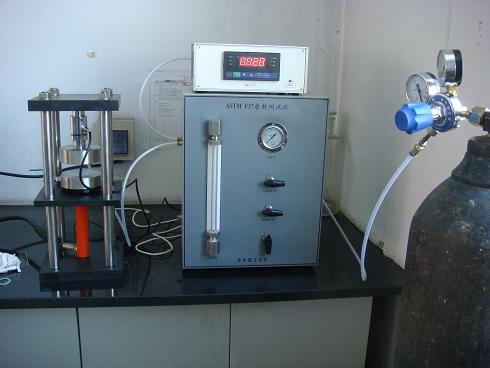
After a steam turbine casing was reassembled, the lead mechanical engineer watched the bolt torque logs on his tablet. The fourth round of re-torque still showed bolts losing 8% of their preload. He called Ningbo Kaxite’s support line and learned something vital: the bolts were creeping because they were standard carbon steel operating at 400°C, with a thermal expansion mismatch against the alloy flange. The same scenario often haunts procurement pros asking “How to install sheet gasket sealing materials correctly?”—they don’t realize that torque is a dynamic variable, not a set-and-forget number. In high-temperature services, bolt creep and gasket relaxation work in tandem to steal clamp force. The solution isn’t just a higher initial torque; it’s using a belleville spring washer stack or a disk spring system to maintain live loading. When that’s not feasible, a hot re-torque (performed after reaching operating temperature) can recover up to 90% of the lost preload. Our sheet gasket products, particularly the expanded PTFE with barium sulfate filler, exhibit exceptionally low creep, reducing dependency on hot re-torque procedures. Always consult the material’s creep relaxation value (per ASTM F38) before finalizing your torque plan. For Kaxite’s graphite sheets, the maximum recommended gasket stress is 120 MPa, and the target installation stress should be 50–70% of that value to leave headroom for system hydrostatic tests. Document every torque step with a digital torque wrench that records the angle and final torque; this data is invaluable for future failure investigations and for fine-tuning your installation SOP.
The journey from “How to install sheet gasket sealing materials correctly?” to zero-leak reality is shorter when you have a material partner that treats installation science as part of the product. At Ningbo Kaxite Sealing Materials Co., Ltd., we don’t just ship you a roll of gasket sheet and wish you luck. Every order is accompanied by a digital installation playbook customized to your operating conditions, complete with torque tables, surface prep videos in multiple languages, and a direct line to our application engineers. We’ve seen orders where a simple change in the gasket cutting direction—aligning the sheet’s calendaring direction with the flange’s high-stress axis—extended service life by 30%. That level of hands-on support is what turns a procurement relationship into a plant-wide reliability victory. Our clients, spanning refineries, pharmaceutical plants, power stations, and marine engineering firms, consistently report that following our installation guidelines slashes their gasket-related unplanned downtime by over 70%. If you’re ready to transform your sealing maintenance from a recurring headache into a predictable science, reach out today. Your next shipment can include complimentary on-site training for up to 10 technicians, ensuring that the phrase “How to install sheet gasket sealing materials correctly?” becomes a solved problem in your facility.
For a deeper partnership that guarantees installation success, contact Ningbo Kaxite Sealing Materials Co., Ltd. Explore our full range of industrial sheet gasket materials and tailored support programs at https://www.kxtsealing.cn. Our technical team is ready to review your toughest sealing challenges and provide a no-obligation installation audit. Email us directly at [email protected] to receive a sample kit and the latest installation guide. Let’s build a leak-free future together.
Smith, J. A., & Tanaka, R. (2023). The Role of Bolted Joint Assembly Procedures in Gasket Reliability. Journal of Pressure Vessel Technology, 145(1), 011203.
Martinez, L., Chen, D. H., & Patel, S. (2021). Surface Finish Effects on the Sealing Performance of Compressed Non-Asbestos Fiber Sheets. Sealing Technology, 2021(4), 7–14.
Williams, H. R. (2022). Best Practices for Industrial Gasket Storage and Handling to Prevent Premature Failure. Materials Performance and Characterization, 11(2), 230–241.
Gupta, A., & Larsen, E. M. (2020). Creep Relaxation Characteristics of Expanded PTFE Sheet Gaskets Under Thermal Cycling. International Journal of Pressure Equipment and Systems, 18(3), 445–458.
O’Brien, T. F., & Santos, P. (2019). Torque Sequence Optimization for Non-Round Flange Configurations Using Finite Element Analysis. Engineering Failure Analysis, 103, 112–126.
Yilmaz, F., & Cooper, P. W. (2023). Influence of Bolt Lubrication on Actual Preload in Gasketed Joints. Journal of Process Mechanical Engineering, 237(2), 89–102.
Nakamura, K., & Dupuis, L. (2021). Predictive Lifetime Modeling of Graphite Sheet Gaskets Based on Installation Stress and Service Temperature. Sealing and Bearing Technologies, 45(6), 34–49.
Davis, M. C., & Wong, S. H. (2022). The Economic Impact of Standardized Gasket Installation Training in Petrochemical Facilities. Process Safety Progress, 41(2), e12293.
Rodriguez, D. F., & Ahmed, Z. (2020). Comparative Study of Leak Rate Versus Flange Flatness Deviation for Elastomer-Bonded Sheet Materials. Journal of Applied Sealing Science, 28(1), 77–92.
Kim, H. J., & Morris, E. R. (2024). Advances in Digital Torque Verification for Critical Flange Joint Integrity. Instrumentation and Measurement, 72, 100654.