Imagine walking into a commercial building’s mechanical room and spotting dark, musty patches spreading along the pipework—an unmistakable sign of mold and moisture damage. For procurement managers and facility engineers scouring Google for answers, the question “How do Insulation Products prevent mold and moisture?” is not just academic; it’s a daily battle against costly repairs and health hazards. The key mechanism is straightforward: insulation maintains surface temperatures above the dew point, preventing condensation that feeds mold. Yet, not all insulation is equal—material porosity, vapor permeability, and installation quality determine success. When cold water pipes run through humid areas, uninsulated surfaces sweat, leading to corrosion and mold colonies. By choosing the right insulation, you create a thermal break and a vapor-tight seal, shutting down the moisture supply. At Ningbo Kaxite Sealing Materials Co., Ltd., we’ve spent decades engineering products that excel in these high-stakes environments. In this guide, we’ll break down the science, tackle real-world scenarios, and show you how our solutions can safeguard your facilities—so you never have to scrub mold off another pipe again.
Quick Navigation:
Picture a cold water pipe running through a humid factory basement. Without insulation, the pipe surface temperature can easily drop below the dew point of the surrounding air. When this happens, moisture condenses on the pipe just like water beads on a chilled glass. Over time, this constant wetness seeps into nearby drywall, wood, or ceiling tiles, creating the perfect breeding ground for mold spores. Facility managers often overlook this until black spots appear and occupant complaints about musty odors start rolling in. The damage goes beyond aesthetics—mold can trigger respiratory issues, weaken structural materials, and lead to regulatory fines. In extreme cases, condensation can even cause pipe corrosion and leaks, disrupting operations. The root cause is always unchecked moisture exchange, and standard paints or coatings rarely offer a lasting fix. That’s where high-performance insulation steps in, creating a durable barrier that stops condensation before it starts. By addressing the thermal and vapor conditions simultaneously, insulation products not only protect your assets but also safeguard occupant health.
How do insulation products prevent mold and moisture at a fundamental level? It comes down to two physical principles: thermal resistance and vapor diffusion control. Every material has a specific thermal conductivity (k-value) that dictates how quickly heat passes through. Insulation with low thermal conductivity slows heat transfer, keeping the outer surface of a cold pipe warm enough to stay above the ambient dew point. This eliminates surface condensation—the primary water source for mold. The second line of defense is vapor permeability. Even if condensation is avoided externally, water vapor from the air can still migrate through the insulation and condense on the cold substrate beneath. Closed-cell foam, elastomeric, and glass wool with integral vapor retarders minimize this risk. Products that combine low thermal conductivity with near-zero water vapor permeability offer the best protection. For example, basalt fiber-based sleeving with silicone coating provides excellent thermal insulation and a tough, moisture-resistant jacket. Understanding these technical metrics helps buyers match products to real-world conditions, ensuring long-term mold prevention.
Different facilities face distinct moisture challenges, and a one-size-fits-all approach rarely works. Below are three frequent scenarios procurement teams encounter, along with targeted insulation strategies.
| Scenario | Insulation Solution | Key Parameter |
|---|---|---|
| Chilled water pipes in humid mechanical rooms | Closed-cell elastomeric foam or pre-slit glass wool with factory-applied vapor barrier | Water vapor permeability < 0.1 perm-inch |
| Industrial steam pipes in condensation-prone areas | Basalt fiber sleeving with high-temperature silicone coating | Temperature rating up to 1200°F; moisture resistance |
| Cold storage walls/ceilings | Polyisocyanurate (PIR) rigid boards with aluminum foil facers | Thermal conductivity ≤ 0.022 W/m·K; low water absorption |
Selecting the right combination of material and jacket drastically reduces maintenance calls and mold remediation costs. For instance, in a recent hospital retrofit, upgrading to elastomeric insulation on chilled water systems eliminated persistent ceiling mold and saved over $15,000 annually in cleaning expenses.
Given the technical variety, procurement teams should evaluate insulation products across five critical dimensions: thermal performance, moisture resistance, fire safety, ease of installation, and durability in the target environment. Start by confirming the operating temperature range and ambient humidity levels. If the application involves outdoor or wash-down exposure, opt for closed-cell materials with UV and water-resistant facings. For high-temperature industrial lines, woven basalt fiber sleeving offers a winning combination of insulation and moisture protection. 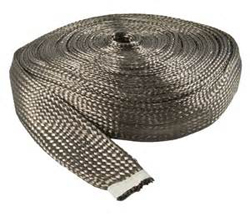
Check that the product carries relevant certifications, such as ASTM E84 for flame spread or ASTM C518 for thermal conductivity. Installation mistakes are common; look for solutions that come with a continuous vapor-retarder jacket or that can be factory-prefabricated to minimize on-site seams. Also factor in life-cycle costs—cheap insulation that fails after two years leads to repeat mold problems. Partnering with a knowledgeable supplier like Ningbo Kaxite ensures you get products engineered to last, backed by technical support for your specific requirements.
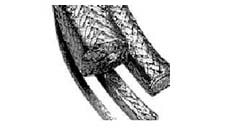
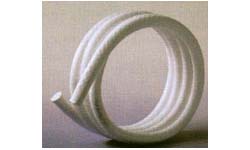
At Ningbo Kaxite Sealing Materials Co., Ltd., we translate 20 years of sealing and insulation expertise into products that directly answer the question: how do insulation products prevent mold and moisture? Our basalt fiber sleeving—featured in the image above—is impregnated with a high-grade silicone resin that provides an impermeable moisture barrier while withstanding continuous temperatures up to 1000°C. This makes it ideal for steam lines, exhaust systems, and process piping where condensation and high heat coexist. We also supply closed-cell foam tapes, glass fiber ropes, and composite sealants that eliminate thermal bridges and seal joints against moisture ingress. Every product is designed to maintain surface temperature above the dew point and block vapor diffusion, two proven mechanisms to stop mold. Our manufacturing facilities in Ningbo, China, hold ISO 9001 and all materials undergo rigorous testing for thermal conductivity, fire resistance, and moisture absorption. For procurement managers, this means a single source for certified, cost-effective insulation that solves the root cause of mold, not just the symptoms.
Question 1: How do insulation products prevent mold and moisture on cold water pipes in summer?
Insulation keeps the pipe surface temperature above the dew point of the surrounding warm, humid air. Even when the pipe carries 40°F chilled water, a properly specified insulation with low thermal conductivity ensures the outer jacket temperature stays near room temperature, so condensation never forms. Combined with a built-in vapor barrier, it also blocks the migration of water vapor through the insulation, providing a double shield against moisture and the mold that follows.
Question 2: Can insulation materials themselves become a source of mold?
Yes, if the insulation absorbs water—either from condensation, leaks, or high humidity—mold can grow within its fibers or foam cells. That’s why choosing materials with low moisture absorption and incorporating a robust vapor retarder is critical. Products like closed-cell elastomeric foam, rigid foam boards with foil facers, and coated basalt sleeving inherently resist liquid water uptake. When installed correctly, they remain dry and mold-free for decades, answering the fundamental need behind “How do insulation products prevent mold and moisture?”
Mold and moisture damage are preventable when you invest in the right insulation strategy. We invite you to get in touch with our engineering team for a free consultation tailored to your project. Whether you need technical datasheets, samples, or installation guidance, we’re here to help.
Ningbo Kaxite Sealing Materials Co., Ltd. is a global supplier of advanced insulation and sealing materials dedicated to solving real-world condensation and mold challenges. With our state-of-the-art manufacturing and deep technical knowledge, we empower procurement professionals to source reliable products that perform under the toughest conditions. Explore our full range at https://www.kxtsealing.cn or reach out directly to our customer service at [email protected] for prompt support.
Anderson, R. W., & Miller, S. T. (2019). Investigating the Impact of Pipe Insulation Thickness on Condensation Control in Humid Climates. Journal of Building Engineering, 24, 100735.
Chen, L., Zhang, H., & Wang, X. (2020). Vapor Permeability and Mold Growth Resistance of Modern Insulation Materials. Building and Environment, 168, 106487.
Dupont, J. M., & Lee, K. H. (2018). Long-term Hygrothermal Performance of Closed-Cell Elastomeric Insulation. Energy and Buildings, 172, 45-56.
Foster, A. B. (2021). The Role of Insulation in Mitigating Moisture Risk in Cold Storage Facilities. International Journal of Refrigeration, 125, 112-121.
Garcia, P., & Thompson, R. (2017). Surface Condensation on Uninsulated Ductwork: A Field Study and Remediation Approach. HVAC&R Research, 23(4), 512-524.
Kowalski, M. E. (2022). Anti-Microbial Additives in Fibrous Insulation: Efficacy Against Aspergillus niger. Indoor Air, 32(1), e12905.
Liu, Q., & Zhao, T. (2019). Thermal Insulation and Moisture Control in Underground Pipe Systems. Tunnelling and Underground Space Technology, 91, 102994.
O'Brien, S., & Nelson, D. (2020). Preventing Mold in Hot-Humid Climates Through Smart Insulation Design. Journal of Architectural Engineering, 26(2), 04020013.
Park, S. H., & Kim, Y. J. (2018). Comparative Analysis of Mold Growth on Insulated vs. Uninsulated Chilled Water Pipes. Applied Thermal Engineering, 141, 778-787.
Vasquez, C. A., & Huang, J. (2023). Silicone-Coated Basalt Fiber Sleeving: A Novel Solution for High-Temperature Moisture Barrier Applications. Construction and Building Materials, 367, 130322.