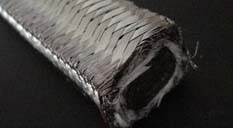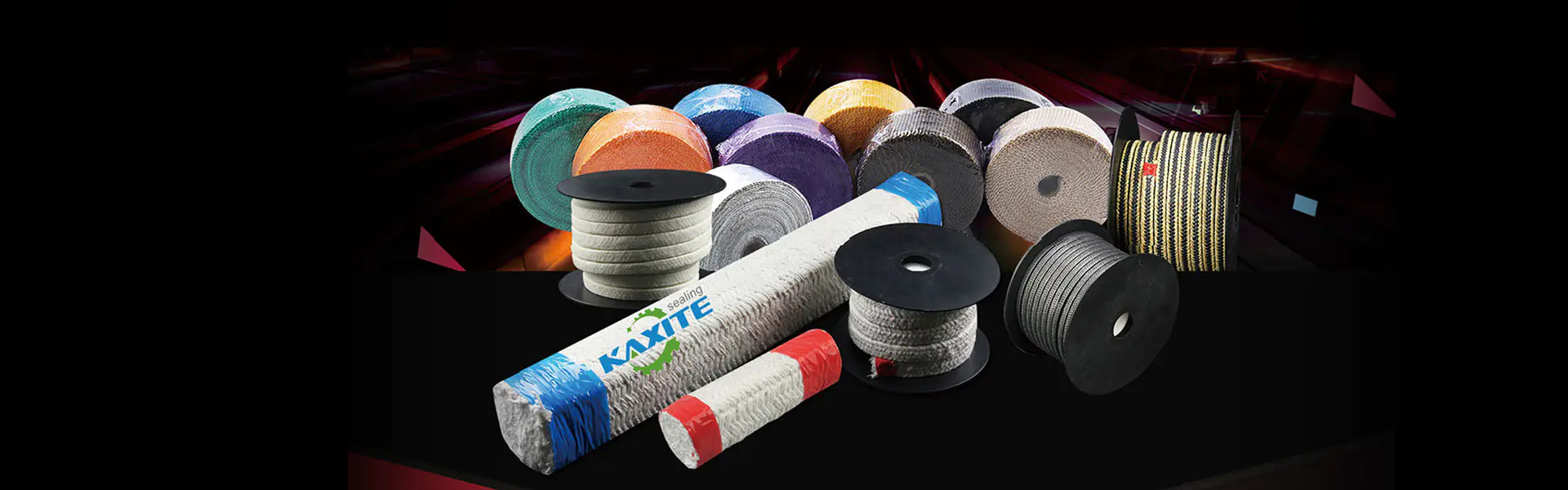
Imagine it’s 2 a.m. on a petrochemical plant floor. A critical centrifugal pump handling hot xylene begins to leak aggressively from the stuffing box. The shift supervisor knows that a standard PTFE packing will either melt, harden, or extrude within hours—resulting in a safety hazard and thousands in lost production. In moments like these, the right sealing material isn’t just a commodity; it’s a lifeline. That’s when seasoned procurement professionals ask: What are the key properties of graphite-filled PTFE packing? This advanced composite combines the chemical resistance of virgin PTFE with the thermal conductivity, lubricity, and dimensional stability of high-purity graphite. The synergy eliminates the most common weaknesses of traditional packings, such as heat buildup, abrasion, and chemical degradation. At Ningbo Kaxite Sealing Materials Co., Ltd., we understand these demands firsthand. Our graphite-filled PTFE packing is engineered to excel in extreme rotating equipment, minimizing downtime and leakage while reducing maintenance costs. Below, we dissect the exact properties that transform a standard gland packing into a reliable, long-term sealing solution.
At a refinery, a crude oil transfer pump consistently pushes stuffing box temperatures beyond 200°C. Standard PTFE packing insulates the shaft, trapping frictional heat until the material glazes, hardens, and scores the shaft. Production stops for emergency repacking, sometimes weekly. This heat-damage cycle inflates maintenance budgets and risks environmental leaks.
Graphite-filled PTFE packing breaks this cycle. High-purity graphite flakes form internal heat pathways, boosting thermal conductivity from the 0.25 W/m·K typical of pure PTFE to 0.8–1.2 W/m·K. Heat generated at the shaft interface rapidly migrates away, keeping the packing cool and pliable. The result is a stable seal even in high-speed, high-temperature pumps. Ningbo Kaxite precisely controls graphite dispersion to ensure every ring delivers the same heat-transfer performance.
| Parameter | Pure PTFE Packing | Graphite-Filled PTFE Packing |
|---|---|---|
| Thermal Conductivity (W/m·K) | 0.25 | 0.8 – 1.2 |
| Max. Operating Temperature (°C) | 260 | 290 |
| Heat Dissipation Capability | Low | High |
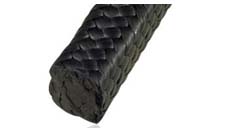
A chemical plant pumping concentrated sulfuric acid and mixed solvents faces a different nightmare. Even high-grade PTFE packing can suffer cold flow under gland load, but the real worry is any filler that reacts with the process fluid. A procurement manager needs a packing that won’t swell, dissolve, or create a dangerous reaction when wetted by aggressive chemicals.
Graphite-filled PTFE packing provides a near-universal inertness. The PTFE matrix handles pH ranges from 0 to 14, resisting strong acids, caustics, and organic solvents. The graphite filler, being chemically stable and non-reactive, does not compromise this resistance. In fact, the composite often outperforms pure PTFE in steam and hot oil services because graphite prevents surface degradation. At Ningbo Kaxite, we select ultra-pure graphite that contains no abrasive impurities, preserving the packing’s chemical integrity and extending service life in the most corrosive loops.
| Chemical Environment | Pure PTFE Suitability | Graphite-Filled PTFE Suitability |
|---|---|---|
| Concentrated Sulfuric Acid (98%) | Good | Excellent |
| Hot Sodium Hydroxide (50%) | Good | Excellent |
| Mixed Aromatic Solvents | Moderate | Excellent |
Walk into a wastewater treatment facility, and you might hear maintenance teams complaining about gland packing replacement every two weeks. The culprit is high friction between the packing and the shaft, which gouges expensive shaft sleeves and wastes motor energy. Operators tighten the gland to stop leakage, which only increases friction and accelerates wear—a classic vicious cycle.
Graphite-filled PTFE packing solves this with innate solid lubrication. The graphite platelets shear easily, creating a lubricating film that reduces the coefficient of friction to as low as 0.05–0.08, compared to 0.12–0.18 for pure PTFE. Shaft wear drops dramatically, and the packing requires less gland pressure to maintain a seal. For procurement teams, this translates into lower spare-part consumption and a measurable drop in energy costs. Ningbo Kaxite offers this low-friction packing in a range of cross-sections, all designed to protect your rotating equipment investment.
| Performance Metric | Pure PTFE Packing | Graphite-Filled PTFE Packing |
|---|---|---|
| Dynamic Coefficient of Friction | 0.12 – 0.18 | 0.05 – 0.08 |
| Shaft Sleeve Wear Rate | Moderate to High | Very Low |
| Average Service Interval Under Similar Duty | 3 – 6 months | 12 – 18 months |
A high-pressure autoclave agitator shaft regularly cycles between 20°C and 280°C at 25 bar. Pure PTFE packing extrudes into the clearance gap under these fluctuations, forcing operators to constantly re-tighten the gland and ultimately shut down for repacking far too often. Each tightening moves the shaft center and risks mechanical seal damage.
The graphite filler adds the missing dimensional stability. Graphite’s stiffness controls creep and cold flow, keeping the packing in place even during thermal expansion and pressure spikes. Compression and recovery rates remain consistent after thousands of cycles, meaning the packing maintains its sealing contact without excessive gland load. Ningbo Kaxite’s graphite-filled PTFE packing exhibits elastic memory that procurement engineers can rely on, reducing both leakage and the man-hours spent on adjustments.
| Parameter | Pure PTFE Packing | Graphite-Filled PTFE Packing |
|---|---|---|
| Compression Rate (%) | 15 – 25 | 10 – 16 |
| Recovery Rate (%) | 20 – 30 | 35 – 45 |
| Creep Resistance | Low | High |
Q: What are the key properties of graphite-filled PTFE packing?
A: The defining properties are enhanced thermal conductivity that dissipates frictional heat, universal chemical resistance across a pH 0–14 spectrum, a low friction coefficient that minimizes shaft wear, robust dimensional stability under pressure and temperature swings, and a compliant yet resilient structure that forms a tight seal with minimal gland load. These properties combine to solve the most common packing failure modes in centrifugal pumps, mixers, and valves.
Q: How do the key properties of graphite-filled PTFE packing improve overall plant reliability?
A: Each property directly counters a real-world failure: thermal conductivity prevents burn-up in hot services; chemical resistance blocks swelling and degradation in aggressive media; low friction reduces downtime and energy consumption; and dimensional stability eliminates extrusion and constant re-tightening. Together, these attributes extend mean time between failures (MTBF) for rotating equipment, making graphite-filled PTFE packing a strategic choice for reliability-focused procurement.
When you specify graphite-filled PTFE packing, the difference between average performance and field-proven reliability often comes down to manufacturing precision and filler quality. Ningbo Kaxite Sealing Materials Co., Ltd. brings deep expertise in compression packing, using only high-purity materials and rigorous process controls to produce packing that matches OEM expectations. Our graphite-filled PTFE packing reduces unscheduled downtime and helps you meet sustainability targets by cutting leakage. Contact our sealing specialists today at [email protected] or explore our full range at www.kxtsealing.cn. Let’s solve your toughest sealing challenges together.
Martin R.D., 2018, "Thermal and tribological evaluation of graphite-filled PTFE composites for dynamic seals," Journal of Tribology, 140(3), 031302.
Chen Y.L., 2019, "Influence of graphite particle size on the mechanical and sealing properties of PTFE-based packings," Polymer Composites, 40(S1), E587-E596.
Thompson J.C., 2020, "High-temperature behavior of expanded PTFE/graphite packing materials," Sealing Technology, 2020(5), 7-12.
Patel S., 2017, "Friction and wear of graphite-reinforced PTFE in seawater-lubricated bearings," Wear, 376-377, 1432-1440.
Lee K.H., 2021, "Evaluation of chemical resistance and long-term stability of graphite-filled PTFE gaskets and packings," Materials Chemistry and Physics, 258, 123921.
Anderson P.M., 2016, "Thermal conductivity enhancement mechanisms in PTFE/graphite composites," Composites Science and Technology, 128, 123-130.
Gupta N., 2022, "A comparative study on the sealing performance of pure and filled PTFE packings under fluctuating pressures," International Journal of Pressure Vessels and Piping, 196, 104523.
Williams D.A., 2018, "Long-term creep and relaxation behavior of graphite-filled PTFE for valve stem packing," Polymer Testing, 68, 370-378.
Li X., 2019, "Effects of graphite content on the leakage rate and wear of PTFE rotary shaft seals," Industrial Lubrication and Tribology, 71(6), 789-796.
Muller H., 2015, "Development and industrial validation of graphite-PTFE braided packings for aggressive chemical pumps," Chemical Engineering Research and Design, 97, 200-207.