At 2:47 a.m., a shift supervisor at a petrochemical plant notices a pressure drop on a heat exchanger. A maintenance crew isolates the exchanger and finds a leaking flange joint. The gasket, a standard spiral wound type, has failed under thermal cycling. This is not an uncommon story. Process engineers and procurement professionals often ask: What are double jacketed gaskets and why are they used? A double jacketed gasket consists of a metallic outer shell, usually stainless steel, wrapped around a soft filler such as flexible graphite, PTFE, or ceramic fiber. The metal jacket provides structural strength and resistance to high temperatures and pressures, while the filler delivers conformability to flange surfaces. These gaskets are widely used in heat exchangers, boiler handholes, condensers, and flanged connections where temperature fluctuations, vibration, or aggressive media can compromise sealing integrity. Compared with solid metal gaskets, double jacketed gaskets require lower bolt loads and are easier to install. Compared with non-metallic gaskets, they survive far higher temperatures and pressures. For buyers in global procurement teams, the key is not just knowing the answer, it is knowing which manufacturer can supply dimensionally accurate, traceable, and consistent double jacketed gaskets for critical applications. Here we break down everything you need to evaluate.
Table of Contents
A double jacketed gasket is a sealing component built by wrapping a metal sheet around a non-metallic filler. The outer jacket is usually made from stainless steel 304, 316L, or other alloys. Inside, the filler is typically flexible graphite, PTFE, or ceramic fiber. This design combines the mechanical strength of metal with the compressibility of a soft filler. When a maintenance team in a food processing plant has to seal a heat exchanger manway that sees repeated steam cleaning, a solid metal gasket may be too stiff and a soft gasket may degrade too quickly. The double jacketed gasket solves both problems. It conforms to minor flange imperfections while maintaining structural stability under bolt preload. This is why inspectors often see fewer leak paths and more predictable seating stress with double jacketed gaskets than with low-cost non-metallic alternatives.
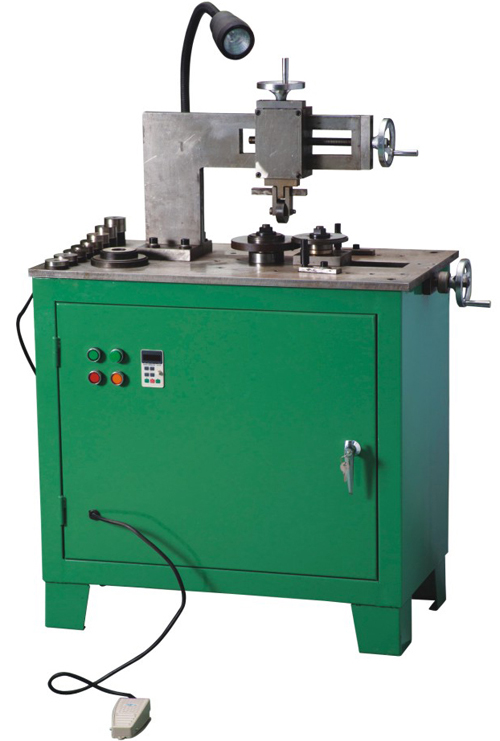
The image above shows production equipment used to form double jacketed gaskets. Precision forming matters because uneven jacket thickness can lead to stress concentrations and premature leak paths. For procurement teams, this is a reminder that gasket performance starts at the manufacturing stage, not just at installation.
A common scene in a refinery turnaround is a stack of heat exchanger shells waiting for new gaskets. The engineer responsible for the shutdown wants a gasket that can handle thermal cycling, resist aggressive process fluids, and seal without excessive bolt torque. Double jacketed gaskets are used because they answer all three demands. Their metal jacket protects the filler from direct contact with the medium and from blowout. The filler provides resilience and compensates for flange distortion. In many cases, double jacketed gaskets are more cost-effective than solid metal gaskets because they require lower bolt loads and can be reused in certain low-severity services if inspected carefully. The table below compares double jacketed gaskets with other common types based on typical industrial conditions.
| Gasket Type | Max Temperature | Max Pressure | Bolt Load Required | Sealing Conformability |
|---|---|---|---|---|
| Double Jacketed | 540 °C (1000 °F) | Up to 250 bar | Low to moderate | Good |
| Spiral Wound | 450 °C (842 °F) | Up to 200 bar | Moderate | Good |
| Solid Metal | 600 °C (1112 °F) | Up to 300 bar | High | Low |
| Non-Metallic | 200 °C (392 °F) | Up to 40 bar | Low | Excellent |
In steam, oil, and high-temperature water services, double jacketed gaskets remain a practical choice because they balance cost, thermal resistance, and sealing reliability. Buyers who select double jacketed gaskets from a manufacturer with full material traceability can reduce the risk of mixing incorrect jacket or filler materials during procurement.
Procurement managers often face a familiar scenario. A purchase order for 24 heat exchanger gaskets arrives, but four gaskets have the wrong inner diameter. The warehouse team notices after the exchanger is already open. The plant loses hours of production. The root cause is often inconsistent cutting, weak quality control, or unclear communication between buyer and supplier. Double jacketed gaskets are available from many suppliers, but not all suppliers provide the documentation and dimensional accuracy needed for critical flange work. The solution is to choose a manufacturer that uses CNC cutting, inspects each jacket before filler insertion, and can provide material test certificates upon request. Ningbo Kaxite Sealing Materials Co., Ltd. focuses on exactly this point. The company produces double jacketed gaskets with strict dimensional tolerances and offers full export documentation, so procurement teams can avoid the hidden costs of rework and delayed shutdowns.
Other common pain points include unclear lead times, no pre-shipment photos, and mixed inventory of stainless steel grades. When a buyer orders double jacketed gaskets in 316L but receives 304 material, corrosion resistance drops and flange leaks may appear within months. Solution-oriented suppliers carry out PMI testing and label each gasket with heat numbers. This level of control is essential for oil and gas, chemical, and power generation projects.
Choosing the right double jacketed gasket starts with matching the jacket and filler to the service environment. In a chemical plant where weak acids are present, 316L stainless steel jacket with PTFE filler may be preferred. In a high-temperature steam system, flexible graphite filler inside a 304 stainless steel jacket is a common combination. The following table lists typical material pairings and their operating ranges.
| Jacket Material | Filler Material | Temperature Range | Pressure Range | Typical Application |
|---|---|---|---|---|
| 304 Stainless Steel | Flexible Graphite | -200 °C to 540 °C | Up to 200 bar | Steam, heat exchangers |
| 316L Stainless Steel | PTFE | -100 °C to 260 °C | Up to 100 bar | Chemical, food grade |
| Carbon Steel | Ceramic Fiber | Up to 800 °C | Up to 50 bar | Furnace doors, boiler handholes |
| Monel or Inconel | Flexible Graphite | Up to 600 °C | Up to 250 bar | Offshore, high-corrosion |
For procurement teams, specifying these parameters correctly is the first step to a leak-free shutdown. The second step is verifying that the supplier actually uses the requested materials. Reputable manufacturers such as Ningbo Kaxite Sealing Materials Co., Ltd. maintain batch traceability and can supply mill certificates, material test reports, and visual inspection records with every shipment.
A gasket can be manufactured perfectly but still fail if installation is rushed. Imagine a maintenance shift replacing a double jacketed gasket on a steam header during a short outage. The bolts are tightened unevenly with an impact wrench. The gasket cocks slightly, and the metal jacket deforms. Within weeks, a whisper leak appears. To prevent this, follow a simple procedure. Clean the flange surface thoroughly, inspect for scratches or warping, and place the gasket centrally. Tighten bolts in a cross-pattern sequence using a calibrated torque wrench. For double jacketed gaskets, applying gradual, even compression protects the jacket and allows the filler to seat properly. After initial tightening, a second pass at full torque is often required after a short heat cycle.
Quality verification should include dimensional checks, visual inspection of the jacket for wrinkles, and confirmation of filler type. Buyers can ask for pre-shipment photos, hardness test results, or third-party inspection reports. These steps reduce the chance of receiving gaskets that look correct but fail in service. Suppliers with export experience understand these requirements and prepare the necessary documentation before the cargo leaves the warehouse.
Ningbo Kaxite Sealing Materials Co., Ltd. understands that global procurement teams need more than just a low unit price. They need repeatable dimensions, correct material grades, on-time delivery, and responsive communication. The company manufactures double jacketed gaskets in a wide range of sizes, including large heat exchanger gaskets up to several meters in diameter. Each order is processed with CNC cutting and controlled jacket forming. Before shipment, gaskets are checked against customer drawings, and batch numbers are recorded for traceability. This directly solves the common pain point of receiving mix-matched gaskets that delay turnaround schedules.
In addition to double jacketed gaskets, Ningbo Kaxite Sealing Materials Co., Ltd. supplies spiral wound gaskets, ring joint gaskets, PTFE gaskets, and related sealing materials. This product range allows buyers to consolidate orders from one reliable source instead of coordinating multiple vendors. The company serves refineries, chemical plants, power stations, shipyards, and OEM equipment builders. With a focus on export documentation and technical support, Ningbo Kaxite Sealing Materials Co., Ltd. helps procurement teams reduce sealing-related downtime and avoid costly reorders.
Q: What are double jacketed gaskets and why are they used in high-temperature heat exchangers?
A: Double jacketed gaskets are sealing elements made of a metallic outer jacket filled with a soft material such as flexible graphite or PTFE. They are used in high-temperature heat exchangers because the metal jacket withstands extreme heat and pressure while the filler conforms to flange irregularities. This combination reduces leak paths and prevents gasket blowout under thermal cycling. They are especially useful when flange surfaces are not perfectly machined or when bolt load must be kept at a practical level.
Q: What are double jacketed gaskets and why are they used instead of solid metal gaskets?
A: Double jacketed gaskets are used instead of solid metal gaskets because they require much lower bolt loads to achieve a reliable seal. Solid metal gaskets need very smooth flange surfaces and high seating stress, which can be difficult on large or older equipment. The soft filler inside a double jacketed gasket compensates for minor surface imperfections, while the outer metal jacket protects the filler and provides structural strength. This makes double jacketed gaskets a practical alternative for heat exchangers, boiler handholes, and large flanged connections where solid metal gaskets are too rigid or too expensive to install.
When a sealing failure stops production, the cost is never just the gasket. It is the labor, the lost throughput, and the safety risk. Double jacketed gaskets are an effective solution for many industrial sealing challenges, but only when they are made to the correct dimensions and from the correct materials. If you are preparing an RFQ or reviewing a gasket specification, request full material traceability and dimensional inspection records. Compare suppliers not only on price but also on their ability to meet delivery dates and provide technical support. A proactive supplier will ask about your operating temperature, flange type, and process media before quoting.
Ningbo Kaxite Sealing Materials Co., Ltd. is a specialized manufacturer of double jacketed gaskets, spiral wound gaskets, and industrial sealing products. The company operates from Ningbo, China, and serves global procurement teams in oil and gas, petrochemical, power generation, and marine industries. With in-house production, CNC cutting, and full material traceability, Ningbo Kaxite Sealing Materials Co., Ltd. helps buyers eliminate dimensional errors, reduce downtime, and maintain stable supply chains. Visit https://www.kxtsealing.cn or contact [email protected] to request a quote or technical datasheet.
Anderson, M., & Chen, L. (2020). "Double Jacketed Gasket Performance Under Thermal Cycling in Shell-and-Tube Heat Exchangers." Journal of Pressure Vessel Technology, 142(3), 031204.
Bhandari, R., & Zhou, Y. (2019). "Effect of Filler Density on the Sealing Behavior of Double Jacketed Gaskets." International Journal of Pressure Vessels and Piping, 175, 103928.
Chen, S., & Müller, T. (2021). "Comparative Study of Spiral Wound and Double Jacketed Gaskets for Flanged Joints." Engineering Failure Analysis, 124, 105364.
Davis, P., & Kim, H. (2022). "Leak Rate Prediction for Double Jacketed Gaskets Under Non-Uniform Flange Loading." Journal of Loss Prevention in the Process Industries, 77, 104778.
Garcia, A., & Patel, N. (2018). "Material Selection Criteria for High-Temperature Heat Exchanger Gaskets." Chemical Engineering Research and Design, 135, 206-215.
Huang, W., & Smith, J. (2020). "Bolt Load Optimization for Double Jacketed Gaskets in ASME Code Applications." Journal of Pressure Vessel Technology, 142(5), 051203.
Ivanov, D., & Lee, S. (2021). "Experimental Evaluation of Flexible Graphite Filler in Double Jacketed Gaskets." Sealing Technology, 2021(4), 7-12.
Kaur, R., & Thompson, B. (2019). "Failure Analysis of Double Jacketed Gaskets in Boiler Handhole Service." Case Studies in Engineering Failure Analysis, 8, 45-52.
Li, X., & Fernandez, M. (2023). "Digital Image Correlation for Gasket Deformation Measurement in Flanged Joints." Experimental Mechanics, 63(2), 301-312.
Wang, J., & Okafor, E. (2022). "The Role of Jacket Thickness and Filler Recovery in Double Jacketed Gasket Reliability." Tribology International, 169, 107468.