Imagine walking through a refinery turnaround at 3:00 a.m. A heat exchanger flange has been leaking for weeks, and the spiral wound gasket installed last month already shows signs of unwinding. The maintenance supervisor turns to you and asks a direct question: When Should You Use a Double Jacketed Gasket Instead of a Spiral Wound Gasket? In high-temperature, high-pressure, or thermal-cycling services, the answer often comes down to flange condition, seating stress, and handling reliability. Double Jacketed Gaskets wrap a compressible filler inside a metallic shell, so they tolerate pitted or slightly misaligned flanges better than spiral wound designs. They also resist blowout and are less likely to be damaged during installation. This guide walks you through real-world scenarios, side-by-side parameters, and buyer-friendly selection rules. By the end, you will know exactly when to specify a double jacketed gasket—and how Ningbo Kaxite Sealing Materials Co., Ltd. can supply the right product with fast lead times and consistent quality. For purchasing teams, the wrong gasket choice means unplanned downtime, safety risks, and wasted maintenance budgets. In chemical plants, refineries, and power stations, gasket selection directly affects leak rates and emissions compliance. This article covers the key differences, application scenarios, and technical parameters that help you decide with confidence.
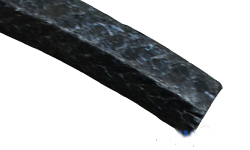
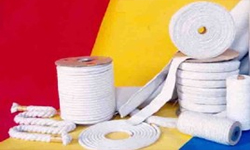
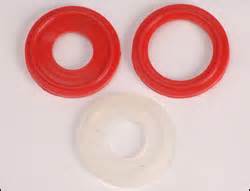
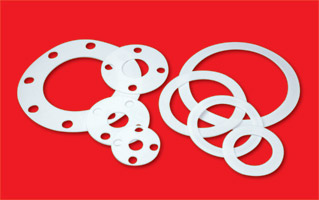
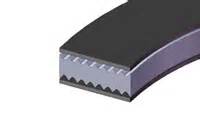
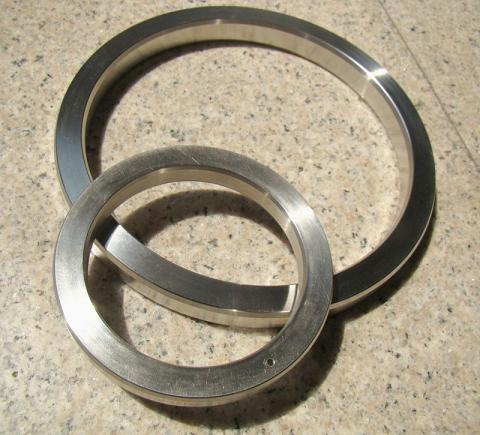
A double jacketed gasket consists of an outer metal shell—usually stainless steel 304, 316L, or other alloys—formed around a soft filler such as flexible graphite, PTFE, or ceramic fiber. The metal jacket provides structural strength and heat resistance, while the filler delivers compressibility and tight sealing under moderate bolt loads. These gaskets are common in heat exchangers, shell-and-tube units, boilers, and flanged connections where flanges are large and not perfectly flat. Unlike spiral wound gaskets, which are made by winding a metal strip and filler in alternating layers, double jacketed gaskets have a smooth outer surface that adapts to surface irregularities without excessive seating stress. This makes them a practical upgrade for older equipment or field services where flange resurfacing is not possible. In addition, the closed metal shell protects the filler from being washed out by aggressive media, which is a frequent problem in steam and hydrocarbon services. For procurement engineers, this means fewer leak complaints and lower maintenance costs over the life of the flange.
Purchasing teams often receive two competing quotes: one for double jacketed gaskets and one for spiral wound gaskets. The real difference shows up on the plant floor. A spiral wound gasket can unwind or buckle if the flange surface is rough, if the gasket is dropped during installation, or if the inner ring is not specified correctly. Double jacketed gaskets avoid many of these failure modes because the solid metal shell encloses the filler completely. They seat with lower bolt load, which is critical when old flanges cannot be torqued to modern ASME values. However, spiral wound gaskets still have higher pressure ratings in standard Class 150–2500 flanged joints and are often preferred for smooth, precise flange faces. The table below helps buyers compare the two options quickly.
| Parameter | Double Jacketed Gasket | Spiral Wound Gasket |
|---|---|---|
| Structure | Metal jacket with filler | Alternating metal and filler windings |
| Tolerance to flange irregularity | High | Moderate |
| Seating stress required | Lower | Higher |
| Blowout resistance | Excellent, closed shell | Good but can unwind if inner ring missing |
| Installation damage risk | Low | Moderate to high |
| Typical temperature range | -200°C to 550°C depending on filler | -200°C to 450°C with graphite filler |
| Typical pressure class | Class 150–600 | Class 150–2500 |
| Cost for non-standard sizes | Often lower | Often higher due to tooling |
Use a double jacketed gasket instead of a spiral wound gasket when the flange face is pitted, wavy, or slightly misaligned. Plant operators often discover this problem after opening a heat exchanger for cleaning: the old gasket fails because the flange cannot create a uniform compression seal. Double jacketed gaskets solve this by letting the metal shell deform into surface defects, which reduces the need for expensive flange resurfacing. Another trigger is low bolt load. Older equipment, especially shell-and-tube exchangers, may not have enough stud strength to compress a stiff spiral wound gasket. A double jacketed gasket seats at a lower gasket stress, making it a better fit for Class 150–300 flanges. Thermal cycling is a third clear signal. If the service swings repeatedly from hot steam to cooling water, the filler inside a spiral wound gasket can extrude or the metal winding can loosen. The closed jacket protects the filler and keeps the seal stable. The table below summarizes common application scenarios.
| Application Scenario | Recommended Gasket | Reason |
|---|---|---|
| Heat exchanger with pitted or corroded flanges | Double jacketed | Metal shell fills surface defects without high bolt load |
| High-pressure ASME flange with smooth finish | Spiral wound | Higher pressure rating and controlled compression |
| Frequent thermal cycling, steam to cooling water | Double jacketed | Filler protected from washout; shell recovers form |
| Tight turnaround schedule with less skilled crews | Double jacketed | Less fragile, faster installation, no unwinding |
| Aggressive chemical or catalyst transfer lines | Double jacketed with PTFE or graphite filler | Closed shell resists media attack |
Consider a maintenance planner at a chemical plant. A spiral wound gasket on a brine cooler starts leaking after only six months. The flange has shallow corrosion pits from years of exposure, and the plant cannot shut down long enough for resurfacing. This is a classic pain point where double jacketed gaskets outperform spiral wound designs. The metal jacket allows the gasket to conform to the pitted surface, restoring a reliable seal without major flange repairs. A second scenario happens during emergency shutdowns. Maintenance crews often damage spiral wound gaskets while handling or positioning them between large flanges. The outer metal strip catches on the flange face and unwinds, making the gasket useless. Double jacketed gaskets have a smooth, robust shell that withstands routine rough handling, reducing scrap and rework. A third scenario involves steam services with frequent start-stop cycles. Spiral wound gaskets may lose resilience after repeated thermal expansion and contraction, while double jacketed gaskets maintain a tight seal because the filler remains enclosed and the metal shell flexes with the flange movement. In each case, switching to a double jacketed design solves the leakage problem without changing the flange or increasing bolt torque beyond safe limits. Ningbo Kaxite Sealing Materials Co., Ltd. regularly helps customers in these situations by supplying custom double jacketed gaskets in the exact dimensions and filler materials required.
Before you place an order, confirm these three technical points with your supplier. First, define the metal jacket material. Stainless steel 304 is the most economical for general steam and water, 316L offers better corrosion resistance for chloride or acidic media, and Monel or titanium can be specified for extreme services. Second, select the filler. Graphite handles high temperatures up to 450°C and is suitable for steam and hydrocarbon service. PTFE is preferred for chemical resistance and food-grade applications up to 260°C. Ceramic fiber is used for high-temperature, low-pressure exhaust systems. Third, check the flange standard and dimensions. Double jacketed gaskets are available for ASME B16.5, EN 1092, JIS, and non-standard flanges. Providing accurate inner diameter, outer diameter, and thickness helps the factory produce a gasket that fits without trimming. The table below lists common filler options and their operating limits.
| Filler Material | Max Temperature | Common Media |
|---|---|---|
| Flexible graphite | 450°C, 550°C in steam | Steam, hydrocarbons, alkaline solutions |
| PTFE | 260°C | Acids, solvents, food-grade services |
| Ceramic fiber | 800°C | High-temperature exhaust, low pressure |
| Mica-graphite | 600°C | High-temperature steam, flue gas |
Use a double jacketed gasket when the heat exchanger flanges show minor pitting, waviness, or misalignment. The metal jacket deforms to fill surface irregularities without requiring high bolt loads, which reduces the risk of leakage in services with thermal cycling, steam, or aggressive chemicals. At Ningbo Kaxite Sealing Materials Co., Ltd., we recommend double jacketed gaskets for many ASME heat exchanger flanges with non-smooth finish and limited bolt load capacity.
If spiral wound gaskets arrive with broken filler rings or unwound strips during handling, switch to double jacketed gaskets. Their solid metal shell resists rough storage and quick installation, making them ideal for field crews working under turnaround deadlines. Purchasing teams can reduce rework and scrap by specifying double jacketed designs from Ningbo Kaxite Sealing Materials Co., Ltd., which supplies consistent, ready-to-install gaskets for demanding plant environments.
Have you faced repeated spiral wound gasket failures on a critical flange? Share your operating conditions or flange photos with our sealing engineers. We will help you determine when a double jacketed gasket is the safer, longer-lasting choice and provide a custom quote within 24 hours.
Ningbo Kaxite Sealing Materials Co., Ltd. is a specialized manufacturer and exporter of industrial sealing products, including double jacketed gaskets, spiral wound gaskets, PTFE gaskets, and custom metal gaskets. Headquartered in Ningbo, China, the company serves chemical plants, refineries, power stations, and OEM equipment builders in more than 30 countries. With in-house tooling, ISO-certified quality control, and fast lead times, Kaxite helps procurement teams solve sealing challenges with reliable, cost-effective, and fully traceable products. Contact [email protected] or visit https://www.kxtsealing.cn for a same-day technical consultation and quotation.
Bickford, J. H. (1998). An Introduction to the Design and Behavior of Bolted Joints. Mechanical Engineering Series, 4(1).
Payne, J. R. (1985). Gaskets and Gasketed Joints: Design and Selection. Chemical Engineering, 92(22).
Kobayashi, T. (2001). Sealing Performance of Spiral Wound Gaskets under Thermal Cycling Conditions. Journal of Pressure Vessel Technology, 123(4).
Marchand, L., Derenne, M., & Masi, V. (2005). Predicting Leak Rates in Bolted Flanged Joints. Journal of Pressure Vessel Technology, 127(2).
Blach, A. (1998). Metal Jacketed Gaskets for Heat Exchanger Flanges. Hydrocarbon Processing, 77(8).
Fukuoka, T., & Takaki, T. (2003). Finite Element Analysis of Bolted Flange Connections with Nonlinear Gasket Behavior. Journal of Pressure Vessel Technology, 125(1).
Winter, J. R., & Leon, G. F. (1985). Radial Shear and Buckling Behavior of Spiral-Wound Gaskets. Experimental Mechanics, 25(4).
Brown, W. (2004). Enhanced Sealing Technology for Flanged Joints. Sealing Technology, 2004(10).
Kollmann, K. (1986). Application of Metal Jacketed Gaskets in Chemical Equipment. Chemical and Petroleum Engineering, 22(5).
Neale, M. J. (1995). Tribology Handbook: Gaskets and Seals. Butterworth-Heinemann, 2(3).
-